
Reviewed · HISTORICAL TOURS
Bukhara: Historical City Highlights Guided Walking Tour
Bukhara’s old center is best understood on foot, and this tour puts its grandest sights into one well-planned walk. You move from the shady pond at Lyabi Khauz to the blue-domed Kalyan Complex, then finish inside the massive Ark Fortress, where Bukhara’s rulers once lived.
I like the way the route mixes famous monuments with less obvious layers of the city, especially the partly sunken Magok-i-Attari Mosque. I also like the chance to get a flexible guide such as Ruby, Dildora, or Makhbuba, since the small groups can leave room for questions and a slower photo stop.
The main catch is simple: entrance tickets are not included in the $19 price, and some afternoon departures may find certain interiors closed. You will also walk for most of four hours, so comfortable shoes and sensible clothing matter.
Five things to know before you book
- Lyabi Khauz begins the story: The 17th-century pond and surrounding madrasahs make a relaxed first stop.
- The route covers Bukhara’s essential monuments: You see the Khanaka, Magok-i-Attari Mosque, Kalyan Minaret, Kalyan Mosque, and Ark Fortress.
- The guide can shape the experience: Small groups and private options make it easier to ask about religion, dynasties, customs, and modern Uzbekistan.
- The Ark receives a full hour: That gives you time for the royal court, throne room, and museums rather than a quick look at the walls.
- Budget for admission fees: The tour cost covers the guide and taxes, but not site tickets.
- The walk is best for curious first-time visitors: It gives you the essential map and background before you explore Bukhara on your own.
Why this four-hour walk works in Bukhara
Bukhara can feel like a history book written in brick, tile, and carved plaster. Its central monuments sit close enough together that a walking tour makes more sense than a vehicle, but the details are easy to miss if you simply wander from one postcard view to the next.
A good guide connects the buildings. You learn why a pond became a social center, how a Sufi lodge fitted into city life, why one mosque sits below street level, and how the Ark functioned as a seat of royal power. That context is the real value here.
The advertised price is $19 per person. For four hours with a professional guide, that is a strong deal, particularly if you receive a private or very small group by chance. It is not an all-in price, though. You need local currency for personal spending, tips, and admission tickets, and the exact entry cost is not specified in the tour information.
The guides available include English-, Uzbek-, and Russian-speaking hosts. Ruby receives especially warm praise for clear English, energy, flexibility, and photography. Dildora is described as polished, entertaining, and good at answering historical questions. Makhbuba is a strong choice if you want a warm introduction to local customs and a guide willing to admit when she does not know an answer.
More Guided Tours in Bukhara
- Bukhara Historical City Highlights Guided Walking Tour
★ 4.5 · 16 reviews - Bukhara: Private Guided Walking Tour with Hotel Pickup
★ 5.0 · 11 reviews - 2 – Days Guided Tour of Samarkand and Bukhara from Tashkent
★ 5.0 · 5 reviews
Starting beside the Khodja Nasreddin statue
The meeting point is near the Statue of Khodja Nasiriddin, a familiar figure in Central Asian storytelling. Your guide is expected to contact you through WhatsApp the day before, so add a working WhatsApp number when you book.
Arrive five minutes early. That small cushion helps you find the guide and avoids losing time at the start of a tightly packed route. The company offers private and small-group formats, so the pace may feel more personal than a large coach excursion.
This is also the moment to tell your guide what matters most. If you care about architecture, religious history, local life, photography, or modern Uzbekistan, say so early. Guides such as Ruby have adjusted the route and pace for small groups, and one-person departures have sometimes felt much like private walks.
Lyabi Khauz and the calm center of old Bukhara
The first major stop is Lyabi Khauz, a pond built in the 17th century and surrounded by historic madrasahs and public spaces. The water gives the area a calm center, while the surrounding buildings show how religious study, social life, and civic activity once met in one place.
You have about 40 minutes here, including a guided explanation and time for photographs. That is long enough to look beyond the usual wide shot. Notice the relationship between the pond and the buildings around it, then ask your guide how the area functioned in Bukhara’s daily life.
I like starting here because it eases you into the city. The setting is open and easy to read, unlike the Ark, which can feel overwhelming at first. You get a clear first lesson in how Bukhara’s public spaces were shaped around water, shade, worship, and gathering.
The stop is mainly about atmosphere and architectural context. If you want long, quiet time for detailed photography, mention that to your guide, since the full route has several major sites still ahead.
Nadir Divan Begi Khanaka and Sufi tradition
A short walk brings you to Nadir Divan Begi Khanaka, also spelled Khanaka Nodir Devonbegi. A khanaka served as a Sufi lodge, a place connected with spiritual retreat and religious life. The building is admired for its decorated facade and tilework.
The planned visit lasts about 20 minutes. That is enough for an explanation of the building’s purpose, a close look at its design, and photographs, but it is not a long architectural study.
This is one of the route’s more useful stops because it broadens the story beyond rulers and monumental mosques. Bukhara’s religious world included teaching, prayer, scholarship, and Sufi practice. Your guide can help you see how those strands fit together.
Look carefully at the facade rather than treating it as a quick photo background. Ask about the symbols and decoration, and ask how a khanaka differed from a madrasah. The answer helps you read the rest of Bukhara with more confidence.
More Walking Tours in Bukhara
- All You Need To Know About Bukhara. A Walk In The Town
★ 4.9 · 31 reviews - Bukhara: Walking Tour with a Small Group
★ 5.0 · 10 reviews - A Group Walking Tour Of Old Town
★ 5.0 · 8 reviews - Bukhara Walking Tour
★ 5.0 · 4 reviews
Miri Arab Madrasah and the blue-domed skyline
Miri Arab Madrasah is one of Bukhara’s most recognizable religious schools. Its blue domes, mosaic work, and long association with religious scholarship make it a key stop for anyone interested in Islamic architecture.
The visit is scheduled for roughly 20 minutes. You will get a guided explanation and time to see the building, with access depending on current arrangements. The tour information describes it as a functioning madrasah, so respectful behavior is important.
This stop works especially well when your guide explains the difference between seeing a facade and understanding a working religious institution. Pay attention to the balance of color, dome, arch, and geometric pattern. The building photographs beautifully, but the historical setting gives it more meaning than its appearance alone.
If you are making a list of Bukhara’s essential views, this is near the top. It also prepares you for the Kalyan Complex, where the scale becomes larger and the relationship between mosque, minaret, and school becomes easier to understand.
Magok-i-Attari Mosque, a building below street level
Magok-i-Attari Mosque is one of the most unusual stops on the walk. Part of the structure sits below present street level, revealing how the city has been rebuilt and raised over many centuries.
The site is associated with layers reaching from pre-Islamic Zoroastrian worship through early Islamic construction. That makes it valuable for understanding Bukhara as a place where religious traditions and successive civilizations left physical traces.
You have about 30 minutes here, including a guided visit and sightseeing. Use the time to ask how archaeologists and historians read the layers of the building. The point is not simply that the mosque is old. It is that the ground around it changed, while earlier foundations remained part of the city.
This stop may appeal most to you if you enjoy archaeology and complicated historical timelines. It is less instantly grand than the Kalyan Minaret, but it may be one of the most revealing places on the route. Take care with your footing around uneven historic surfaces and remain attentive to the guide’s instructions.
The Kalyan Minaret, Bukhara’s unmistakable landmark
The Kalyan Minaret is the visual star of the walk. Rising above the old city, it is also known as the Tower of Death, a name tied to the darker stories surrounding Bukhara’s past.
The planned visit lasts about 20 minutes. Your guide will explain the minaret’s place in the city and give you time for photographs. You should expect to view it from ground level rather than treat this as a climb, since no climb is included in the supplied details.
Try to see the minaret from more than one angle as you approach the complex. Its patterned brickwork changes with distance, and the full effect comes from its relation to the surrounding mosque and madrasah. This is a good place to ask about construction, religious use, and the legends connected with the tower.
The minaret is one of those sights that can look familiar from photographs yet feel far more powerful in person. The guide’s historical explanation keeps it from becoming just another attractive tower.
Inside the Kalyan Mosque
The Kalyan Mosque follows the minaret and receives another 20-minute visit. It is the broad, open religious space that gives the complex its scale, contrasting with the vertical emphasis of the tower.
The mosque and Miri Arab Madrasah form a powerful architectural group. One building spreads outward through courtyards and prayer space, while the other rises in domes and decorated surfaces. Seeing them together helps you understand why this corner is often treated as the spiritual center of Bukhara.
Use this part of the tour to ask practical questions about how the mosque was used and how its design guides movement and attention. Your guide can also place the complex within Bukhara’s larger role as a center of Islamic learning.
Some sites may have changing access rules or admission requirements. Since tickets are not included, keep money available and do not assume every interior is covered by the base price. An afternoon departure can also be less predictable for interiors, so ask about timing when you book.
The Ark Fortress and one hour of royal power
The final major stop is the Ark of Bukhara, a huge fortress that served as the residence and seat of power for the city’s emirs. Its thick walls enclose a royal court, throne room, and museums devoted to Bukhara’s past.
The one-hour allocation is important. The Ark is not just an exterior photo stop. You have time to enter, hear the political story of the fortress, and visit the areas included in the guided tour.
This is where the route shifts from religious architecture to government and court life. After seeing mosques, madrasahs, and a Sufi lodge, you can better understand how power operated alongside faith and scholarship.
The Ark can be hard to absorb without a guide because it contains several historical layers and institutional spaces. Ask your guide to explain what you are seeing before moving on. If you prefer museums to exterior monuments, this may be the strongest part of the walk.
The hour is useful but not unlimited. If you like reading every display, you may want to return later on your own. The tour gives you orientation and a meaningful first look, not an exhaustive museum visit.
What the guides add to the walk
The strongest quality of this experience is the human element. Several guides are praised for clear English, good humor, patience, and a willingness to answer questions about both ancient Bukhara and present-day Uzbekistan.
Ruby is a particularly appealing match for visitors who want an upbeat guide and plenty of flexibility. She has led one-person and very small-group walks, taken photographs, and added stops when local events or festivals offered something worthwhile.
Dildora suits you if you want a confident account of dynasties, monuments, and historical questions. Makhbuba is a good fit for cultural explanation and a warm, conversational pace. Other named guides include Shahnoza, Shaxnoza, Hulkar, Aziza, Mexrisha, Niso, Gulichka, and Maksad.
You cannot select a particular guide from the information provided, so treat those names as examples of the available guiding style rather than a guarantee. The consistent pattern is a personal walk, not a scripted lecture. Still, guide quality can vary from one departure to another, and the experience improves if you ask questions instead of simply following along.
Timing, walking, and practical comfort
The tour lasts four hours and includes substantial walking between sites. Wear supportive shoes, especially since historic areas may have uneven surfaces. Bring water, check the forecast, and dress for the weather.
Respectful clothing and behavior are important at religious buildings. The supplied guidance specifically asks you to respect local customs and traditions. A scarf or other covering may be useful depending on current site expectations, but exact clothing rules are not specified.
Bring a camera. Bukhara rewards close views of tile, brick, domes, carved details, and courtyards as much as broad skyline photographs. Your guide may also help with photos, as several guides are praised for taking good pictures.
The route is most comfortable when you accept that it is a walking experience, not a rapid monument checklist. The scheduled stops add up to about three and a half hours, leaving the remaining time for walking, transitions, and questions.
Who should book this Bukhara tour?
I would choose this walk if you have just arrived in Bukhara and want a clear first orientation. It covers the major central sights without requiring you to solve the old city’s layout on your own.
It also suits you if you enjoy Islamic architecture, religious history, royal stories, and local conversation. The English-language guiding has received strong praise, and private or small-group departures can make the experience comfortable for people who ask many questions.
Families with older children may appreciate the variety. The pond, decorated madrasahs, huge minaret, partly sunken mosque, and fortress each offer a different visual hook. Younger children may find four hours of walking demanding, though the supplied information does not give a minimum age or accessibility details.
You might choose another option if you want a relaxed photography session, a food-focused walk, or detailed museum time. This route is built around major historical sights, and its four-hour schedule keeps moving.
Is the $19 price good value?
Yes, provided you budget separately for admission. At $19, the tour offers a professional guide, four hours of local explanation, and a route through the city’s key monuments. That is good value for a first visit, especially if the group is small.
The price does not include entrance tickets, so calculate the final cost before booking. Exact ticket prices are not provided, and admission arrangements may change by site or time of day.
The reserve-now, pay-later option keeps your plans flexible, and cancellation is free up to 24 hours before the start for a full refund. You need to add a WhatsApp number so the company can contact you the day before.
Should you book it?
Book this tour if you want Bukhara’s essential sights explained by a local guide rather than viewed as a string of handsome buildings. The route is strong, the price is modest, and the option of a private or small group adds real value.
I would book a morning departure when possible, especially if entering the monuments matters to you. Ask about opening conditions and ticket costs before setting out. If you like to walk, ask questions, and see the city through both its religious and royal past, this is a practical first-day choice.
FAQ
How long does the Bukhara walking tour last?
The tour lasts four hours, including guided visits and walking between the main sites.
What language can the guide speak?
Guides are available in English, Uzbek, and Russian.
Where does the tour begin?
The meeting point is near the Statue of Khodja Nasiriddin, also called the Khodja Nasreddin statue.
Which main attractions are included?
The route includes Lyabi Khauz, Nadir Divan Begi Khanaka, Miri Arab Madrasah, Magok-i-Attari Mosque, Kalyan Minaret, Kalyan Mosque, and the Ark of Bukhara.
Are entrance tickets included in the price?
No. The $19 price includes the professional guide and taxes, but entrance tickets are not included.
Is the tour private or shared?
Private and small-group options are available.
What should I wear and bring?
Wear comfortable shoes and dress for the weather. Bring a camera, local currency for personal expenses and tips, and clothing that respects local customs.
Can I cancel the booking?
Yes. You can cancel up to 24 hours before the tour for a full refund. You can also reserve now and pay later.
More City Tours in Bukhara
- City Tour Around Bukhara
★ 5.0 · 55 reviews - Bukhara Full Day Old City Private Tour
★ 5.0 · 46 reviews - Private Samarkand City Tour With Transportation
★ 5.0 · 149 reviews - A City Tour Of Samarkand: The Pearl Of The East
★ 5.0 · 133 reviews
More History Walks in Bukhara
- Bukhara in a Day History, Culture, and Local Insight Private Tour
★ 5.0 · 4 reviews - Samarkand: Historical Monuments Guided Walking Tour
★ 4.8 · 446 reviews - Khiva: Historical City Highlights Guided Walking Tour
★ 4.8 · 156 reviews - Tashkent: Historical City Highlights Guided Walking Tour
★ 4.8 · 71 reviews
Just added around Bukhara
- Uzbekistan 6 Days Private Tour Khiva-Bukhara-Samarkand by Train★ 5.0 · 4 reviews
- Tashkent-Samarkand-Bukhara tour-3nights/4 days★ 5.0 · 5 reviews
- 6- Day Private Tour to Tashkent, Khiva, Bukhara and Samarkand★ 5.0 · 5 reviews
- Bukhara Walking Tour★ 5.0 · 4 reviews
- Bukhara in a Day History, Culture, and Local Insight Private Tour★ 5.0 · 4 reviews
- Full-Day Private Guided Tour to Islamic 7 Saints of Bukhara★ 4.5 · 3 reviews
- A Complete Chapter To Old Bukhara★ 5.0 · 5 reviews
- 2 Day Ukhum Hiking Tour from Bukhara★ 5.0 · 4 reviews
Historical Tours, compared.
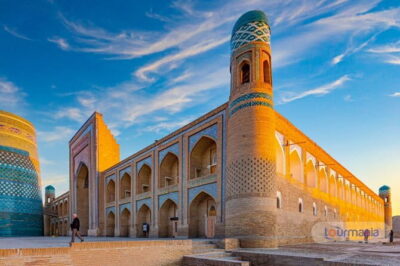
Khiva Historical City Highlights Guided Walking Tour
Read our review →
Samarkand Historical City Highlights Guided Walking Tour
Read our review →
Private Guided Tour Samarkand city history and culture
Read our review →
Bukhara Historical City Highlights Guided Walking Tour
Read our review →Browse the lists this tour appears in