
Reviewed · BUKHARA TOURS
A Complete Chapter To Old Bukhara
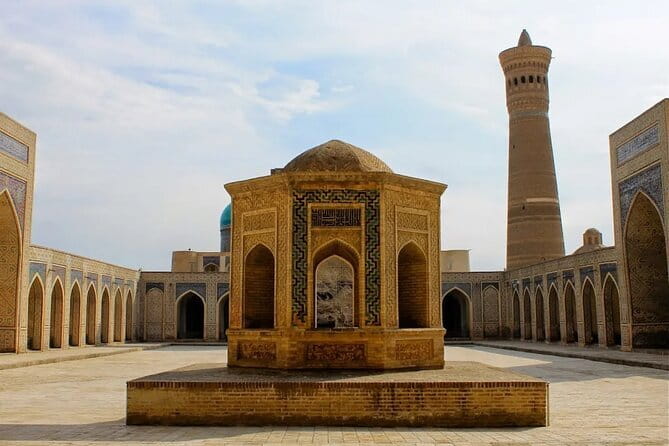
Bukhara is best understood on foot, and this tour gives you a compact route through the city’s major monuments, from Bolo Hauz Mosque and the Ark to the Kalon Minaret and several old madrasas. Guide Hamza adds the historical thread, explaining Central Asian history in a way that helps the buildings make sense rather than leaving you with a pile of names.
I like the tour’s small maximum group of 10, which should make it easier to ask questions and keep pace in the narrow old-city streets. I also like the finish near Ismail Samani Mausoleum and a local bazaar, since you get both grand monuments and a chance to see everyday commerce. The main consideration is that admission fees, transport, coffee, and tea are not included, and the walking route may take longer or shorter than three hours depending on the group.
Key points at a glance
- Old Bukhara on foot: See major mosques, madrasas, the Ark, and the Kalon Minaret without arranging transport between stops.
- Guide Hamza: Expect historical explanations, with particular attention to Central Asian history and Bukhara’s cultural traditions.
- A 10-person limit: The small group size should make the walking tour more personal and practical.
- A useful market finish: The route ends near Ismail Samani Mausoleum and a local bazaar, if the bazaar is open.
- $55 value: The price covers guide service, walking, support, and help with other bookings, but not all entry fees.
- Flexible cancellation: You can cancel up to 24 hours before the start for a full refund, subject to the stated weather and minimum-group conditions.
Why Bukhara works best as a walking tour
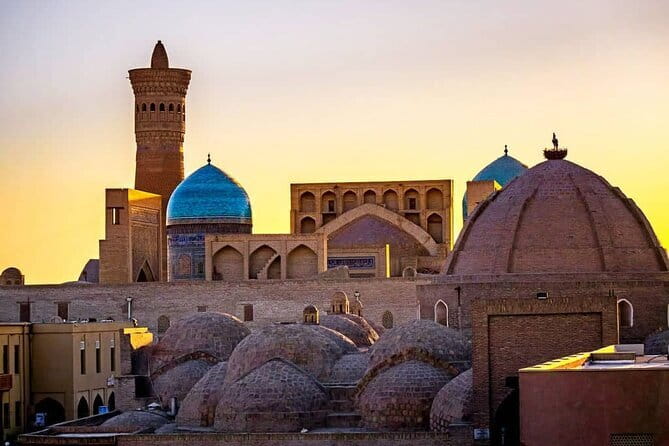
Bukhara’s appeal comes from how much history is packed into a relatively walkable old center. A minaret, mosque, madrasa, and trading area can appear within a short walk of one another, but the meaning of each place is easier to grasp with a guide connecting the pieces.
This experience lasts about three to four hours. That is long enough for a useful first look without committing you to a full day of sightseeing. You will be on foot throughout, so wear comfortable shoes and expect the final timing to depend on walking speed, questions, and the amount of time spent at each site.
The group limit of 10 matters here. Smaller groups are easier to manage around busy squares and historic entrances. You also have a better chance to ask Hamza about the parts of Bukhara that catch your attention, instead of simply following a large crowd from one photo stop to the next.
The advertised price is $55 per person. I see that as a reasonable rate if you want a private-feeling introduction without paying for a fully private tour. The value rests mainly in the guide service and the interpretation, since several stops are viewing points rather than long interior visits.
More things to do in Bukhara:
- Bukhara: Historical City Highlights Guided Walking Tour
★ 4.6 · 102 reviews - Transfer: Bukhara – Khiva via Ancient Fortresses
★ 4.5 · 101 reviews - Best of Bukhara: All Day Private Old Town Tour
★ 5.0 · 66 reviews
Starting at Magoki Attori Mosque and the carpet museum
The meeting point is Magoki Attori Mosque and the carpet museum on Mekhtar Anbar Street 55. Starting here gives the tour an immediate cultural focus. You are not beginning with a generic city walk, but with a historic religious site and a museum tied to one of Central Asia’s most familiar traditional arts.
The carpet museum admission is not included, so check with Hamza at the start about what you will see inside and what extra fee applies. The available information does not give a separate visit length or admission price, so you should treat this stop as part of the route rather than assuming a long museum visit.
This is also a practical place to confirm the order of the walk. The supplied stop list mentions several sites in a sequence that may not read like a clean point-to-point route, including the Kalon Minaret twice and separate references to a mausoleum and a walk-by. A quick confirmation at the meeting point can help you understand how the day will flow.
Bolo Hauz Mosque and the Ark of Bukhara
Bolo Hauz Mosque is listed as the first named stop, with five minutes set aside and admission included. That is a short visit, so expect an introduction and a chance to take in the building rather than a long, quiet examination of every feature.
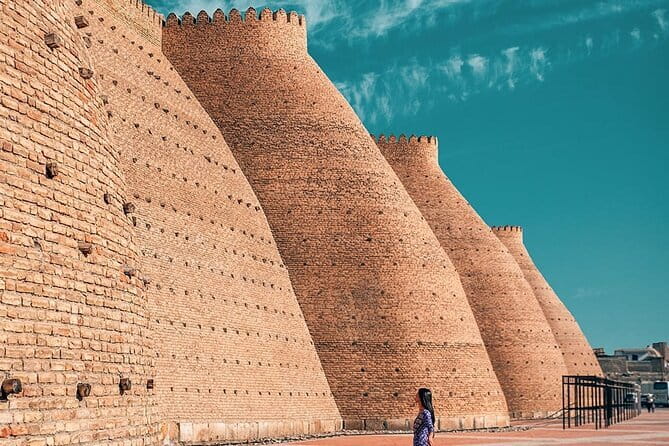
From there, the route includes the Ark of Bukhara. The Ark is one of the city’s defining historic landmarks, and its presence gives the tour a change of scale after the mosque. You move from a place of worship to the former seat of power, which helps show how religion, government, and urban life were tied together in old Bukhara.
No exact visiting time or admission detail is provided for the Ark. Ask Hamza whether the tour goes inside or focuses on the exterior. That distinction can affect both the pace and the total cost, especially since all fees and taxes are excluded from the tour price.
I like this early section because it gives you two different ways to read the city. Bolo Hauz introduces religious and community life, while the Ark points to rulers and administration. Hamza’s role is important here: the buildings are impressive on their own, but the historical links are what turn a short stop into a useful lesson.
The Kalon Minaret and the center of old Bukhara
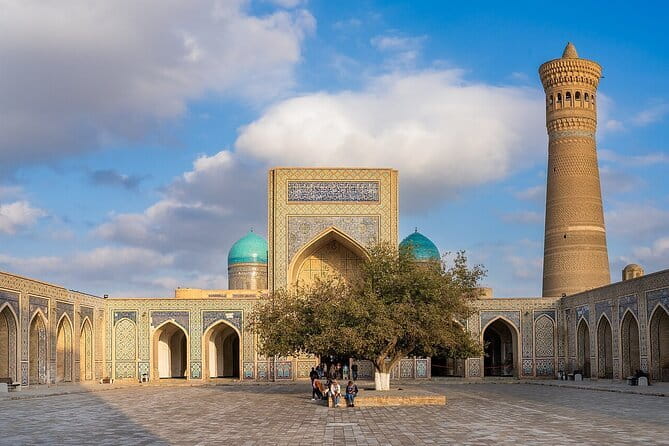
The Great Minaret of the Kalon is one of the central landmarks on the route. It is listed with free admission for one stop and appears again later as a viewing stop with admission included. The repeated entry suggests that the minaret may be seen from more than one point in the walk, or that the route includes both an initial look and a later return to the same area.
You should ask Hamza to clarify this when the tour begins. It is not a problem in itself, but knowing the plan helps you set expectations. A five-minute stop is enough for orientation and photographs, while a two-minute pass-by is more about seeing the minaret as part of the wider square.
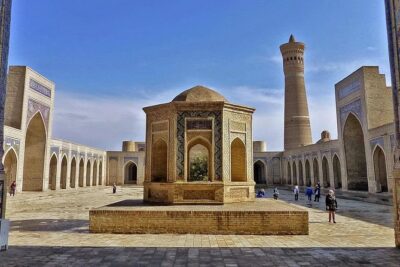
The Kalon area is also a useful place to understand Bukhara as a historic crossroads. The minaret is not simply an isolated tower. It belongs to a group of religious buildings and public spaces that give the old center its unmistakable character.
Because the visit may be brief, do not expect a detailed architectural study at this point. If you are especially interested in the minaret, tell Hamza. The tour is designed to cover several major sites, so your questions can help guide the depth of the explanation.
Same city, a completely different kind of day:
- Best of Bukhara: All Day Private Old Town Tour
★ 4.9 · 62 reviews - City Tour Around Bukhara
★ 5.0 · 55 reviews - 2 Days Tour to Bukhara and Samarkand from Tashkent by train
★ 5.0 · 53 reviews - Bukhara Full Day Old City Private Tour
★ 5.0 · 46 reviews
Ulugbek Madrasa and the education of Central Asia
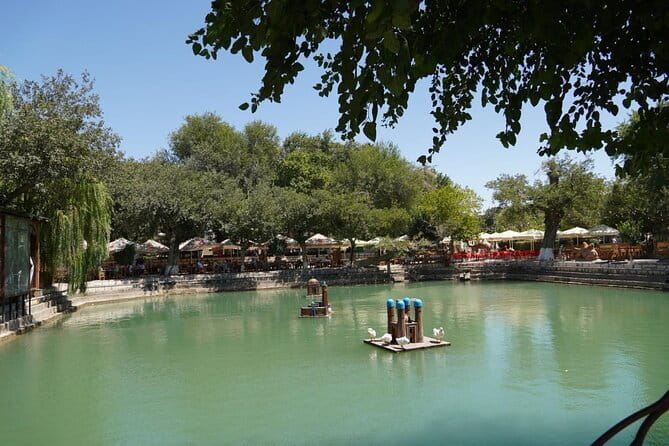
Ulugbek Madrasa is another short stop, listed at about five minutes with admission free. The visit introduces Bukhara’s tradition of Islamic education and the role of madrasas as important institutions, not just photogenic façades.
The name connects the site to Ulugbek, a major Central Asian ruler and scholar. The tour’s historical emphasis should be useful here, especially if you want to place Bukhara within the wider story of the region rather than viewing each monument as a separate building.
Again, five minutes is an overview. You will likely get the essential context and time to look around, but not a long interior exploration. If you are a serious student of architecture or religious history, you may want to return independently after the walk.
Magoki Attori Mosque and the carpet museum
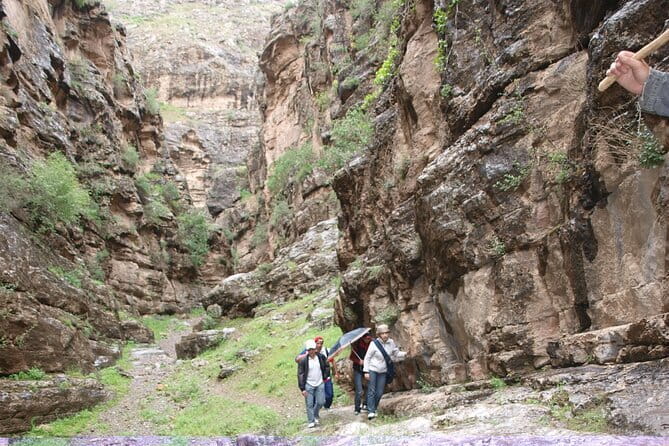
Magoki Attori Mosque is both the starting point and one of the places connected with the carpet museum. The mosque gives the route a sense of continuity, since you begin among historic religious buildings and then continue through other sites shaped by faith, scholarship, and trade.
Admission here is not included. The tour price should therefore be viewed as payment for Hamza’s guiding and support, not as an all-inclusive pass to every monument. Carry some money for optional admissions and ask which entrances are part of the walking experience.
The carpet museum adds a different layer. Instead of focusing only on stone, brick, and dynasties, it brings you closer to a living craft tradition. That balance is one of the tour’s strengths. You get major monuments, but also an opening to Bukhara’s handmade culture.
Kosh Madrasah and Abdulaziz-Khan Madrasah
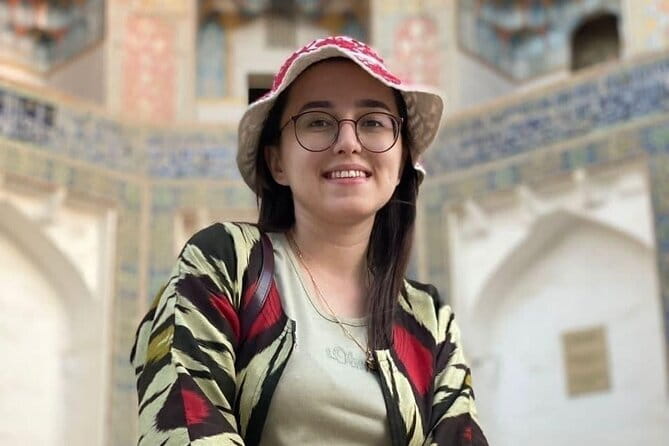
Kosh Madrasah receives a very brief two-minute stop. This is best treated as an exterior look and a chance to hear why the building matters. The short timing means you should not expect a full tour of rooms, displays, or architectural details.
Abdulaziz-Khan Madrasah is also listed as a two-minute visit, with admission not included. Together, these two stops provide a quick sense of how many historic educational buildings are concentrated in Bukhara’s center.
I like having these sites included because they prevent the walk from becoming a single-monument tour. At the same time, the short stops may feel rushed if you want to study decorative work or take careful photographs. Tell Hamza early if one of these madrasas interests you most. The tour format leaves limited time for every building, but a good guide can help you focus.
Mir-i-Arab Madrasa and the Kalon area
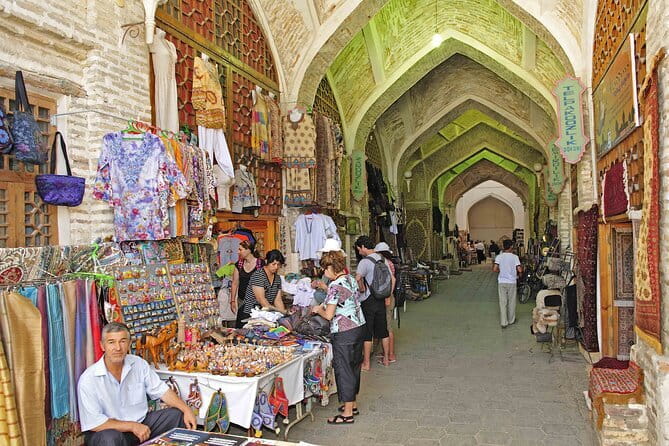
Mir-i-Arab Madrasa is listed as another brief exterior stop, with admission not included. Its position near the Kalon complex makes it part of the central visual group that many people associate with Bukhara.
The two-minute timing tells you how to read this part of the experience. You are getting a guided overview of the old center, not a series of long indoor visits. That is useful if you want orientation on your first day in Bukhara, but less suitable if your main goal is detailed study of every monument.
The route’s repeated references to the Kalon Minaret, Mir-i-Arab Madrasa, and nearby sites also mean you should be ready for some walking between closely grouped landmarks. The reward is variety within a small area. The drawback is that the schedule may feel fast for anyone who prefers to linger.
Ending near Ismail Samani Mausoleum and the bazaar
The walk ends near the Mausoleum of Ismail Samani, close to a local bazaar. If the bazaar is open, you have time to explore it after the formal tour. This is a thoughtful ending because it shifts you from monumental Bukhara to a more ordinary setting where you can browse, observe, and continue at your own pace.
The bazaar is one of the strongest practical features of the experience. A tour can explain a city’s past, but a market gives you a chance to see how local life continues around that past. You can decide how long to stay, and the end point may be convenient if you want to buy food or browse local goods.
The wording is important: the bazaar may not be open. Do not plan your entire day around shopping there. If it is closed, the mausoleum still gives you a clear end point, but you should have another plan for the rest of your afternoon.
The end location also means you should think about what comes next. The experience does not include transport, so you will need to arrange your own onward travel. The tour does include help with other bookings and general assistance, which may be useful if you need advice while planning the next part of your stay.
What the $55 price covers
For $55, you receive a walking tour with guide service, 24-hour support, help with other bookings, and general assistance. The group can include up to 10 people, giving the experience a more personal feel than a large coach excursion.
The price does not include transport, coffee or tea, all fees and taxes, or every site admission. This matters most at Magoki Attori Mosque and the carpet museum, Kosh Madrasah, Abdulaziz-Khan Madrasah, and Mir-i-Arab Madrasa, where admission is specifically not included.
I would choose this tour for the interpretation rather than for included tickets. If you want a guide to explain Central Asian history and connect Bukhara’s mosques, madrasas, rulers, and local life, $55 can make sense. If you prefer to enter every building and spend a long time inside each one, extra costs and the short stop times may make the value less attractive.
The tour is booked, on average, five days ahead. That gives you a useful planning clue: reserve before arriving if you want a particular date, but the experience is not presented as something that requires months of advance planning.
Who will get the most from this walk
I would recommend this experience to you if you are visiting Bukhara for the first time and want a clear introduction to the old city. It is especially well suited to people who enjoy history, religious architecture, and explanations of Central Asian culture.
The five available ratings are all positive, with the strongest praise directed at Hamza’s explanations, his clear and engaging approach, and his ability to connect history with the places you see. The bazaar finish is also singled out as a memorable part of the day.
You may want something else if you dislike walking, need long seated breaks, or want a slow architectural photography tour. The timing is approximate, and most stops are short. It is also less suitable if you expect every entrance, meal, drink, and transfer to be covered by the $55 price.
The experience requires good weather and a minimum number of participants. If poor weather or insufficient participation causes cancellation, you are offered another date or experience, or a full refund. You can cancel for a full refund up to 24 hours before the start time, but changes or cancellations inside that window are not accepted.
Should you book A Complete Chapter To Old Bukhara?
Book it if you want a guided first look at Bukhara’s main historic center, prefer walking to transport, and value clear explanations more than long visits inside every monument. Hamza’s strength appears to be making the city’s history easier to follow, while the small group and bazaar finish add practical value.
Before paying, ask which sites you will enter, what the final walking order will be, and which admission charges you should budget for. If you are comfortable with short stops and a few extra fees, this is a useful, fairly priced introduction to Old Bukhara. If you want a slow, specialist tour with extensive interior access, choose a longer private experience instead.
FAQ
How long does the tour last?
The walking tour lasts approximately three to four hours. The exact duration can change because it is a walking experience.
What is the price?
The price is $55 per person.
How many people can join the tour?
The maximum group size is 10 people.
Who is the guide?
The experience is provided by guide Hamza.
Where does the tour start?
The meeting point is Magoki Attori Mosque and the carpet museum, at Mekhtar Anbar Street 55, Bukhara, Uzbekistan.
Where does the tour end?
The tour ends near the Mausoleum of Ismail Samani, close to a local bazaar in Bukhara. The bazaar may be open for you to explore.
Is transportation included?
No. Transport is not included, and the tour is conducted on foot.
Are entrance fees included?
Some admissions are included or free, but all fees and taxes are not included. Admission is specifically not included for several listed sites, including Magoki Attori Mosque and the carpet museum, Kosh Madrasah, Abdulaziz-Khan Madrasah, and Mir-i-Arab Madrasa.
What does the tour include?
The tour includes guide service, 24-hour support, the walking tour, help with other bookings, and general assistance.
Can I cancel for a full refund?
Yes. You can cancel at least 24 hours before the experience start time for a full refund. Cancellations or changes made less than 24 hours before the start are not accepted, and weather or minimum-group cancellations may result in another date, another experience, or a full refund.
Just added around Bukhara
- Uzbekistan 6 Days Private Tour Khiva-Bukhara-Samarkand by Train★ 5.0 · 4 reviews
- Tashkent-Samarkand-Bukhara tour-3nights/4 days★ 5.0 · 5 reviews
- 6- Day Private Tour to Tashkent, Khiva, Bukhara and Samarkand★ 5.0 · 5 reviews
- Bukhara in a Day History, Culture, and Local Insight Private Tour★ 5.0 · 4 reviews
- Full-Day Private Guided Tour to Islamic 7 Saints of Bukhara★ 4.5 · 3 reviews
- Bukhara Walking Tour★ 5.0 · 4 reviews
- 2 Day Ukhum Hiking Tour from Bukhara★ 5.0 · 4 reviews
- Bukhara: Full-Day Guided Tour with English-Speaking Guide★ 5.0 · 4 reviews
Bukhara Tours, compared.
2 Days Tour to Bukhara and Samarkand from Tashkent by train
Read our review →
Uzbekistan 8 Days Private Tour Tashkent-Urgench-Bukhara-Samarkand-Tashkent
Read our review →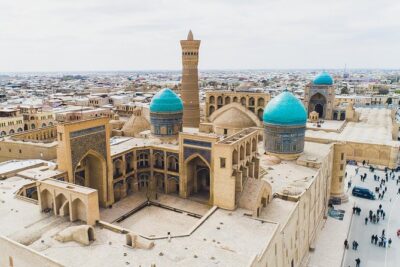
Browse the lists this tour appears in