
Reviewed · WALKING TOURS
Bukhara Walking Tour
Bukhara’s old center unfolds almost entirely on foot, and this tour takes you from the shady pool at Lyab-i-Hauz to the great Kalyan minaret, then out toward the Ark and the Samanid Mausoleum. I like that it links the famous sights with less obvious stops, including the old Jewish quarter, a traditional bathhouse entrance, and a tiny puppet theater.
I also like the human touch. Guides Peri and Nilufar are named by past participants, with Nilufar praised for her punctuality, excellent English, energy, and remarkable command of local detail. The main consideration is cost: the $28 guide fee does not include monument entrance tickets or lunch, so your final bill will be higher.
Key points to know before you book
- The route crosses Bukhara’s main historic core: You begin at Lyab-i-Hauz and finish at the Samanid Mausoleum.
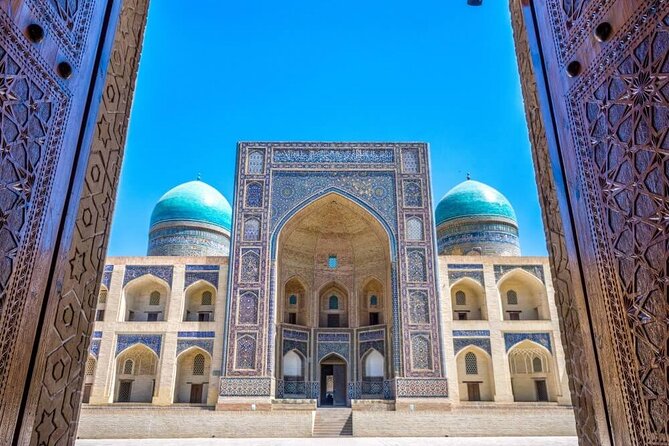
- Poi Kalyan gets a full hour: This is the visual high point, with the Kalyan minaret, Kalyan Mosque, and Miri Arab Madrasa.
- You see more than the headline monuments: The route includes the Jewish quarter, trading domes, Magoki Attori Mosque, a puppet theater, and Bolo Hauz Mosque.
- It is a private walking tour: Only your group takes part, so you can ask questions and keep the pace personal.
- The guide is the main value: English, Spanish, French, German, and Russian are offered, and Peri and Nilufar have earned particular praise.
- Plan for extra ticket costs: Entrance fees are not part of the advertised $28, and there is no included vehicle or meal.
Why this route works well in Bukhara
Bukhara is a city where the important sights sit close enough to connect on foot, but not always close enough to understand without a map and a sense of sequence. A poolside madrasa may look like a pretty façade until you learn who used it, while a low, half-buried mosque can carry more age than the grand buildings around it.
This five to six hour walk gives you that sequence. You begin in the center of old social life, pass through commercial and religious quarters, reach the enormous Poi Kalyan complex, and then move toward the royal citadel and the oldest surviving mausoleums.
I see this as a strong first-day tour for someone who wants the main picture of Bukhara without arranging several separate visits. It is also useful if your time is short. The route is long enough to cover a lot, but the listed stops are generally brief, so you should expect an overview with explanation rather than a slow study of every building.
The private format matters. You are not folded into a large bus group, and the guide can respond to your questions. That is especially helpful in Bukhara, where the difference between a madrasa, khanaka, mosque, mausoleum, and trading dome is not always obvious at first glance.
More Walking Tours in Bukhara
- Bukhara: Historical City Highlights Guided Walking Tour
★ 4.6 · 102 reviews - All You Need To Know About Bukhara. A Walk In The Town
★ 4.9 · 31 reviews - Bukhara Historical City Highlights Guided Walking Tour
★ 4.5 · 16 reviews
Lyab-i-Hauz: beginning beside Bukhara’s social pool
The tour starts at the Lyab-i-Hauz ensemble, one of the best places to get your bearings. The name refers to the pool at its center. The setting brings together the Kukeldash Madrasa, the Nadir Divanbegi Madrasa, and a khanaka, a building linked with dervishes and religious life.
Allow about an hour here. That is enough time to look at the arrangement of the buildings, hear how the square functioned, and begin to understand why water mattered so much in an inland Central Asian city.
Lyab-i-Hauz also works well as a starting point because it is not only a monument zone. It is a social space, especially later in the day. The tour schedule does not promise a particular evening atmosphere, but the area is described as becoming more animated as the day goes on.
Your guide can help separate the architectural details from the legends and labels. If you have only seen photographs of Bukhara’s blue-tiled façades, this first stop gives you a useful introduction without rushing straight to the grandest building.
A short puppet theater visit with a local craft angle
One of the route’s more unusual stops is devoted to the history of Central Asian puppet theater. It lasts about 20 minutes and includes a two-minute performance by the master, when available.
This is a small stop, but it adds a different voice to the tour. Most sightseeing walks move from mosque to madrasa to citadel. Here, you get a look at a performance tradition and the chance to see the puppets themselves. If luck is on your side, you may also find a puppet available for purchase.
I would not book this walk solely for the theater, since the visit is short and the wording allows for some uncertainty about what may be available. Still, it is exactly the kind of brief cultural pause that keeps a long architectural route from feeling like a parade of stone facades.
Magoki Attori Mosque and the old trading lanes
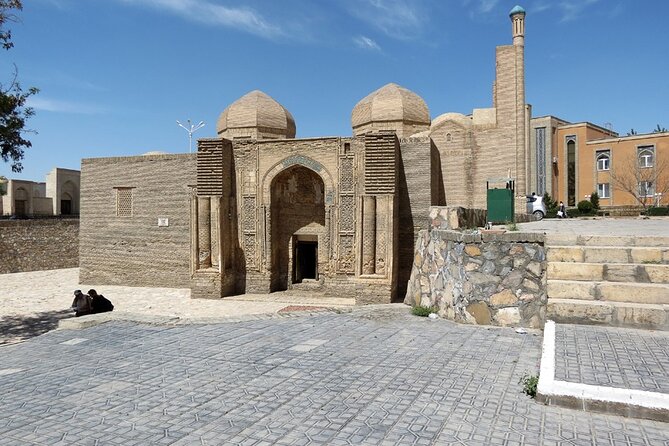
The Magoki Attori Mosque is presented as the first mosque in Bukhara and in Uzbekistan. The site also has a pre-Islamic association, since it was once a place where pagan idols were sold. That layered use is what makes the stop valuable: the building is not just an Islamic monument, but part of a much older religious and commercial setting.
The visit is scheduled for about 15 minutes, with a carpet museum included in the stop. Since entrance fees are separate, ask your guide which parts require payment before going in.
From here, the route reaches Bukhara’s trading domes. The tour description names three domes, each tied to the city’s old market system. These covered commercial spaces are a reminder that Bukhara was not only a religious center. It was also a place where merchants, artisans, and long-distance trade shaped daily life.
The route also mentions a traditional 16th-century men’s bathhouse, with reception only. That limitation matters. You should expect to see or hear about the entrance rather than tour a working bathing complex. It is still a useful detail, since bathhouses were part of the practical urban fabric that grand monuments often leave out.
Same city, a completely different kind of day:
- Transfer: Bukhara – Khiva via Ancient Fortresses
★ 4.5 · 101 reviews - Best of Bukhara: All Day Private Old Town Tour
★ 5.0 · 66 reviews - Best of Bukhara: All Day Private Old Town Tour
★ 4.9 · 62 reviews - City Tour Around Bukhara
★ 5.0 · 55 reviews
Two contrasting madrasas: Ulughbek and Abdulaziz-Khan
The Ulughbek Madrasa receives about 15 minutes. It is described as the oldest madrasa in Bukhara and the only monument in the city from the Timurid period.
That makes it an important counterpoint to the later buildings on the route. The madrasa is tied to Ulughbek, the Timurid ruler and scholar, and its place in Bukhara’s old center helps show how education and religious study shaped the city.
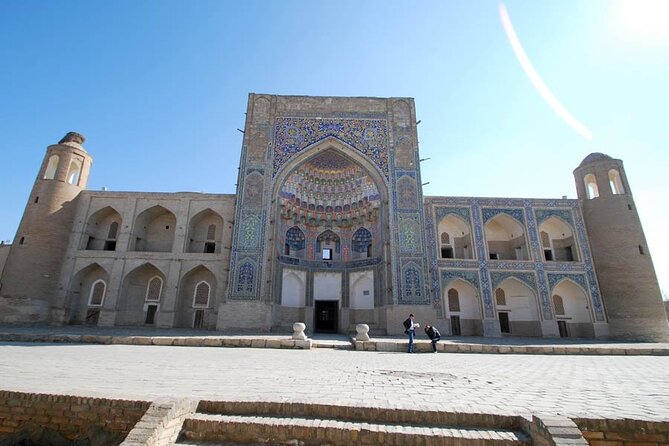
Next comes the Abdulaziz-Khan Madrasa, also scheduled for 15 minutes. It is known as Bukhara’s most magnificent madrasa and as the first monument where yellow was used.
The two stops work best together. Ulughbek gives you an earlier Timurid reference point, while Abdulaziz-Khan offers a more lavish architectural display. Your guide can point out the difference in decorative ambition rather than leaving you to compare two ornate entrances that may otherwise blur together.
Fifteen minutes at each madrasa is enough for a guided look and photographs. It is not enough for a quiet, detailed examination of every tile or inscription. If you have a strong interest in architecture, keep mental notes and consider returning independently.
Poi Kalyan: Bukhara’s great architectural pause
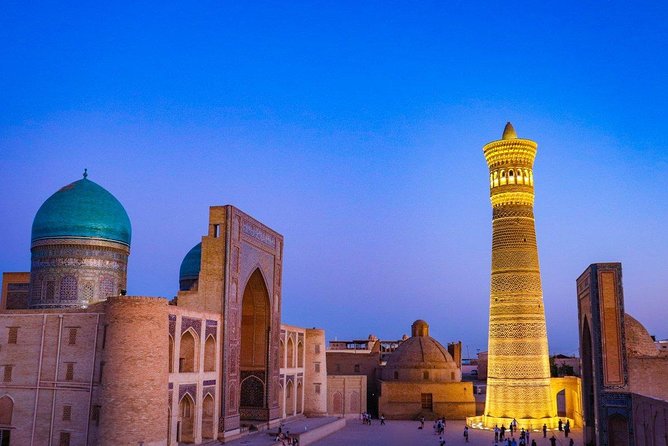
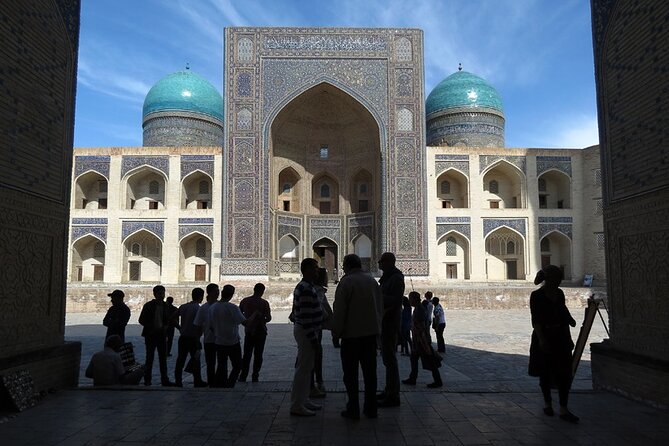
Plan on about an hour at Poi Kalyan, the central monument group of the walk. It contains three major buildings: the Kalyan Minaret, the Kalyan Mosque, and the Miri Arab Madrasa.
The Kalyan Minaret is the tallest minaret in Bukhara and one of the three pre-Mongol monuments identified on the route. Its height gives the square its sense of direction. After several lower courtyards and covered market spaces, the minaret pulls your eye upward.
The Kalyan Mosque is described as the largest medieval mosque in the city. Its scale is the key point here. You need time to take in the courtyard, the surrounding arcades, and the way the mosque relates to the minaret and madrasa opposite it.
Miri Arab Madrasa remains a working madrasa for male students. That is worth remembering as you look at it. This is not simply a frozen museum façade. It belongs to a continuing religious and educational setting.
Poi Kalyan is the place where a guide’s explanation can make a real difference. Without context, you may spend an hour photographing three impressive buildings. With context, you can see how minaret, mosque, and madrasa formed a single religious center, and why this square became Bukhara’s visual calling card.
The area can also be the most demanding part of the walk because it invites you to stop, look up, and move slowly. Wear shoes you can use comfortably for several hours, and keep water with you. The tour does not include lunch or a vehicle.
The Ark of Bukhara, a city inside the city
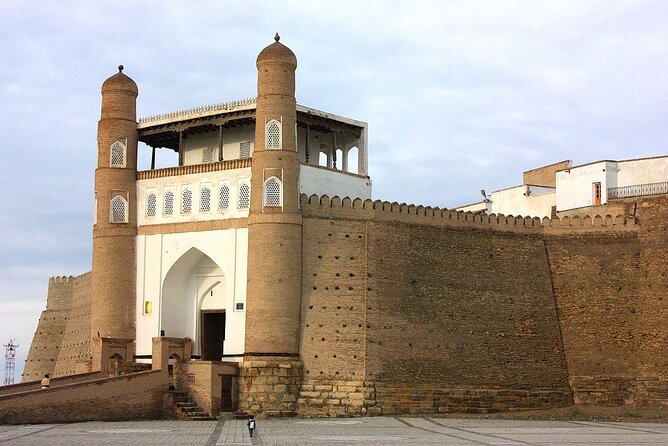
After Poi Kalyan, the route goes to the Ark of Bukhara, the winter residence of the emirs. The Ark was considered a city within the city, which tells you more than simply calling it a fortress.
The scheduled visit is about 40 minutes. That gives you time to grasp the Ark as a seat of government and royal life, rather than treating it as another decorated entrance. Its importance comes from what happened inside: administration, residence, and the machinery of the emirate were concentrated here.
The tour data does not specify which interiors are open or which tickets are included, so check current admission details when you book. The general rule is clear: monument entrances are not covered by the $28 price.
The Ark also changes the rhythm of the walk. Earlier stops focus on religious learning, trade, and public life. Here, the focus shifts to political power. That contrast is one of the route’s strengths.
Bolo Hauz and the illusion of forty columns
Bolo Hauz Mosque takes about 20 minutes. It is known for having the highest columns in the city and is also called Chilustun, or forty columns.
The explanation is wonderfully visual. The mosque has 20 columns, but their reflection in the reservoir creates the impression of 40. This is the sort of detail that is easy to miss if you are moving quickly from one major monument to the next.
Bolo Hauz offers another view of how water and architecture worked together in Bukhara. The reservoir is not just a decorative feature. It helps create the mosque’s name and the optical effect that makes the site memorable.
This stop is shorter than Poi Kalyan and the Ark, but it earns its place through the reflection and the tall wooden columns. If your guide is Peri or Nilufar, this is a good point to ask for the story behind the name and the building’s role in the city.
Chashmai Ayub and Bukhara’s water story
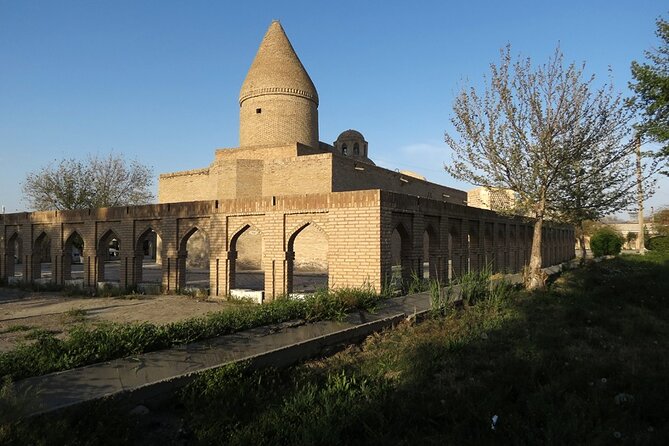
The Chashmai Ayub Mausoleum is scheduled for 20 minutes. It is also the city’s water supply museum and is associated with Ayub, or Saint Jehovah in the supplied description.
The combination is unusual. You are not only looking at a mausoleum, but also at an explanation of how Bukhara obtained and managed water. That gives useful context to the pools, reservoirs, and public buildings you have already seen.
After several religious monuments, this stop adds practical urban history. Bukhara could not function without water, and the city’s religious and civic life depended on systems that are easy to overlook when you focus only on domes and tilework.
As with the other monuments, the ticket is not included. The 20-minute visit suggests a focused stop rather than a long museum session.
The Samanid Mausoleum and the walk’s final note
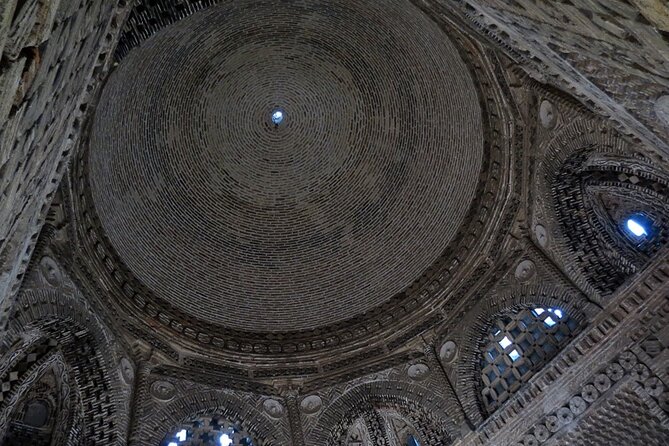
The tour ends at the Ismail Samani Mausoleum after about 30 minutes. This is described as the first mausoleum in Central Asia and the second in the Islamic world. It is also linked to the founder of the first local empire in Central Asia.
That makes the ending more than a convenient endpoint. The mausoleum takes you back to an early period, before the later domes, madrasas, and royal structures that fill much of central Bukhara.
The end point is useful for planning. You do not return to Lyab-i-Hauz, so arrange your next stop from the Samanid Mausoleum rather than assuming the walk finishes where it began.
The route’s final placement also gives the day a clear arc: social life at Lyab-i-Hauz, worship and study around Poi Kalyan, political authority at the Ark, and an early mausoleum at the finish.
What the $28 price really covers
At $28, the tour is priced as a guide-led walking experience, not as an all-inclusive sightseeing pass. The fee includes a professional guide and all fees and taxes connected to the tour, but it does not include admission to the listed monuments, lunch, personal spending, or an air-conditioned vehicle.
That can still be good value for a private five to six hour route. You are paying for the planning, the sequence, the explanations, and the ability to ask questions within your own group. A private guide is especially useful here because the route includes several buildings with similar visual language but different purposes.
Budget extra for tickets. The exact total depends on which sites are open and what current admission charges apply, so the advertised price should not be treated as your full day’s cost.
There are group discounts, and only your group participates. If you are traveling with several people, the per-person value improves. If you are alone, the private format is still convenient, but the ticket costs remain separate.
Guides, languages, timing, and practical details
Guiding is offered in English, Spanish, French, German, and Russian. Peri is described as patient and able to explain details about the monuments. Nilufar is praised for punctuality, energy, excellent English, and an encyclopedic command of her hometown.
Those details matter because this tour covers a lot of ground. A guide who explains clearly and adjusts to your questions can make the difference between a tiring checklist and a coherent day.
The walk lasts approximately five to six hours. The listed stop times add up to close to five hours, before allowing for the walking between sites, questions, photographs, and any ticket arrangements. Keep the wider time window in mind when planning lunch or another booking.
There is no included transport. That is not a weakness in Bukhara’s central old town, since walking is the point of the experience, but it means you should plan for a full day on your feet. The tour ends at the Samanid Mausoleum, not at the starting point.
Confirmation is provided at booking. Most people can take part, and the activity is private. Free cancellation is available if you cancel at least 24 hours before the local start time. Within 24 hours, the payment is not refunded, and changes are not accepted.
Who should book this Bukhara walk
I would choose this tour if you want a single, structured introduction to Bukhara and prefer asking a local guide questions as you go. It suits first-time visitors, short stays, and anyone who wants the major monuments placed in a sensible order.
It is also a good fit if you value smaller cultural stops. The puppet theater, Jewish quarter, old bathhouse entrance, carpet museum, and trading domes keep the route from becoming only a list of famous Islamic buildings.
You may want something else if you prefer to spend an entire hour inside each monument, or if you dislike paying entrance fees separately. The schedule is broad, and the short madrasa visits favor coverage over detailed architectural study.
Should you book it?
Book it if you want a private, guide-led overview of Bukhara with strong coverage of the city’s central monuments and a few less expected stops. The route is especially useful when you are tight on time, and the praised guides Peri and Nilufar suggest that the human side of the experience is a real strength.
Skip it if you want a slow, self-guided day or an all-inclusive price. For most first visits, though, $28 is a reasonable starting point, provided you add the separate monument tickets, bring water, and allow the full five to six hours.
FAQ
Where does the Bukhara Walking Tour start?
The tour starts at the Lyab-i-Hauz ensemble, at Divan-Beghi in Bukhara.
Where does the tour finish?
The tour ends at the Ismail Samani Mausoleum.
How long does the walking tour last?
The experience lasts approximately five to six hours.
Is the tour private?
Yes. Only your group participates in the activity.
Which languages are available?
Professional guiding is offered in English, Spanish, French, German, and Russian.
Are monument entrance tickets included?
No. Entrance to the monuments listed in the program is not included in the tour price.
Can I cancel for a full refund?
Yes, if you cancel at least 24 hours before the experience start time. Cancellations within 24 hours are not refunded.
Just added around Bukhara
- Uzbekistan 6 Days Private Tour Khiva-Bukhara-Samarkand by Train★ 5.0 · 4 reviews
- Tashkent-Samarkand-Bukhara tour-3nights/4 days★ 5.0 · 5 reviews
- 6- Day Private Tour to Tashkent, Khiva, Bukhara and Samarkand★ 5.0 · 5 reviews
- Bukhara in a Day History, Culture, and Local Insight Private Tour★ 5.0 · 4 reviews
- Full-Day Private Guided Tour to Islamic 7 Saints of Bukhara★ 4.5 · 3 reviews
- A Complete Chapter To Old Bukhara★ 5.0 · 5 reviews
- 2 Day Ukhum Hiking Tour from Bukhara★ 5.0 · 4 reviews
- Bukhara: Full-Day Guided Tour with English-Speaking Guide★ 5.0 · 4 reviews
Walking Tours, compared.
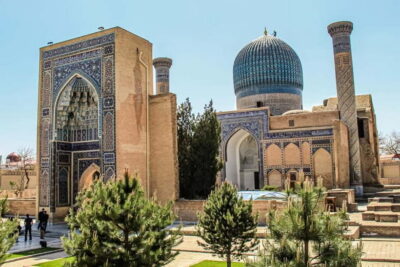
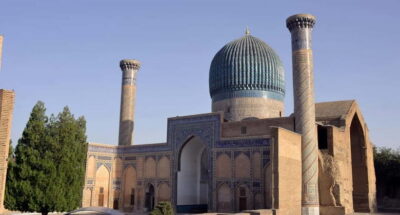
Samarkand One Day Tour: one day walking & group tour
Read our review →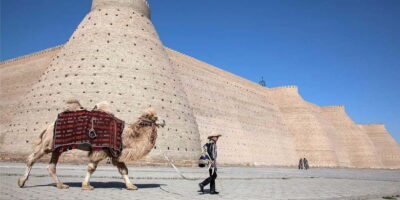
All You Need To Know About Bukhara. A Walk In The Town
Read our review →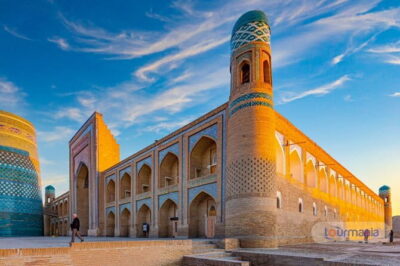
Khiva Historical City Highlights Guided Walking Tour
Read our review →
Browse the lists this tour appears in