
Reviewed · WALKING TOURS
All You Need To Know About Bukhara. A Walk In The Town
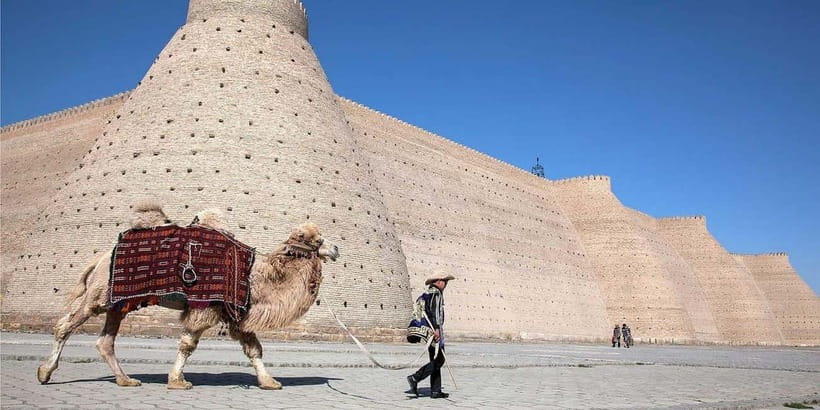
Bukhara is easiest to understand on foot, and this tour gives you a useful map of the old city while explaining the people, dynasties, traders, and religious schools behind its grand buildings. Guide Hamza leads the walk in fluent English, with plenty of time for questions and practical tips on food and shopping. I especially like the focus on history and architecture, plus the chance to meet other people without paying private-tour prices.
I also like that the route covers both headline sights and smaller streets you might pass without noticing. The main drawback is the group size: this is generally a 10 to 15 person group, despite the private-group wording used in the booking details. Entrance tickets, meals, transport, and accommodation are not included.
Key points to know before you book
- Hamza’s history-first guiding: Expect clear explanations of how Bukhara’s buildings fit into the story of Central Asia.
- A practical Old Town orientation: The walk helps you understand the layout before returning to sights on your own.
- Major landmarks in one route: You visit Lyabi Khauz, the trade domes, Poi Kalan, Bolo Haouz, Chashma-Ayub, and the Samanid Mausoleum.
- Good-value group pricing: The $55 price is based on sharing the guide with roughly 10 to 15 people.
- Shopping and restaurant help: Hamza can point you toward Uzbek handicrafts, textiles, spices, and local places to eat.
- A walking tour, not a sightseeing bus: Bring water, sun protection, a charged phone, and comfortable shoes.
Why this walk helps you understand Bukhara
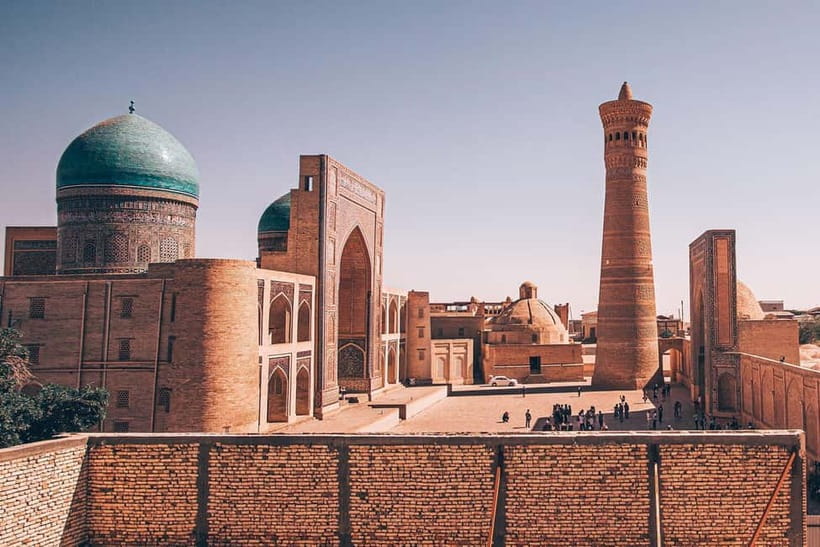
Bukhara can feel like a collection of beautiful monuments at first. One blue dome leads to another, narrow lanes open into old courtyards, and the trading domes can seem disconnected from the mosques and madrasahs around them.
A good guide turns that collection into a city with a clear logic. Bukhara grew for more than 2,000 years along the Silk Road, and its rulers, religious leaders, merchants, and craftsmen each left their mark. The old center is protected as a UNESCO World Heritage site, but the value of the tour is not only seeing famous buildings. It is learning why they were built, who used them, and how they relate to one another.
Hamza’s approach is centered on history, architecture, and culture. He gives enough dates and names to make the story useful, but the tour is not presented as a dry list of monuments. Several people who took the walk appreciated his humor, relaxed manner, and willingness to answer questions. That balance matters in Bukhara, where a long lecture beside every building could quickly become tiring.
The walk lasts about 4.5 hours. Although the experience is sometimes described as a one-day city tour, the actual activity is a half-day route on foot. That makes it a strong first activity in Bukhara, especially if you want the rest of your visit free for revisiting interiors, shopping, or exploring at your own pace.
More Walking Tours in Bukhara
- Bukhara: Historical City Highlights Guided Walking Tour
★ 4.6 · 102 reviews - Bukhara Historical City Highlights Guided Walking Tour
★ 4.5 · 16 reviews - Bukhara: Private Guided Walking Tour with Hotel Pickup
★ 5.0 · 11 reviews
Meeting near the donkey statue at Nadir Divan Begi
The meeting point is near the donkey statue by Nadir Divan Begi Madrasah. This is a sensible place to start because it puts you close to Lyabi Khauz, one of the best-known gathering areas in the Old Town.
Arrive with your phone charged and give yourself enough time to locate the statue. The supplied meeting instructions are brief, so it is worth checking the exact position before you leave your accommodation. The tour is conducted in English, and the guide provides the walking commentary throughout.
Because the route is on foot, you do not need to arrange a driver for the sightseeing itself. Transport during the tour is not included, and neither are entrance fees. This matters if you are watching costs closely. The $55 fee covers the guide and the group walk, but you should carry extra money for paid sites, food, drinks, and purchases.
Lyabi Khauz and the first look at old Bukhara
The route begins at Lyabi Khauz, a pool surrounded by old buildings and one of the city’s most recognizable public spaces. It is a useful opening scene because it shows how water, shade, religion, trade, and social life once came together in the center of Bukhara.
From here, you can begin to read the city’s layout. The surrounding madrasah and commercial streets lead naturally toward the old trade routes. The first guided explanation is short, but this part of the route sets up the rest of the walk.
You then continue toward Toqi Sarrafon Bazaar. The word toqi refers to the domed trading structures that once sheltered merchants and shoppers. These domes are not just photogenic roofs. They reveal how commerce was organized in the old city, with different trades gathered around particular market areas.
Bukhara is a good place to shop for Uzbek handicrafts. You may see hand-woven textiles, carpets, spices, and other locally made goods in the trading areas and madrasah courtyards. Hamza can offer suggestions on what to look for and where to eat, which is useful if you are new to Uzbek food or unsure how much time to set aside for shopping.
Magok-i-Attari Mosque and Bukhara’s layered past
Magok-i-Attari Mosque is one of the route’s most interesting stops because it reflects how many layers of Bukhara’s past occupy the same small area. The mosque is part of the old religious and commercial core, and its position helps show how closely worship and trade were linked.
This is where a guide adds real value. Without context, you might see another old brick and tile building. With an explanation of the site’s place in the city’s development, you get a better sense of why Bukhara feels older and more complex than a simple collection of restored monuments.
Several short guided stops follow. The exact names of these points are not supplied, so you should expect brief explanations during the walk rather than a separate major attraction at each one. These pauses may be useful for orienting you through the lanes, but they also mean the pace can feel quick in places.
If you prefer long periods inside each monument, this may not be the ideal format. If you want a broad introduction before choosing where to spend more time later, the short stops work well.
Same city, a completely different kind of day:
- Transfer: Bukhara – Khiva via Ancient Fortresses
★ 4.5 · 101 reviews - Best of Bukhara: All Day Private Old Town Tour
★ 5.0 · 66 reviews - Best of Bukhara: All Day Private Old Town Tour
★ 4.9 · 62 reviews - City Tour Around Bukhara
★ 5.0 · 55 reviews
Ulugbek Madrasah and the role of Islamic schools
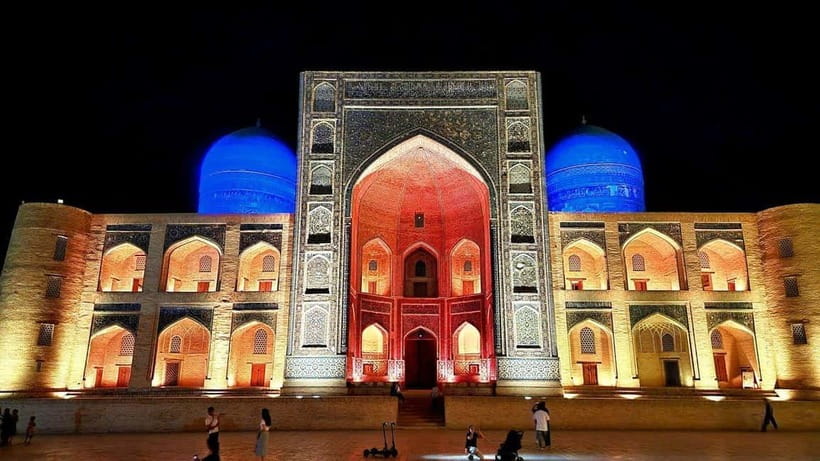
The route continues to Ulugbek Madrasah, an important building associated with Ulugbek, the Timurid ruler and scholar. Madrasahs were not simply decorative facades. They served as places of study, with classrooms, student spaces, and religious functions arranged around courtyards.
One useful detail from the tour is the explanation that a madrasah traditionally included both a lecture hall and a mosque. That kind of practical information helps you read the buildings rather than only photograph them.
The route gives you the outside context of several madrasahs and mosques, but you should not assume every stop includes entry. Entrance tickets are paid separately on the spot. The tour description says you can skip the ticket line, but it does not mean admission is free.
This is also a good point to ask questions. Hamza’s style suits people who want to understand how architecture served daily life. He has been praised for explaining the wider Central Asian setting before moving into the individual buildings, which can make the rest of the walk easier to follow.
Poi Kalan, the minaret, and the city’s grandest view
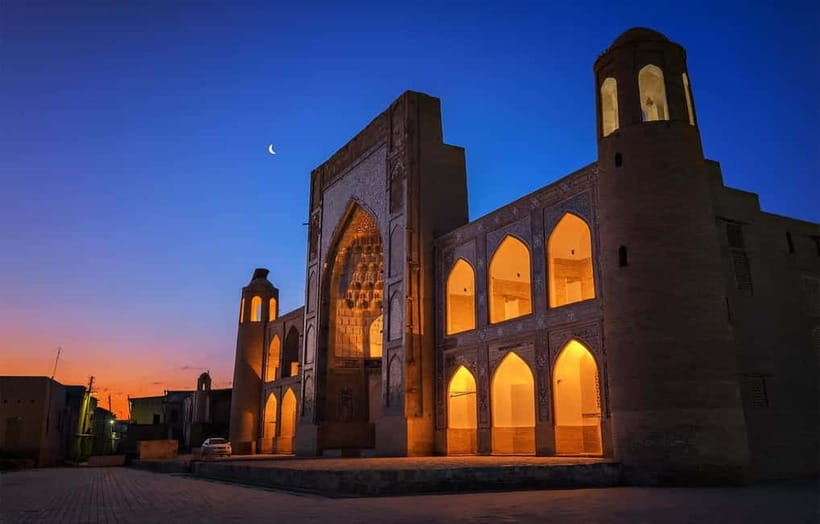
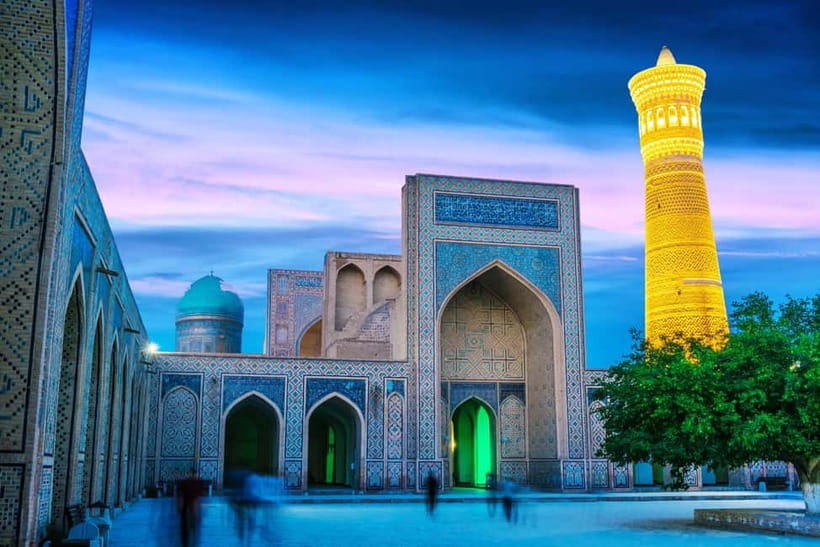
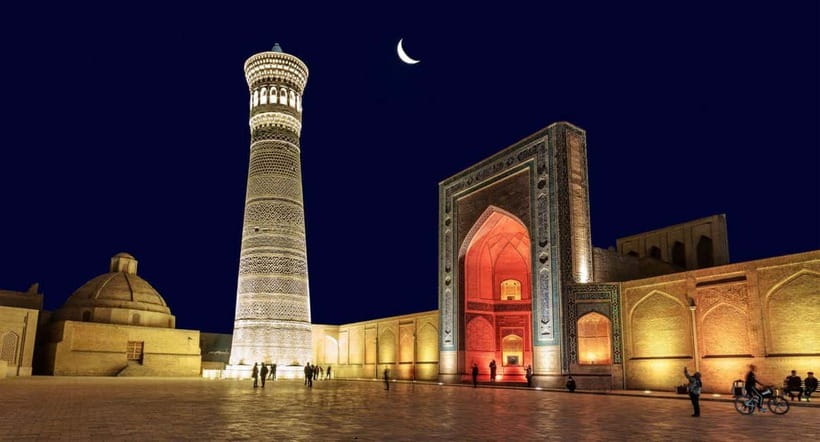
Poi Kalan is the visual centerpiece of the Old Town. The ensemble includes the Kalan Mosque, the Mir-i-Arab Madrasa, and the great Kalan Minaret. The minaret is one of Bukhara’s defining landmarks, and its scale becomes more impressive as you approach it through the surrounding streets.
The site is also a good example of why a historical explanation matters. The buildings are not isolated attractions. They form a religious complex that dominated the city’s skyline and helped shape the identity of Bukhara.
You will have time for guided commentary at the Kalan Mosque and Mir-i-Arab Madrasa. The listed stop times are short, so do not expect a long, quiet interior visit at every building. The emphasis is on understanding the ensemble as part of the city’s story.
Photography is easy here, but listen before rushing off for pictures. The guide’s account of the minaret, the mosque, and the madrasa gives the square more meaning. Bukhara is full of places where the setting is memorable, but the explanation is what helps you remember why the place mattered.
Bolo Haouz Mosque and a change of setting
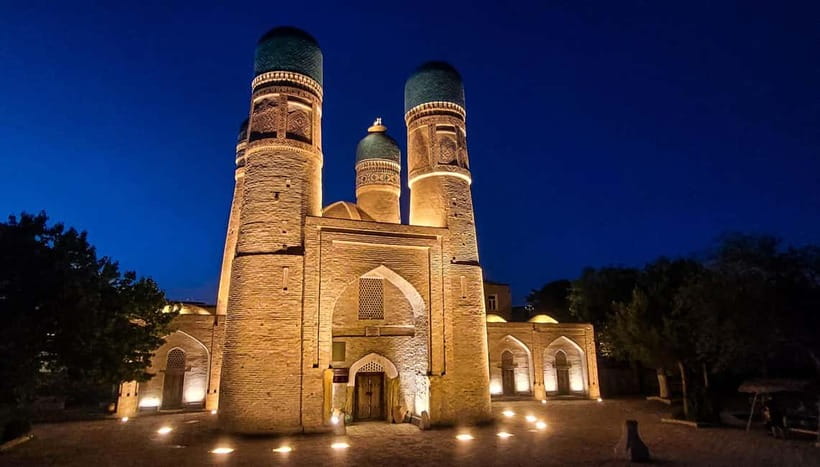
Bolo Haouz Mosque takes you away from the dense commercial core and toward another important part of Bukhara’s old civic and religious center. Its covered wooden columns and ornate details offer a different architectural mood from the brick and tiled forms around Poi Kalan.
This stop helps keep the tour from becoming a single parade of blue domes. You see how building styles changed and how different religious spaces served different parts of the city.
The nearby route also gives you a chance to notice the texture of everyday Bukhara. The Old Town has pedestrian-friendly lanes, restored facades, workshops, shops, and places where local life continues alongside tourism. The walk is not designed as a food tour, but Hamza can suggest a restaurant for lunch if you want help choosing somewhere after the tour.
Chashma-Ayub and the Samanid Mausoleum
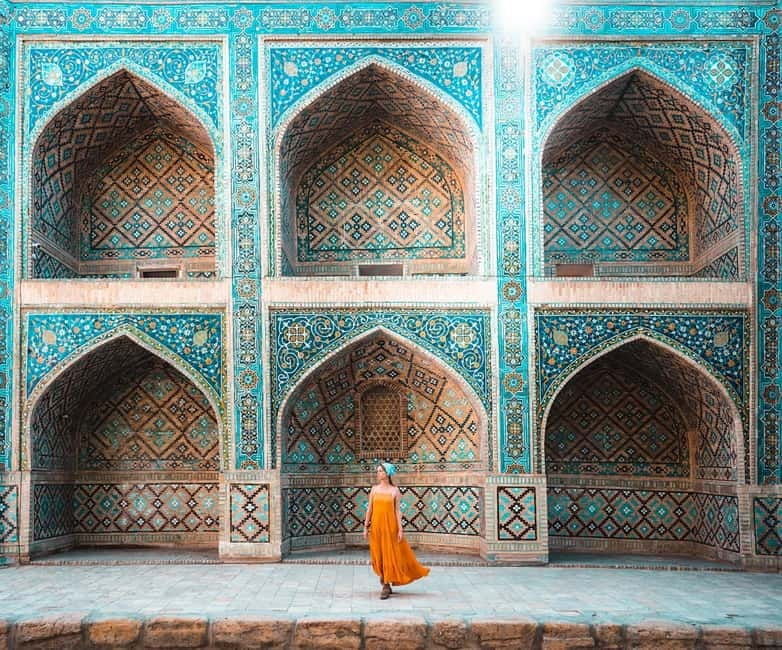
Chashma-Ayub Mausoleum is another short stop on the route. Its name is linked to the spring of Job, and the building adds another layer to the religious traditions associated with Bukhara.
The final major destination is the Samanid Mausoleum, often identified as the Ismail Samani Mausoleum. This is one of the most important early Islamic monuments in Central Asia and a highlight for anyone interested in architecture. Its patterned brickwork is especially striking because the decoration comes from the structure and arrangement of the bricks rather than relying only on colorful tile.
The tour finishes at the Ismail Samani Mausoleum. Ending here can be useful because you are left near a major sight that deserves a second look if you have time. The finish also gives you a clear sense of the Old Town’s broader reach, from Lyabi Khauz and the trading domes to the monuments farther west.
The itinerary includes several unnamed two-minute and twenty-minute guided sections between the principal sights. Think of these as walking commentary and connecting stops, not mystery attractions you should expect to find listed separately.
What the $55 price really covers
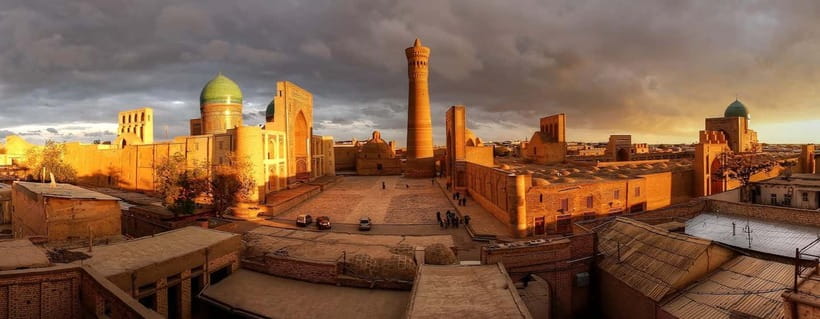
At $55 per person, this is a mid-priced walking tour rather than a bargain-basement orientation. The value comes from having an English-speaking guide for 4.5 hours and seeing a large number of major sites in one organized route.
The group format keeps the price below what you would normally pay for a fully private guide. The important point is to read the group description carefully: the tour is generally shared with around 10 to 15 people. Some booking information calls it a private group, but the specific note says it is not a private tour unless you contact the provider to arrange one.
That distinction affects the experience. With a group, you may have less freedom to linger, ask long individual questions, or change the route. In return, you meet other people and get a lower per-person cost. The group size is still small enough to feel more personal than a large flag-led tour, but it is not the same as having Hamza to yourself.
Your extra costs include entrance tickets, lunch, dinner, accommodation, and any transport you use to reach or leave the route. If you are planning a full day around this activity, leave time and money for meals and independent visits after the walk.
Free cancellation up to 24 hours before the activity and reserve-now, pay-later booking make it easier to fit the tour around changing train or flight plans. The tour is listed as wheelchair accessible, though the practical ease of every old lane and monument entrance is not explained in the supplied details.
Best timing, group fit, and what to bring
Several people found the tour useful on their first day or first evening in Bukhara. That makes sense. Once you know where Lyabi Khauz, Poi Kalan, the trade domes, and the Samanid Mausoleum are located, independent sightseeing becomes much easier.
The timing can also suit people arriving in the morning who want a guided orientation later in the day. Bukhara is particularly attractive after dark, and the route can help you recognize the monuments when you return to them in the evening.
Weather matters. The walk has taken place successfully in rain, but you should prepare for sun as well. Bring:
- Water
- A sun hat
- A camera
- A charged smartphone
- Comfortable walking shoes
Wear clothing suitable for visits to religious and historic sites. The route includes mosques and madrasahs, so modest dress is a sensible choice.
This tour suits you best if you like history, architecture, and questions more than staged entertainment. It is also a good match if you want shopping and restaurant suggestions without booking a separate food or market tour.
You may want a private booking instead if you have mobility concerns, a tight photographic schedule, or a strong preference for spending ten or twenty minutes at every stop. Contact the provider about a private option rather than assuming the standard $55 booking is private.
Should you book the Bukhara walking tour?
I would book this tour if you want a clear first look at Bukhara and care about understanding the city rather than simply checking off monuments. Hamza’s strength is the historical thread that links the buildings, along with practical advice about food and shopping. The route also gives you a helpful plan for exploring on your own afterward.
I would skip it if you dislike group walks, already have a private guide, or want long visits inside every monument. Keep the group size and extra entrance fees in mind, and treat the tour as a strong half-day orientation rather than a complete day of private sightseeing.
For most first-time visitors, the combination of major landmarks, old market streets, architecture, and approachable English commentary makes the $55 fee worthwhile. Book it early in your stay, then use the rest of your time to return to the places that deserve a slower look.
FAQ
How long does the Bukhara walking tour last?
The tour lasts approximately 4.5 hours. Although it is sometimes described as a one-day Bukhara tour, the listed duration is a half-day walking experience.
Where does the tour begin?
The meeting point is near the donkey statue by Nadir Divan Begi Madrasah.
Where does the tour finish?
The route finishes at the Ismail Samani Mausoleum, also referred to as the Samanid Mausoleum.
Is this a private tour?
The standard experience is a group tour with around 10 to 15 people. The booking information also uses the term private group, but the specific instructions say it is not a private tour. You can contact the provider about arranging a private option.
What language is the tour in?
The live tour guide speaks English.
Are entrance tickets included?
No. Entrance tickets are not included and can be paid for on the spot. Lunch, dinner, accommodation, transport during the tour, and travel tickets are also excluded.
What should I bring?
Bring water, a sun hat, a camera, and a charged smartphone. Comfortable walking shoes are also a practical choice for the Old Town route.
Just added around Bukhara
- Uzbekistan 6 Days Private Tour Khiva-Bukhara-Samarkand by Train★ 5.0 · 4 reviews
- Tashkent-Samarkand-Bukhara tour-3nights/4 days★ 5.0 · 5 reviews
- 6- Day Private Tour to Tashkent, Khiva, Bukhara and Samarkand★ 5.0 · 5 reviews
- Bukhara Walking Tour★ 5.0 · 4 reviews
- Bukhara in a Day History, Culture, and Local Insight Private Tour★ 5.0 · 4 reviews
- Full-Day Private Guided Tour to Islamic 7 Saints of Bukhara★ 4.5 · 3 reviews
- A Complete Chapter To Old Bukhara★ 5.0 · 5 reviews
- 2 Day Ukhum Hiking Tour from Bukhara★ 5.0 · 4 reviews
Walking Tours, compared.
Samarkand One Day Tour: one day walking & group tour
Read our review →
Khiva Historical City Highlights Guided Walking Tour
Read our review →
Tashkent Walking Tour with Local Lady / Gentleman
Read our review →Browse the lists this tour appears in