
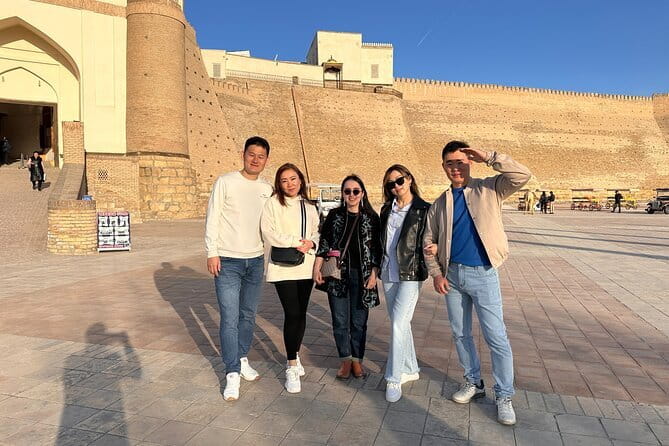
Reviewed · CITY TOURS
City Tour Around Bukhara
Bukhara is best understood on foot, one story and one courtyard at a time. This private tour with Kamilla Yu links the city’s major monuments with working crafts, local food, music, and everyday Uzbek culture. You may even receive a handmade message from the past, a small personal touch that gives the old city a playful voice.
I like the way Kamilla keeps the history short and clear instead of burying you under dates. I also like the chance to see real artisans making puppets, carving wood, embroidering gold, shaping metal, or producing fabric. The main consideration is pace: eleven stops in four to six hours can feel full, and admission fees at several sites are extra.
Key points to know before booking
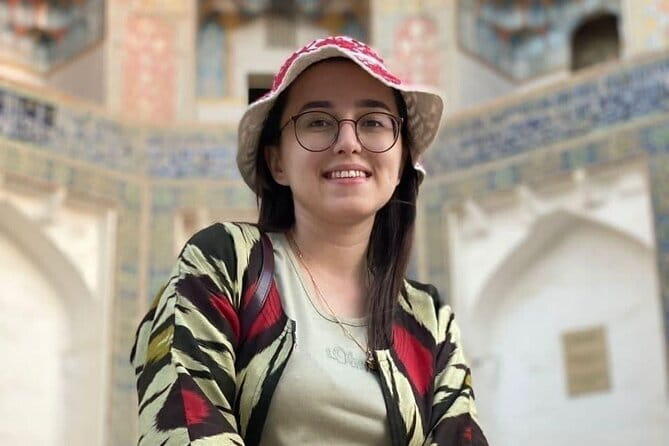
- A private tour for up to six people: You get Kamilla’s attention rather than sharing the day with a large group.
- A strong mix of monuments and daily life: The route includes mausoleums, mosques, madrasas, trading domes, craft workshops, food, and traditions.
- A thoughtful personal touch: Handmade messages from the past are included.
- A central finish: You end at Lyabi Hauz, the heart of Bukhara’s old city, close to restaurants and the famous pond.
- Flexible interests: The schedule can make room for photographs, shopping, local food, artisan visits, and general questions about life in Uzbekistan.
- A full half-day: The route lasts about four to six hours, with short coffee or tea breaks possible, though those drinks are not included.
Why this Bukhara tour feels different
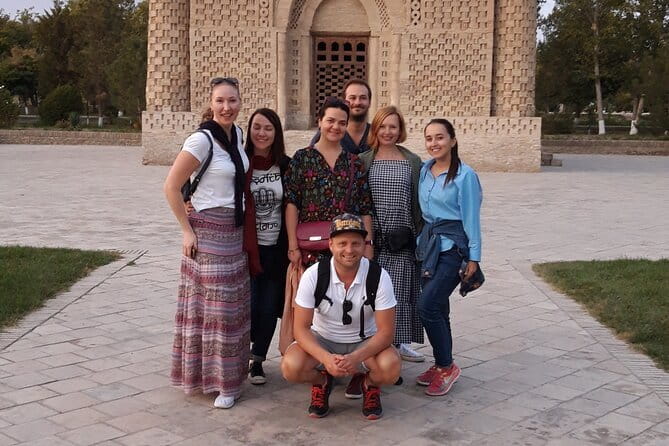
Many city tours in Bukhara move from one blue-tiled monument to the next. This one adds the people and skills behind the buildings. You may see how a puppet is made, watch a blacksmith work, observe gold embroidery, or learn how fabric and wood are handled by local craftspeople.
That matters because Bukhara can sometimes feel like an open-air museum. Kamilla’s approach helps connect the old city to present-day Uzbekistan. You are not only hearing about Silk Road commerce and religious education. You are also asking questions about modern Uzbek life, local customs, food, and family traditions.
The guide’s style is conversational and adaptable. Her English is described as strong and natural, and she is willing to slow down for photographs or shopping. She has also adjusted routes for guests who wanted a plov lunch, a craft visit, or more time discussing Uzbek society.
The handmade messages are another unusual feature. They are included in the price and give you a physical souvenir tied to the theme of old letters and forgotten voices. Do not expect a formal museum program. This is a personal experience shaped around conversation and discovery.
More City Tours in Bukhara:
- Bukhara: Historical City Highlights Guided Walking Tour
★ 4.6 · 102 reviews - Bukhara Full Day Old City Private Tour
★ 5.0 · 46 reviews - Bukhara Historical City Highlights Guided Walking Tour
★ 4.5 · 16 reviews
Starting at Ismail Samani Mausoleum
The tour begins at Ismail Samani Mausoleum, one of Bukhara’s earliest surviving monuments. Built in the ninth or tenth century, it is made entirely of brick, with no colorful tile covering the exterior.
The detail to watch is the brickwork. More than 20 laying patterns are used to create changes in light, shadow, and texture. From a distance, the mausoleum looks restrained. Up close, the walls become a study in geometry and careful construction.
You have about 30 minutes here. The admission ticket is not included, so set aside some local currency or confirm the current fee with Kamilla before entering. Starting here also means you begin away from the busiest central sights, with a quieter architectural introduction to Bukhara.
Chashmai Ayub and the meaning of sacred water
The next stop is Chashmai Ayub Mausoleum, a holy site connected with three religions. It is associated with the grave of the Prophet Job and includes a natural well whose water is believed to help people with skin ailments.
The complex dates from the 12th century. You have about 20 minutes, enough for a focused visit rather than a long examination of every detail. Admission is not included.
This stop is useful for understanding how several religious traditions have shaped Bukhara. Kamilla can explain the connection between the sacred place, the well, and the building without turning the visit into a long list of names.
Bolo Hauz Mosque and its wooden pillars
Bolo Hauz Mosque is known for its carved wooden columns. There are 20 pillars, though the mosque is often called the mosque with 40 pillars. Kamilla explains the reason for that name and how the building was used to announce news about a new ruler.
You have around 30 minutes here, and admission is free. Look upward and along the entrance porch, where the woodwork creates a very different mood from the brick and tile monuments elsewhere in the city.
This is one of the stops where a guide adds real value. Without context, you may simply see a handsome mosque with an impressive porch. With explanation, the building becomes part of Bukhara’s civic and political life.
More things to do in Bukhara:
- Transfer: Bukhara – Khiva via Ancient Fortresses
★ 4.5 · 101 reviews - Best of Bukhara: All Day Private Old Town Tour
★ 5.0 · 66 reviews - Best of Bukhara: All Day Private Old Town Tour
★ 4.9 · 62 reviews - 2 Days Tour to Bukhara and Samarkand from Tashkent by train
★ 5.0 · 53 reviews
The Ark of Bukhara, fortress and viewpoint
The Ark is Bukhara’s great citadel, a massive fortress where rulers lived from the fourth century BC until 1920. The visit lasts about 40 minutes, and admission is not included.
Parts of the citadel are ruins, but the site still gives you a strong sense of power and scale. You also get a city view from the top. This is a good place to pause and understand how Bukhara was organized around its ruling center.
The Ark can be one of the more substantial visits on the route. If you want detailed photographs or time inside every accessible section, the four-hour version of the tour may feel tight. Tell Kamilla at the beginning if the fortress is a priority for you.
Kalon Minaret and Poi Kalyan Mosque
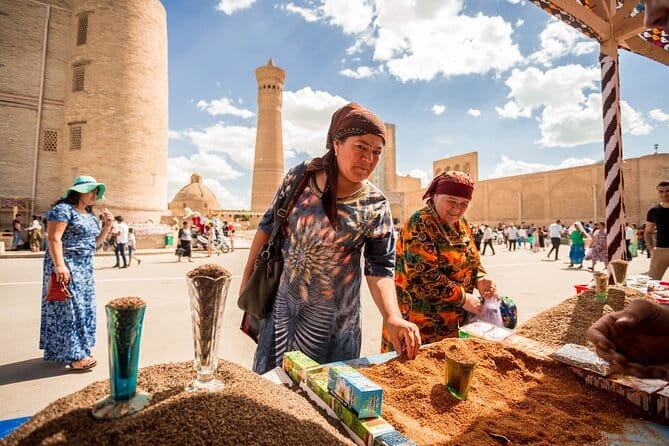
The Great Minaret of the Kalon is one of Bukhara’s defining sights. Built in the 12th century, it has survived without falling, and the tour explains both its sturdy construction and its changing purposes over time.
You spend about 25 minutes at the minaret. Admission is free. In summer, evening tours are available, allowing you to see the illuminated minaret. That option may be especially appealing during hot weather, although evening availability is seasonal.
Nearby, Poi Kalyan Mosque provides another major stop. It remains active and dates from the 16th century. The mosque is known for its 288 domes, and the route allows about 25 minutes here. Admission is not included.
The mosque rewards a slow look across the roofline and corners. Even if you are not focused on architectural detail, the repeated domes show how a large religious complex was built as a unified whole.
Mir-i-Arab Madrasa and religious education
Mir-i-Arab Madrasa has continued to function as a religious college since the 16th century. The visit lasts around 25 minutes, and admission is free. The tour explains how religious education worked and how a traditional madrasa was organized.
This is a useful counterpoint to the Ark. The fortress shows political authority, while the madrasa shows religious learning and institutional life. You may also see how courtyards, classrooms, and worship spaces fit into the standard madrasa design.
The madrasa is still functioning, so the experience is not simply about a preserved building. Be prepared for the emphasis to remain respectful and educational rather than purely photographic.
Three trading domes and the Silk Road economy
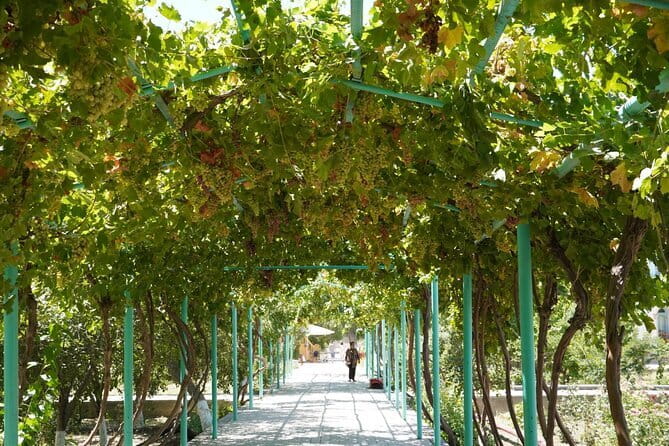
Bukhara’s trading domes bring the commercial side of the city into view. You cross three domed marketplaces, each designed for a particular type of trade.
The visit lasts about 40 minutes and costs nothing to enter. These spaces help explain how merchants bought and sold goods in a city positioned along major trade routes. The point is not only to admire the vaulted roofs. You also learn how the domes were arranged for business and how traders sought profit.
This is a good stretch of the tour for shopping. The route can also allow time for souvenirs, especially if you tell Kamilla what you are looking for. Keep in mind that browsing and bargaining may lengthen the day, so the six-hour estimate is more realistic if shopping matters to you.
Kosh Madrasah and two religious styles
Kosh Madrasah places two different madrasas in the same square. Their styles differ, and the visit includes an original 17th-century classroom and a mosque designed in a cave-like style.
You have about 40 minutes here, with admission not included. The site also introduces two major streams of religious thought, giving you a chance to ask questions about how religious schools differed.
This may be one of the most rewarding stops for anyone who likes comparison. Instead of looking at one building in isolation, you can see how two institutions share space while expressing different design choices.
Magoki Attori Mosque and the carpet collection
Magoki Attori Mosque is described as Bukhara’s oldest mosque, dating from the 12th century and set below the present ground level. The visit takes about 20 minutes, and admission is not included.
The site has an unusual religious past. It was once a place of worship for Judaism and Islam, a detail that adds another layer to Bukhara’s story of shared communities and changing beliefs.
A carpet museum is also part of the stop. This gives you a chance to shift from architecture to textile work and decorative tradition. If carpets are not a major interest, the visit remains short enough not to dominate the day.
Ending at Lyabi Hauz
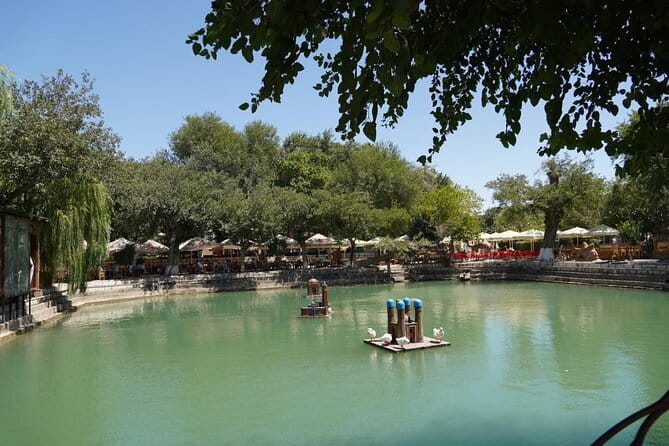
The tour finishes at Lyabi Hauz, the center of Bukhara’s old city. You spend about 30 minutes around a large pond and a complex that includes a mosque, two distinctive madrasas, and a caravanserai, the roadside hotel once used by merchants.
This is a sensible place to end. You are close to the old city’s restaurants and further sightseeing, rather than being dropped at an isolated monument. It also gives the route a natural final chapter: after mausoleums, rulers, schools, and trade, you arrive at the social center of old Bukhara.
You can continue your evening here, arrange a meal, or use the square as a reference point for finding your way around. The endpoint is especially convenient if you are staying in or near the historic center.
Food, crafts, music, and breaks
The core route is architectural, but the experience can include much more. Kamilla offers local food stops and can organize a masterclass in preparing a traditional meal or bread if requested.
The exact meal or workshop is not specified in advance, so you should ask about options when booking. The same applies to local music and folk shows. They are available as part of the cultural program, but the format may vary.
Craft visits can include puppets, blacksmithing, gold embroidery, fabric making, and wood carving. These are not just shopping opportunities. Seeing the work in progress helps you understand the skill behind objects you may encounter in Bukhara’s markets.
Short coffee and tea breaks are part of the tour rhythm, but drinks are not included. Bring money for refreshments and for any admission fees, food, or crafts you choose to purchase.
Price, timing, and practical value
The cost is $66 per group of up to six people. That is a strong value if you are traveling with family or friends, since the fee is not charged per person. For a full group, the per-person cost is especially low for a private guide covering major sights over four to six hours.
For one or two people, the price is less of a bargain than it is for a group, but the private format still has practical value. You can ask questions freely, adjust the pace, and request more time for photos, shopping, food, or crafts.
Several entrance fees are extra. Tickets are not included at Ismail Samani Mausoleum, Chashmai Ayub, the Ark, Poi Kalyan Mosque, Kosh Madrasah, and Magoki Attori Mosque and Carpet Museum. The Great Minaret, Mir-i-Arab Madrasa, Bolo Hauz Mosque, trading domes, and Lyabi Hauz are listed as free stops.
The stated duration is approximate. Eleven stops require steady movement, and the day will run closer to six hours if you add lunch, a workshop, shopping, or long photo breaks. The tour is offered Monday through Friday from 9 a.m. to 6 p.m. Evening departures are available in summer.
Pickup is offered, and the listed meeting point is Ismail Samani Mausoleum. The tour ends at Lyabi Hauz. Confirmation arrives at booking, and the activity is suitable for most people. It is a private experience, so only your group participates.
Who will enjoy this tour most
I would choose this tour if you want Bukhara explained by a local guide rather than simply photographed. It suits first-time visitors who want the major monuments in one organized route, but it also works well for people interested in food, crafts, modern Uzbek life, and religious traditions.
Families may appreciate the short stories, craft demonstrations, and handmade messages more than a formal lecture. Small groups of friends receive especially good value from the $66 group price.
You should think twice if you want a highly specialized architectural tour with long periods at each monument. The route covers a lot, and Kamilla’s style favors clear explanations, cultural connections, and conversation over exhaustive academic detail.
Free cancellation is available up to 24 hours before the start time for a full refund. Changes made within 24 hours are not accepted, and poor weather may lead to a new date or a full refund.
Should you book City Tour Around Bukhara?
Book it if you want a broad, human-scale introduction to Bukhara. Kamilla’s greatest strength is her ability to connect old buildings with present-day life, and the chance to add artisans, food, music, and local customs makes this more than a monument checklist.
The best way to use the tour is to tell her your priorities in advance. Ask for more time at the Ark, request a plov stop, arrange a bread workshop, or make room for crafts and shopping. If you do that, allow closer to six hours.
Skip it only if you prefer exploring alone at a very slow pace or want every minute devoted to formal historical detail. For most people seeking a private, flexible, and culture-focused introduction to Bukhara, this is a well-priced choice.
FAQ
How long does the City Tour Around Bukhara last?
The tour lasts approximately four to six hours. The final length depends on the pace, photographs, shopping, food stops, and any added cultural activities.
How much does the tour cost?
The price is $66 per group of up to six people.
Is this a private tour?
Yes. Only your group participates.
Where does the tour start?
It starts at Ismail Samani Mausoleum in Bukhara.
Where does the tour end?
It ends at Lyabi Hauz, also called Lyabi Khause Square, in the center of Bukhara’s old city.
Is hotel pickup available?
Pickup is offered.
Are admission fees included?
No. Admission is not included for several stops, including Ismail Samani Mausoleum, Chashmai Ayub Mausoleum, the Ark of Bukhara, Poi Kalyan Mosque, Kosh Madrasah, and Magoki Attori Mosque and Carpet Museum.
Is coffee or tea included?
No. Coffee and tea are not included, although short breaks for them are part of the tour.
Can the tour include food or a cooking class?
Yes. Kamilla can organize a masterclass for preparing a traditional meal or bread if requested. Local food stops can also be added.
Is evening touring available?
Evening tours are available during the summer period.
Just added around Bukhara
- Uzbekistan 6 Days Private Tour Khiva-Bukhara-Samarkand by Train★ 5.0 · 4 reviews
- Tashkent-Samarkand-Bukhara tour-3nights/4 days★ 5.0 · 5 reviews
- 6- Day Private Tour to Tashkent, Khiva, Bukhara and Samarkand★ 5.0 · 5 reviews
- Full-Day Private Guided Tour to Islamic 7 Saints of Bukhara★ 4.5 · 3 reviews
- Bukhara Walking Tour★ 5.0 · 4 reviews
- Bukhara in a Day History, Culture, and Local Insight Private Tour★ 5.0 · 4 reviews
- A Complete Chapter To Old Bukhara★ 5.0 · 5 reviews
- 2 Day Ukhum Hiking Tour from Bukhara★ 5.0 · 4 reviews
City Tours, compared.
Private Samarkand City Tour With Transportation
Read our review →
A City Tour Of Samarkand: The Pearl Of The East
Read our review →
Browse the lists this tour appears in