
Reviewed · HISTORICAL TOURS
Bukhara in a Day History, Culture, and Local Insight Private Tour
Bukhara packs centuries of Silk Road trade, faith, craft, and royal power into a compact old city. This private walk takes you from the Nasreddin Afandi statue through Lyab-i-Hauz, the Trading Domes, Poi Kalyan, and the Ark, with guide Yulduz explaining how the buildings fit together. I like the efficient route and the personal pace, especially if you want major sights without a large group. I also like the human touches: carpet weaving, puppet making, ceramics, food, and green tea. The catch is that several entrance fees are extra, and the four-hour schedule leaves little room for a slow meal or long shopping stops.
Key points at a glance
- A private group rate of $80 covers up to six people, making the tour especially good value for families and small groups.
- Guide Yulduz sets a flexible pace, with clear explanations of Bukhara’s monuments and culture.
- The route covers the old city’s main landmarks, ending near the Ark rather than returning to the starting point.
- Craft and food details add local context, including silk carpets, puppets, ceramics, plov, shashlik, manti, flatbread, and green tea.
- Admission fees are not all included, with the listed charge for several sites totaling $7 per person.
- The tour lasts about 4 hours 20 minutes, beginning at 9:00 a.m. near the Khodja Nasreddin statue.
A smart first walk through Bukhara
I like this experience because it gives you a quick but substantial introduction to Bukhara without the drag of a fixed group. You meet at the Nasreddin Afandi statue, an easy landmark near Lyab-i-Hauz, and finish on Afrosiab Street beside the Ark. That one-way route matters: you see the old center in a logical order and do not spend the final minutes retracing your steps.
The $80 price is charged per group of up to six, not per person. Fill the group and the arithmetic is excellent. Even with the listed $7-per-person admission charge, the total remains reasonable for a private guide. For one or two people, the price is less of a bargain, but the privacy and flexible pace still have real value.
The main limitation is time. The advertised duration is about 4 hours 20 minutes, while the stops themselves are fairly brisk. You can see the major sights and ask plenty of questions, but this is not the right choice if you want long museum visits, a leisurely lunch, or extended carpet shopping.
More Private Tours in Bukhara
- Best of Bukhara: All Day Private Old Town Tour
★ 5.0 · 66 reviews - Best of Bukhara: All Day Private Old Town Tour
★ 4.9 · 62 reviews - Bukhara Full Day Old City Private Tour
★ 5.0 · 46 reviews
Meeting Nasreddin Afandi at Lyab-i-Hauz
Your morning begins at 9:00 a.m. at the statue of Nasreddin Afandi. This comic figure from Central Asian folklore is a fitting meeting point, since Bukhara’s old center mixes serious religious monuments with lively stories and local character.
The first stop is Lyab-i-Hauz, a historic pool and gathering area at the heart of the old city. You have about 40 minutes here. That is enough time to get your bearings, hear about the setting, and begin understanding how public water spaces shaped city life.
The guide’s role is important at this early stage. Bukhara can look like a string of attractive brick facades until someone explains the links between mosques, madrasas, markets, and caravan routes. Yulduz has been praised for making the history clear, answering questions, and adjusting the pace. If you have a particular interest in architecture, religion, or daily life, tell her early so the walk can fit your curiosity.
Lyab-i-Hauz is listed with no admission fee. You receive bottled water, but meals are not included, so do not expect the tour to function as a food tour despite its attention to local dishes.
Silk Road shopping under the Trading Domes
From Lyab-i-Hauz, the route continues to Bukhara’s covered Trading Domes. These domed markets date mainly from the 16th and 17th centuries and once served merchants moving goods across the Silk Road.
You will encounter the main market structures, including Toqi Sarrafon, traditionally linked with money changers. The domes are more than shopping areas. Their shape, location, and purpose show how commerce was organized in a hot, dry city where shade was practical as well as pleasant.
Allow about 40 minutes. That gives you time to look at the architecture and browse, though it may not be enough for serious bargaining or a careful purchase. If you are considering a carpet, ask questions rather than rushing. The tour’s craft focus can help you understand what you are seeing before you buy.
The food side of Bukhara also fits naturally here. The experience introduces you to dishes such as plov, shashlik, manti, fresh flatbread, and green tea. These foods are not part of the tour price, but they give useful context for what to order later. The food description is best treated as cultural guidance, not a promised tasting session.
Magoki Attori and the story beneath the city
The next stop is Magoki Attori Mosque, one of Bukhara’s oldest surviving religious sites. You have about 20 minutes here, including time connected with the carpet museum.
The site’s importance comes from its age and layers of use. It began as a sacred mosque and was later expanded. The setting gives you a chance to see how Bukhara’s religious buildings changed over time rather than appearing as isolated monuments.
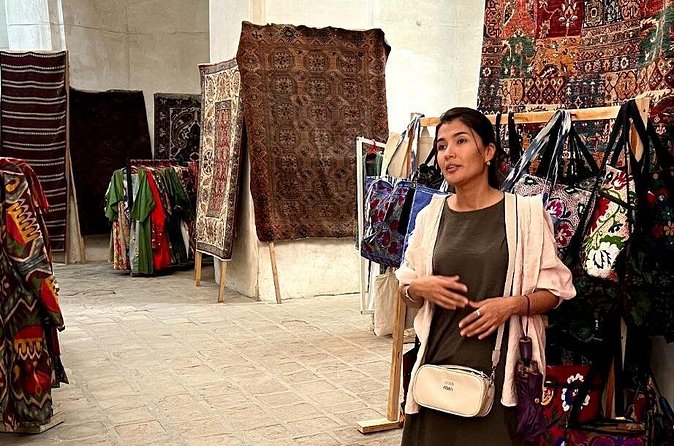
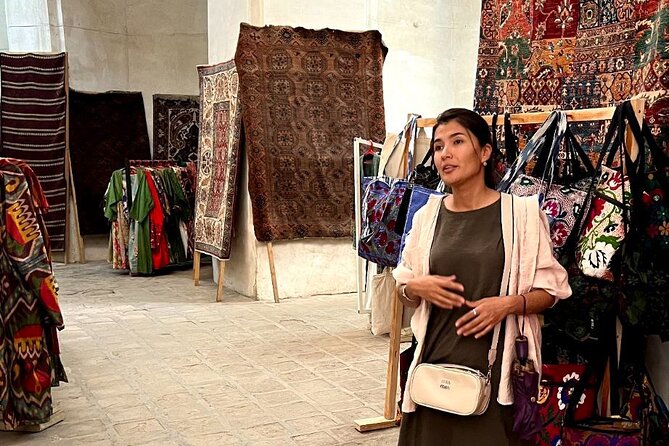
This is also where the carpet discussion becomes especially useful. You can learn how handmade silk carpets differ from machine-made silk carpets. Handmade pieces use intricate knots and natural dyes, so small variations are part of their character. Machine-made carpets tend to have a more even finish.
The distinction matters if you plan to shop in the Trading Domes. A short explanation from a guide will not replace a professional appraisal, but it can help you ask better questions about materials, knotting, and dye. Admission here is listed as not included, so keep some money ready.
More history walks around Bukhara:
- Bukhara: Historical City Highlights Guided Walking Tour
★ 4.6 · 102 reviews - Bukhara Historical City Highlights Guided Walking Tour
★ 4.5 · 16 reviews - Samarkand: Historical Monuments Guided Walking Tour
★ 4.8 · 446 reviews - Khiva: Historical City Highlights Guided Walking Tour
★ 4.8 · 156 reviews
Two madrasas, two different stories
The Ulugbek Madrasa receives about 15 minutes. Built in the 15th century by Ulugbek, the Timurid ruler and astronomer, it connects Bukhara to an age when education, religion, mathematics, and astronomy shared the same architectural world.
This is a short stop, so concentrate on the facade and the guide’s explanation rather than expecting a long interior visit. Ulugbek’s name gives the building an extra layer of interest: he was not only a ruler but also a serious scholar of the stars.
Next comes the Abdulaziz Khan Madrasa, with about 10 minutes allotted. Begun in the 17th century, it was never fully completed, yet its design includes striking architectural details. An unfinished monument can be useful because it lets you see ambition without the polished final product.
The timing here is tight. I would treat both madrasas as focused architectural stops. If you want detailed study of tilework or a slower look at decorative elements, you may need to return later on your own.
Admission information is slightly mixed across the tour details, but the listed cost says the entry fee for Abdulazizkhan is part of a $7-per-person charge covering several sites. Confirm the exact inclusions when booking.
Poi Kalyan, Bukhara’s great visual moment
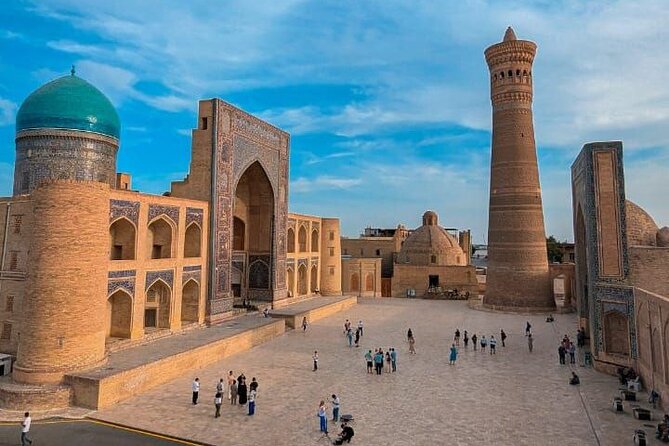
The Poi Kalyan complex is one of the tour’s major highlights, with about 30 minutes assigned to it. The complex includes the famous Kalon Minaret, a 12th-century tower known for its height and patterned brickwork.
The minaret served both religious and practical roles, including the call to prayer and use as a watchtower. Its scale helps explain Bukhara’s power better than a date on a plaque can. Look closely at the brick patterns, since the decoration depends on texture and repeated geometry rather than bright surface color alone.
The complex also includes the Kalon Mosque and related historic buildings. The guide can connect the separate structures into one civic and religious center, which is far more useful than simply collecting photographs.
Poi Kalyan is listed among the places with an admission charge. The stated amount is $7 per person for the set of listed entries, including Poi Kalon Mosque. Since admission wording can be easy to misunderstand, ask whether the fee is a combined charge or collected separately at the gates.
Thirty minutes will give you a strong introduction, but not an unhurried visit. Keep your camera ready, then put it away long enough to notice the scale of the courtyard and minaret.
Inside the Ark, Bukhara’s massive citadel
The Ark of Bukhara receives the longest stop, one hour. That tells you where the tour places its greatest historical weight.
The Ark is a huge fortress in the center of Bukhara and has served as a seat of power for more than two thousand years. Its walls and raised position make it feel different from the open market streets and courtyard monuments you see earlier.
An hour allows your guide to explain the citadel’s role as a royal residence and political center. It also gives you more time to take in the site without being hurried from one facade to another. Still, the Ark is large, and a single hour cannot cover every corner in depth.
The admission fee is not included in the basic tour price. The listed information places the Ark among the entries covered by the $7-per-person charge. Budget for this separately from the $80 group fee.
The tour ends near the Ark on Afrosiab Street. That is convenient if you want to continue exploring the citadel area, but it means you should not assume the guide will walk you back to Lyab-i-Hauz. If you need to return to your hotel, plan that separately.
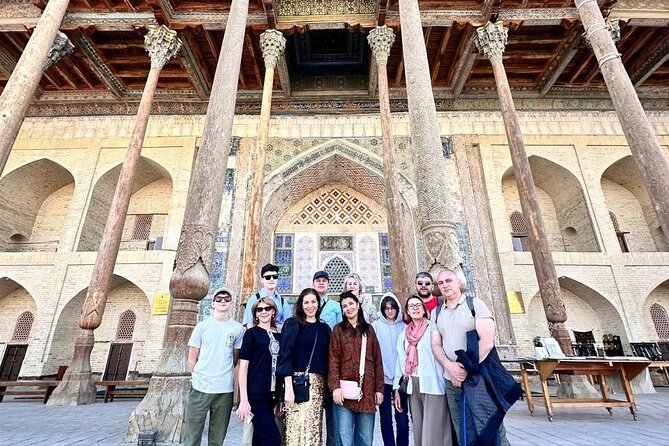
Bolo Hauz and Bukhara’s wooden columns
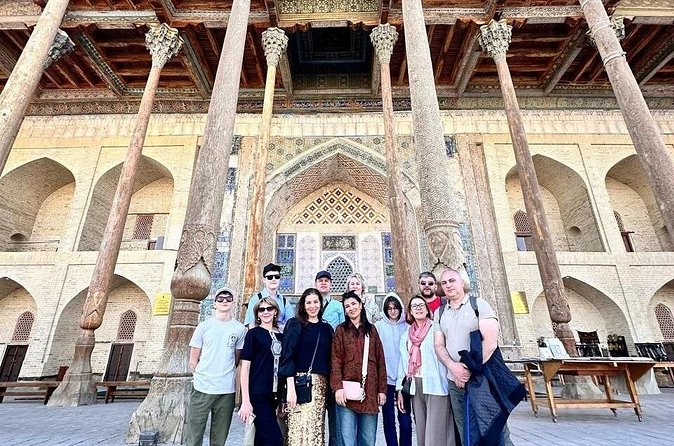
The final listed stop is Bolo Hauz Mosque, near the Ark. You have about 15 minutes here, and admission is listed as free.
The mosque dates from the early 18th century and is known for its carved wooden columns. After the brick-heavy monuments earlier in the walk, the woodwork provides a welcome change in texture and design.
This is a compact final stop, not a long worship or museum visit. The setting near the Ark makes sense geographically and gives the tour a quiet architectural finish before you end on Afrosiab Street.
Crafts, food, and the details between monuments
The strongest feature of this experience is that it does not treat Bukhara as a row of old buildings. The cultural themes give you practical ways to understand the city today.
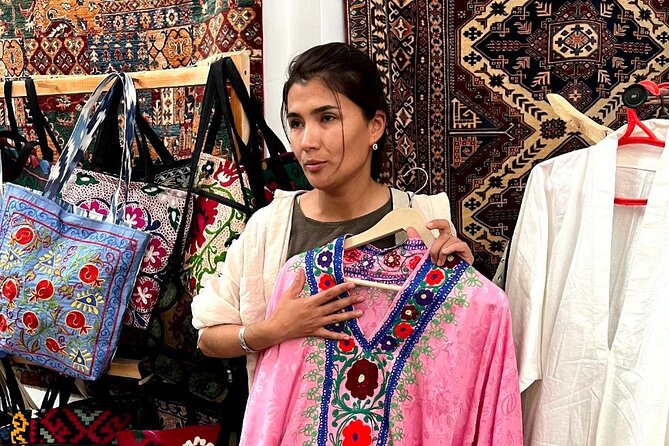
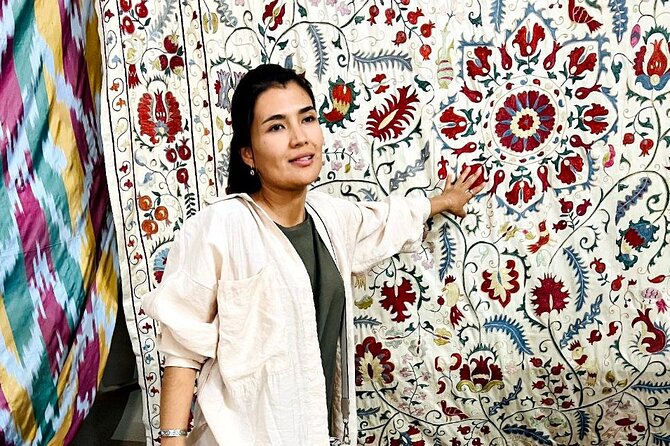
Silk carpet weaving is one example. You can learn about handmade silk, natural dyes, and the labor behind tightly knotted designs. You may also visit a local workshop and see artisans at work, although the exact workshop schedule is not specified, so treat that as part of the planned cultural focus rather than a guaranteed performance.
The puppet workshop offers another change of pace. Craftsmen make colorful marionettes used in storytelling performances. This is a useful reminder that local culture is not only found in grand mosques and fortresses.
Ceramics bring in an unusual detail: Bukhara’s famous blue color is connected with a desert plant. The supplied information does not explain the full process, so ask the guide to show how the plant is used and what part it plays in the color.
Food is discussed in equally practical terms. Plov, shashlik, manti, flatbread, and green tea are all part of the local food picture. You should not read this as an included meal. Meals are expressly excluded, but the information can help you choose what to eat after the walk.
Cost, pace, and who gets the best value
At $80 per group of up to six, this is strongest for a small party that wants a private guide. Six people paying together get a very low per-person rate. Two people still receive a private experience, but the cost per person rises.
Add the listed $7 admission fee per person for the specified sites. Bottled water and a professional guide are included. Meals, restroom access on board, and entrance fees are not included. Since this is a walking experience with no stated transport segment, wear comfortable shoes and bring a little extra water if you prefer more than the bottle supplied.
The tour suits first-time visitors who want the main sights in one morning. It also works well for families or friends who want to ask questions without holding up a large group. Most people can participate, service animals are allowed, and the meeting point is near public transportation.
It is less suitable if you prefer a slow, unstructured day. The schedule is efficient, and some stops last only 10 or 15 minutes. You will get a broad understanding of Bukhara, then can return independently to the places that caught your attention.
Booking confirmation is provided at the time of purchase. Free cancellation is available if you cancel at least 24 hours before the local start time. Changes or cancellations inside that window are not refunded.
Should you book the Bukhara day tour?
Book it if you want a private, well-paced introduction to Bukhara’s main old-city sights, especially if you are visiting for a short time. The route covers the monuments most people hope to see, and Yulduz’s flexible approach makes it easier to match the walk to your interests.
The craft and food themes are another reason to choose it. They turn a standard monument walk into a broader look at carpets, puppets, ceramics, and daily culture.
Skip it if you want a full food tasting, long shopping sessions, or several hours inside each monument. In that case, use this tour as your orientation, then set aside another day to revisit the Ark, Poi Kalyan, and the Trading Domes at your own speed.
FAQ
Where does the tour begin?
The meeting point is the Khodja Nasreddin statue near Lyab-i-Hauz, listed as QCFC+5FM in Bukhara.
What time does the tour start?
The tour starts at 9:00 a.m.
Where does the tour end?
It ends on Afrosiab Street near the Ark of Bukhara.
How long does the experience last?
The stated duration is approximately 4 hours and 20 minutes.
How many people can join for the listed price?
The $80 price covers one private group of up to six people.
Is the tour private?
Yes. Only your group participates in the activity.
Is a guide included?
Yes. A professional guide is included, and the guide named in the tour information is Yulduz.
Are entrance fees included?
No. The listed information specifies a $7-per-person admission charge for Lyabi Hauz, Abdulazizkhan, Poi Kalon Mosque, and the Ark of Bukhara. Confirm the exact breakdown when booking.
Is food included?
No. Meals are not included, though the tour discusses local foods such as plov, shashlik, manti, flatbread, and green tea.
Can I cancel for a full refund?
Yes, if you cancel at least 24 hours before the experience start time. Cancellations or changes made less than 24 hours before the start are not refunded.
Just added around Bukhara
- Uzbekistan 6 Days Private Tour Khiva-Bukhara-Samarkand by Train★ 5.0 · 4 reviews
- Tashkent-Samarkand-Bukhara tour-3nights/4 days★ 5.0 · 5 reviews
- 6- Day Private Tour to Tashkent, Khiva, Bukhara and Samarkand★ 5.0 · 5 reviews
- Bukhara Walking Tour★ 5.0 · 4 reviews
- Full-Day Private Guided Tour to Islamic 7 Saints of Bukhara★ 4.5 · 3 reviews
- A Complete Chapter To Old Bukhara★ 5.0 · 5 reviews
- 2 Day Ukhum Hiking Tour from Bukhara★ 5.0 · 4 reviews
- Bukhara: Full-Day Guided Tour with English-Speaking Guide★ 5.0 · 4 reviews
Historical Tours, compared.
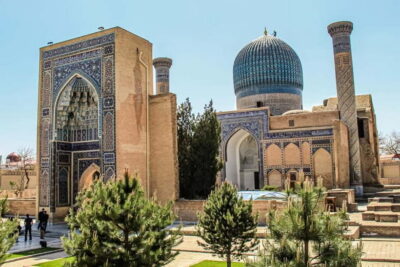
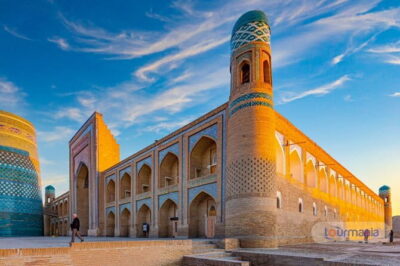
Khiva Historical City Highlights Guided Walking Tour
Read our review →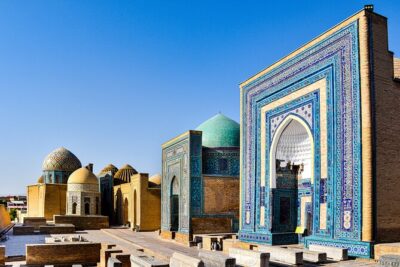
Samarkand Historical City Highlights Guided Walking Tour
Read our review →
Private Guided Tour Samarkand city history and culture
Read our review →Browse the lists this tour appears in