
Reviewed · ANCIENT FORTRESS TOURS
Private Daytrip to 7 Ancient Fortresses of Khorezm
The striking part of this day is the sheer number of ancient sites packed into one run through the Khorezm region. You move from royal ruins at Toprak Kala to remote mud-brick fortresses, then pause at Akchakul Lake, where local fish adds a welcome change from a day of dust and history.
I like the private air-conditioned car, especially in a hot, exposed area. I also like the chance to see several fortresses that are hard to connect by ordinary public transport. The main concern is the guide service: on some departures, English conversation and site knowledge may be limited, with audio files doing much of the explaining.
Key points at a glance
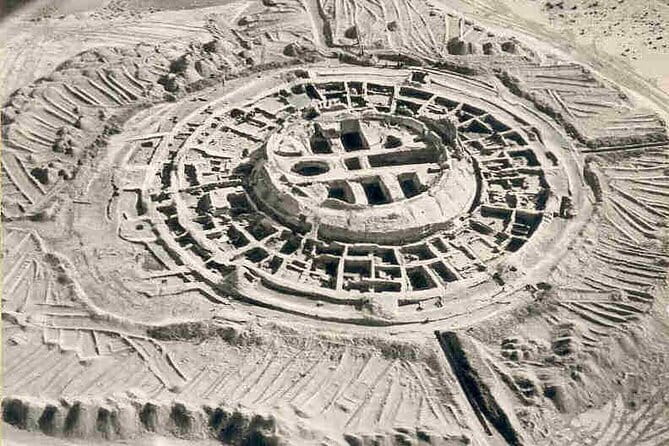
- Seven major stops in about nine hours: You visit Toprak Kala, Guldursun Kala, Janbas Kala, Ayaz Kala, Qizil Kala, Duman Kala, and Akchakul Lake.
- A real private-car outing: Pickup and drop-off are provided from Khiva or Urgench in an air-conditioned sedan.
- Ayaz Kala gets the most time: Plan on about one hour here, compared with roughly 30 minutes at most other stops.
- Some sites are free, some are not: Admission is not included at Toprak Kala and Qizil Kala, while the other listed stops have free entry.
- Audio materials help fill the gaps: Audio-guide files may be supplied before the trip, useful if your driver-guide’s English is limited.
- Lunch is not included: Akchakul Lake is linked with local fish, but you should clarify the meal plan before setting out.
Why this Khorezm fortress day is worth your time
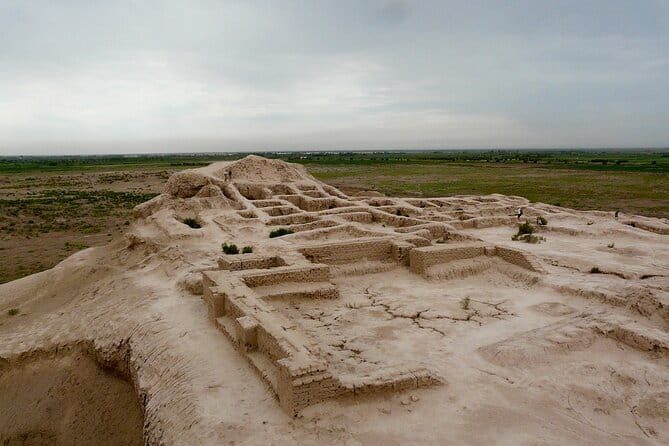
Khiva is famous for its walled old town, tiled minarets, and restored lanes. This trip takes you far beyond that polished center, into the remains of the wider Khorezm world. Here, the attractions are not ornate interiors or neatly marked museum rooms. They are broad earthen walls, battered towers, dry horizons, and the outlines of places that once protected towns, palaces, and trade routes.
I like this contrast. Khiva shows you the later khanate period in a concentrated urban setting. The fortresses show older layers, from early antique settlements to sites rebuilt in medieval times. You get a better sense of how much life existed beyond the city walls.
The trip begins at 9:00 am and lasts about nine hours. That makes it a full day, but the schedule is sensible for the number of stops. Most visits last around 30 minutes, while Ayaz Kala receives one hour. You will spend a good part of the day in the car, so the private vehicle matters more here than it would on a short city tour.
The price is $199 per group of up to three people. For three people, that works out to about $66 each for transport, pickup, drop-off, and the day’s route. For one person, it is a much more expensive outing, but you are still paying for a private vehicle and a route that would be awkward to organize independently. Entrance fees at Toprak Kala and Qizil Kala are extra, and lunch is not included.
More Day Trips in Khiva
- Daytrip From Khiva To Ancient Fortresses
★ 4.6 · 60 reviews - Daytrip from Khiva to Aral Sea Cemetery of Ships. All in one
★ 4.3 · 52 reviews - Daytrip From Khiva to Aral Sea Cemetery Of Ships . All In One
★ 4.5 · 18 reviews
Toprak Kala, a royal center in the open country
Toprak Kala is one of the strongest opening stops because it gives the day a clear sense of scale. Dating from the Kushan period, around the second and third centuries CE, it served as a royal residence of the kings of Khorezm. It first functioned as a royal sanctuary before being abandoned for a time.
You should expect ruins rather than a preserved palace. The value is in reading the site as a former center of power, with the remains spread across open ground. Audio materials are particularly useful here because the walls alone do not explain how the complex once worked.
The planned visit lasts about 30 minutes. That is enough for a focused look, but not enough for a slow archaeological study. Admission is not included, so keep a little extra money ready. The exact fee is not provided, so ask your operator before departure if you want to budget precisely.
Guldursun Kala and the remains of a fortified town
Guldursun Kala is a fortified settlement with exterior walls and towers dating to the 12th century CE. Archaeological work found pottery, bronze objects, and coins inside the site. Those finds help turn the broken walls into evidence of ordinary life, trade, and defense.
I find this kind of stop rewarding because it sits between the grand royal character of Toprak Kala and the more dramatic hilltop setting of Ayaz Kala. You are looking at a town, not only a fortress. The distinction matters: defensive walls protected people, goods, and homes, not just rulers.
The scheduled stop is 30 minutes, and admission is free. That short visit works well if you focus on the walls and towers rather than trying to inspect every detail. Wear shoes suitable for uneven ground and expect little shade.
Janbas Kala and an early defensive design
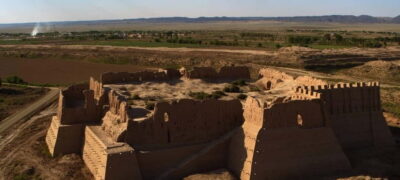
Janbas Kala, also written Jonbos Qala, has one of the more archaic fortification systems in the region. Its walls date from the Early Antique period, and all four flanking walls remain in relatively good condition. In places, they reach about 20 meters high.
This is one of the places where the physical structure tells the story. You can see how a settlement was enclosed and protected, rather than simply viewing a pile of old bricks. The height of the remaining walls also gives you a sharper sense of the labor required to build and maintain such a site.
The visit lasts around 30 minutes and entry is free. Do not expect a museum or a long guided walk. The attraction is the fortress itself, set in a broad, exposed setting. If you want photographs, this is a good place to use the short stop carefully, since the scale of the walls can be hard to capture from close up.
More Private Tours in Khiva
- Uzbekistan 6 days private tour Tas-Khiva-Buk-Sam-Tas
★ 5.0 · 45 reviews - Best of Khiva: Exclusive Private Tour!
★ 5.0 · 9 reviews - Private Bukhara-Khiva Transfer via Ancient Fortresses
★ 4.5 · 8 reviews - Ayaz Kala & Toprak Kala private fortress daytrip from Khiva
★ 3.5 · 6 reviews
Ayaz Kala, the day’s main fortress stop
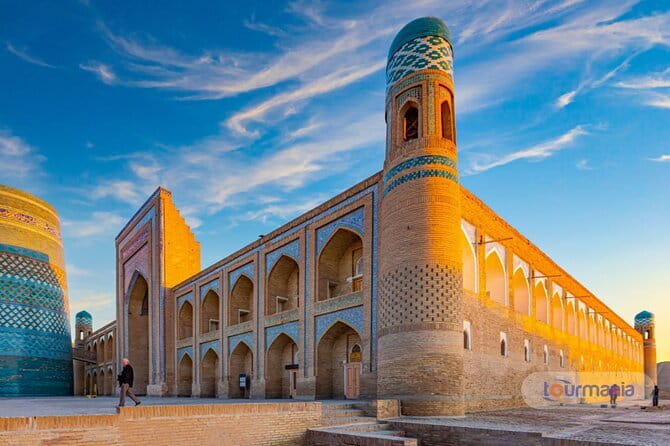
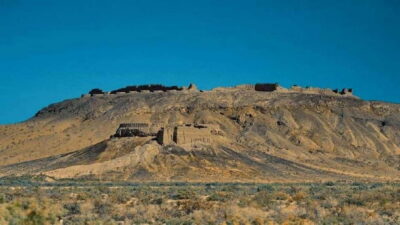
Ayaz Kala is the visual high point of the trip. It is not one fortress but three, grouped on and around a prominent hill at the eastern end of the Sultan-Uiz-dahg range. That arrangement gives the site more drama than the flatter ruins visited earlier.
You get about one hour here, twice the usual stop length. Use it. The extra time allows you to look at more than one section and to understand how the three fortresses relate to one another. The hill setting also changes your view of the surrounding country, though the exact walking conditions can vary.
This is the stop where moderate physical fitness matters most. You should be ready for uneven ground and walking around exposed ruins. The tour is not presented as an easy-access sightseeing circuit, and no special accessibility information is provided.
Entry is free. If you have limited energy, save it for Ayaz Kala rather than spending too long at an earlier stop. It is the place most likely to reward a slower pace.
Qizil Kala and layers from two different periods
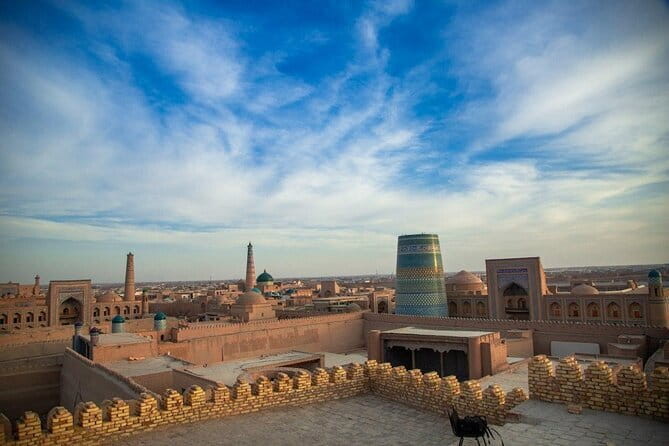
Qizil Kala, also called Kyzyl Kala, was first built in the Late Antique period, between the first and fourth centuries CE. It was later abandoned, then rebuilt in the 12th and 13th centuries, shortly before the Mongol invasions.
That history gives the fortress an important edge. You are not looking at a single moment frozen in time. The site was used, left, and brought back into service under different conditions. There is debate about some aspects of its interpretation, so audio material can help you separate established facts from archaeological argument.
The stop lasts about 30 minutes. Admission is not included, unlike several other sites on the route. Since the tour covers a large area, this is a place to listen closely to the explanation and then make a quick circuit of the visible remains.
Duman Kala, three connected defensive sections
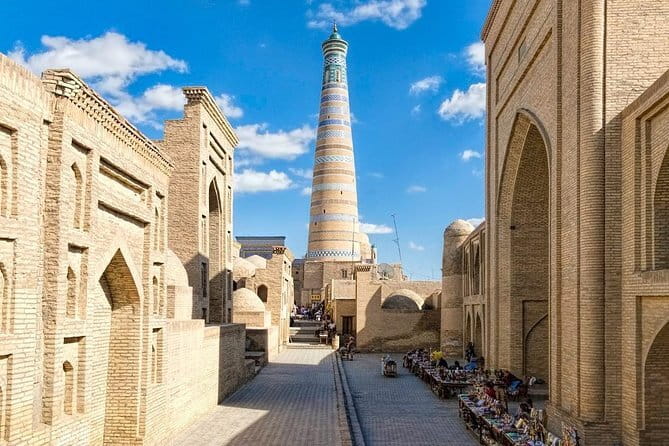
Duman Kala is made up of three adjacent parts: a square western enclosure with corner towers, a smaller square citadel, and an irregular four-sided northern enclosure. Some remains of the northern section are still visible.
This layout is useful for understanding that a fortress was not always one simple block. Different sections could have served different defensive or administrative purposes. The site may appeal most to you if you enjoy comparing plans and wall shapes, rather than looking only for the most dramatic photograph.
The planned visit is about 30 minutes, with free admission. The description places this stop in Uzbekistan rather than giving a nearby town name, so your driver will be important in keeping the route moving. The private vehicle is a practical advantage on a day with several scattered ruins.
Akchakul Lake and a taste of old river country
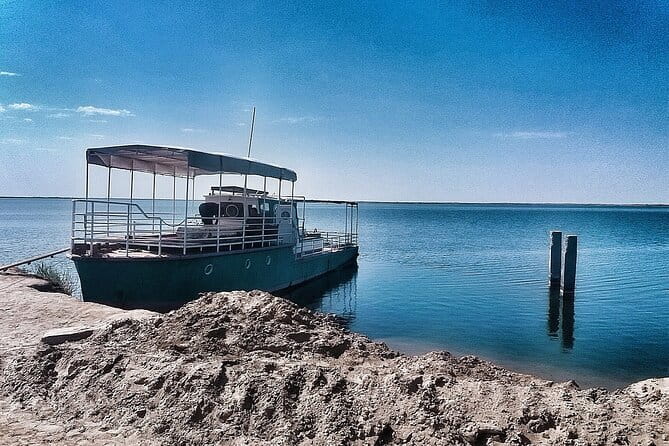
Akchakul Lake adds a different note to the day. In ancient times, the Amudarya, also known as the Ox, flowed in two directions here, through the Akcha River and the Suvyorgan River. The name Akcha is tied to the area’s connection with Akchakhan Fortress.
After so many walls and towers, water and food provide a useful break. Local fish from the Akchakul Lake complex is presented as a notable part of the experience. Lunch is not included, though, so do not assume a meal is covered in the $199 price. Ask in advance how the fish stop is arranged, what it costs, and how much time is available.
The stop itself is scheduled for about 30 minutes. That is enough for a short pause, but perhaps not a leisurely meal, depending on the day’s timing. I would treat this as a chance to sample a local taste and rest briefly, not as a guaranteed full lunch.
The car, guide, and language question
The tour uses a private sedan with air conditioning, and hotel pickup and drop-off are included. For a route lasting around nine hours, this is a meaningful part of the value. You can keep your own bags in the car, control your small group, and avoid arranging separate transport between remote sites.
The booking is for a group of up to three people. That is a good size for a long day because everyone can keep to the same pace. It also makes the per-person price much more reasonable when three people share the vehicle.
The guide experience deserves careful attention. Sarvar has guided this route, and one solo female participant felt completely safe with him. Audio files about the fortresses were sent before that departure, but conversation was limited because he was still learning English, and his knowledge of the sites was described as incomplete.
That does not make the trip a poor choice, but it changes what you should expect. If you need long discussions about archaeology, politics, or the fine points of Khorezm history, confirm the guide’s current English level and background before booking. If you are comfortable using audio materials and mainly need transport, basic support, and a safe private outing, the arrangement may suit you well.
There has also been a case where a private booking ended up traveling alongside another group in a separate car with the same guide. That matters because a private tour should give you control over timing. Ask directly if your departure will have an exclusive guide and vehicle, and confirm how much time you can spend at each stop.
What to bring and how to pace the day
You should prepare for an exposed archaeological day rather than a city walk. Comfortable shoes are important because the itinerary requires a moderate level of fitness and includes uneven fortress sites. Water, sun protection, and a hat are sensible choices, though the tour description does not specify what supplies are provided.
Keep your expectations realistic about comfort. The car is air-conditioned, but the ruins themselves are open-air. Most stops last only 30 minutes, so you will often be moving on just as you begin to get a feel for a place.
If one fortress interests you more than the others, say so early. The day has a set rhythm, and the one-hour allocation at Ayaz Kala is the clearest chance for a longer visit. Since lunch is not included, settle the food plan before leaving Khiva or Urgench.
The trip can start from either Khiva or Urgench. That flexibility is helpful if you are staying in one city and arranging transport through the other. Pickup and drop-off are included, but the supplied details do not specify exact pickup zones, so confirm your hotel address when booking.
Who should book this fortress day?
I would choose this trip if you want to see the wider Khorezm region in one long outing and you value private transport more than a polished, lecture-heavy tour. It suits people who enjoy ruins, open spaces, old defensive systems, and the sense of following a route far beyond the main tourist center.
It is also a good fit for a small group of two or three. Sharing the $199 cost makes the price fairer, and the private car gives you more control than a large coach. Solo visitors can still benefit from the arrangement, especially because a private transfer across remote sites is convenient, but the per-person cost is higher.
I would hesitate if you need a fully fluent English-speaking historian or a guaranteed one-to-one guide throughout the day. The audio materials help, but they are not the same as asking detailed questions at every fortress. I would also think twice if uneven ground, heat, or a nine-hour schedule will be difficult.
Free cancellation is available until 24 hours before the 9:00 am start time. Cancellations inside that window are not refunded, and poor weather can lead to a new date or a full refund. That gives you some protection, but the weather rule matters because the core experience takes place outdoors.
Should you book it?
Book this tour if your priority is coverage and access: seven fortress-related stops, a lake visit, private transport, and a full day outside Khiva or Urgench. The route gives you a better sense of ancient Khorezm than staying only inside Khiva’s famous walls.
Before paying, confirm three points: who will guide your departure, whether the vehicle and guide are exclusive to your group, and how lunch at Akchakul Lake will work. If the answers suit your needs, this is a strong value for two or three people who want a broad, memorable day among Khorezm’s ancient fortresses.
FAQ
Where does the tour start?
The trip can start from Khiva or Urgench. Hotel pickup and drop-off are included.
What time does the tour begin?
The stated start time is 9:00 am.
How long does the experience last?
The daytrip lasts approximately nine hours.
How many people can join the private tour?
The price covers one private group of up to three people.
Are entrance tickets included?
Admission is free at Guldursun Kala, Janbas Kala, Ayaz Kala, Duman Kala, and Akchakul Lake. Tickets for Toprak Kala and Qizil Kala are not included.
Is lunch included?
No. Lunch is not included. Local fish is associated with the Akchakul Lake stop, so confirm the meal arrangements and cost before departure.
More Desert Fortress Trips from Khiva
- Transfer: Bukhara – Khiva via Ancient Fortresses
★ 4.5 · 101 reviews - Guided Tour To Old Fortresses
★ 5.0 · 25 reviews - Tranfer Khiva – Bukhara via Ancient Fortresses
★ 4.8 · 24 reviews - Daytrip from Khiva to Five Ancient Fortresses
★ 4.4 · 15 reviews
Just added around Khiva
- Uzbekistan 6 Days Private Tour Khiva-Bukhara-Samarkand by Train★ 5.0 · 4 reviews
- Traditional Khiva Cooking Class with Market Visit & Lunch★ 5.0 · 4 reviews
- 6- Day Private Tour to Tashkent, Khiva, Bukhara and Samarkand★ 5.0 · 5 reviews
- Master Class – Uzbek Bread (Khiva)★ 3.5 · 4 reviews
- Old Khiva Stories with Your Local Guide★ 5.0 · 5 reviews
- A Night In The Kyzylkum Desert [2] From Khiva★ 4.5 · 3 reviews
- Khorezm Fortress and KyzylKum Desert Private Tour★ 5.0 · 3 reviews
- Best of Khiva: Exclusive Private Tour!★ 5.0 · 3 reviews
Ancient Fortress Tours, compared.
Daytrip From Khiva to Savitsky Museum & Mizdakhan & Chilpik
Read our review →

Private Bukhara-Khiva Transfer via Ancient Fortresses
Read our review →
Browse the lists this tour appears in