
Reviewed · ANCIENT FORTRESS TOURS
Tranfer Khiva – Bukhara via Ancient Fortresses
The best part of this trip is simple: you turn a long transfer between Khiva and Bukhara into a day among the fortresses of the Khorezm Oasis. Toprakkala, Kizilkala, and Ayazkala give you three different looks at an old desert frontier, while the private car keeps the day practical. I like the freedom to spend as much time as you wish at each site, and I like that the trip ends at your hotel in Bukhara rather than sending you back to Khiva. The drawback is the long road day, with rough, open terrain and limited shade at the ruins.
I also like the personal touch. Drivers named Jasur and Bek have been praised for being kind, helpful, and careful, and a local fruit-market stop has even produced an unforgettable melon. Just remember that this is a transfer with sightseeing, not a full guided archaeological tour, and entrance tickets cost extra.
Key points at a glance
- Three major desert fortresses: See Toprakkala, Kizilkala, and Ayazkala on one route.
- A useful Khiva to Bukhara transfer: Travel between two major Uzbek cities without losing a full day to the road.
- Private transport for up to three people: The $180 group price becomes much better value when shared.
- Flexible time at the ruins: You can set your own pace instead of following a large group.
- A real desert setting: The Kizilkum Desert and open steppe are part of the experience, not just the road between stops.
- A full nine-hour day: Bring water, sturdy shoes, sun protection, and patience for the distance.
Why this route makes sense between Khiva and Bukhara
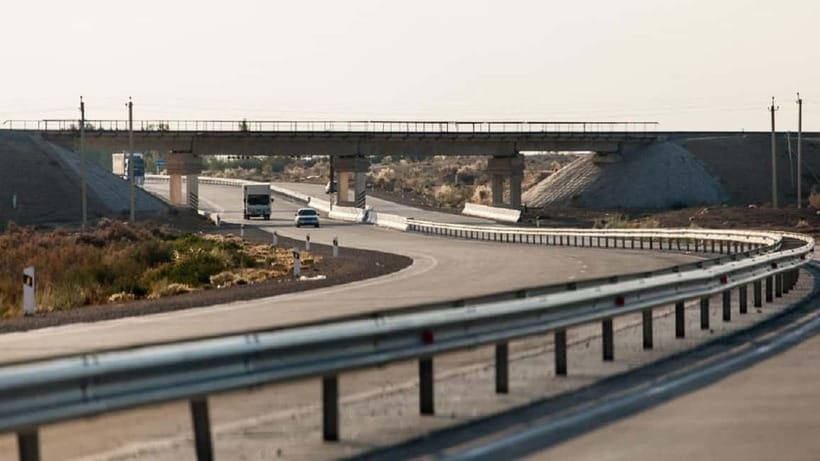
Khiva and Bukhara are both major stops in Uzbekistan, but the journey between them can feel like a travel chore if you simply move from one hotel to the next. This private transfer changes the day’s purpose. You still cover the distance, but you pause at some of the Khorezm Oasis’s most important ancient sites along the way.
The route begins at Khiva’s Ata Darwaza, the western gate of Ichan Kala. Hotel pickup is also available, which is useful if you have luggage or would rather avoid arranging a short taxi ride to the gate. You should be ready in the lobby five minutes before the scheduled pickup.
The full trip takes about nine hours. That includes driving, the fortress visits, an estimated lunch stop, and arrival in Bukhara. It is not a relaxed half-day outing. You will spend a good deal of time in the car, but the private setup makes the road portions easier because you are not managing a large group.
For up to three people, the $180 price is best judged as a private transfer rather than three separate sightseeing tickets. Split three ways, it is $60 per person before entrance fees. For one person, it is a much more expensive way to travel, though you gain a private vehicle and three substantial historical stops.
More desert fortress trips from Khiva:
- Transfer: Bukhara – Khiva via Ancient Fortresses
★ 4.5 · 101 reviews - Daytrip From Khiva To Ancient Fortresses
★ 4.6 · 60 reviews - Private Daytrip to 7 Ancient Fortresses of Khorezm
★ 5.0 · 25 reviews
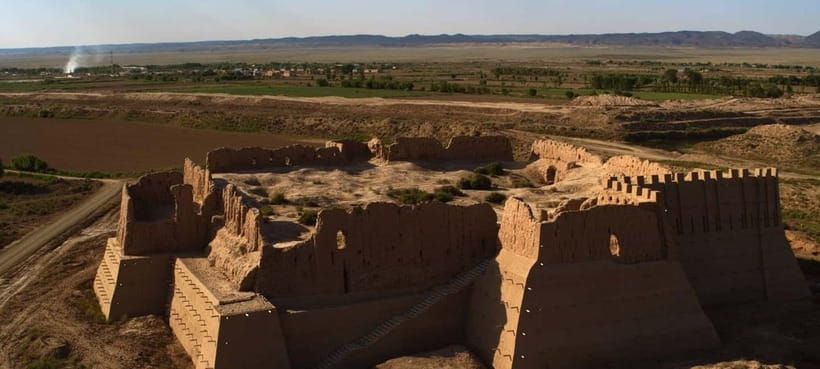
Toprakkala, the former capital in the clay
Toprakkala is the first major stop and the historical anchor of the route. Its name means Clay Fortress, a fitting name for a site made from the earth of the region.
The fortress was the first capital of Khorezm, and its remains helped archaeologists understand how an organized city was planned in the area. The site is linked to evidence of statehood dating to the fourth century AD. That makes it more than a dramatic pile of old walls. It gives you a chance to think about administration, settlement, and power in a place that now looks stark and remote.
Important discoveries connected with Toprakkala include early written sources from Khorezm, a calendar, and plaster figures of singers. You will not see all of those original objects sitting out in the ruins, but knowing what was found here gives the visit extra weight. The broken walls mark a former capital, not merely a lookout post.
Take your time walking around. Comfortable shoes matter because the sites are open and uneven, and the visit involves walking rather than simply viewing the fortress from the car. There is no promise of extensive shade, so water and a hat are sensible additions.
Toprakkala is likely to appeal most if you enjoy the story behind an archaeological site. If you want polished buildings, intact rooms, or a formal museum visit, you may find the ruins spare. Their appeal comes from scale, age, and setting.
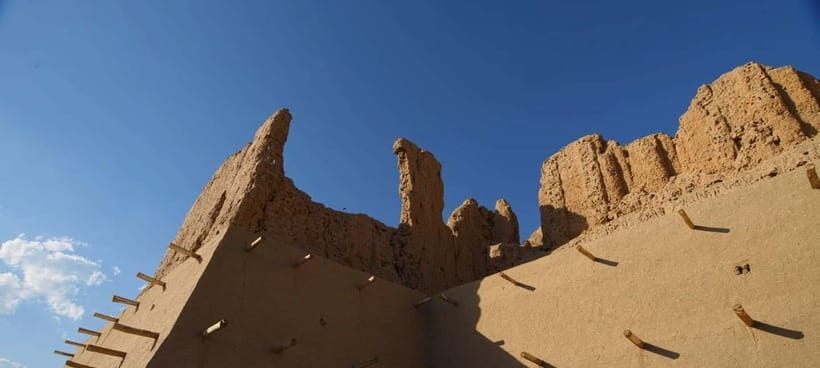
Kizilkala, the compact Red Fortress
Kizilkala is a smaller garrison fortress along the route. Its name means Red Fortress, referring to the color of the clay.
This stop works well as a contrast to Toprakkala. Toprakkala represents a capital and center of power, while Kizilkala shows the defensive side of the oasis. Fortresses were placed around the borders of Khorezm to help protect settled communities from raids by nomadic groups from the north.
The visit is also a useful pause in the driving. You can see how the structure sits within the surrounding dry country and consider why a garrison would be placed there. The red-brown clay and open sky give the stop its visual character.
Do not expect a long list of facilities or a polished visitor center. This is an exposed archaeological site. Your driver may provide useful background, but the stated service is a private transfer with an English or Russian-speaking driver, not a guaranteed specialist guide at every ruin. If detailed archaeology is important to you, ask in advance how much explanation your assigned driver can provide.
Entrance fees are not included. Plan on roughly $1 to $2 per monument per person. The amount is small, but you should carry some cash for the three sites and any personal purchases.
Ayazkala, the grand finale on the open steppe
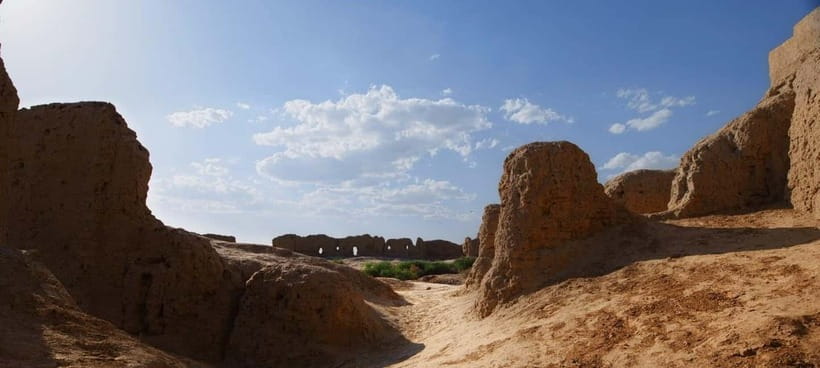
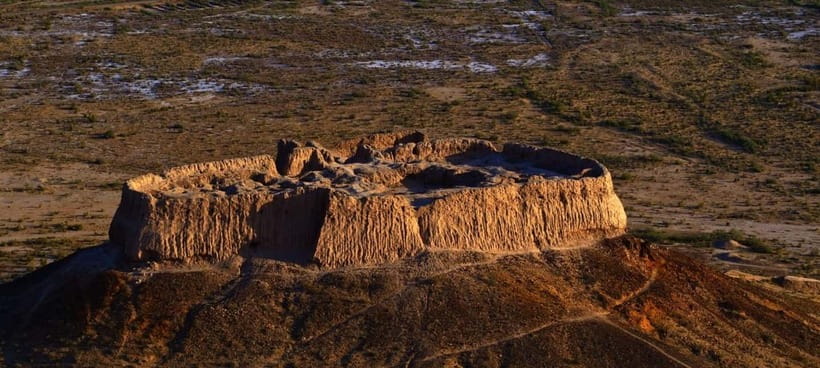
Ayazkala is the most important and remote fortress on the route. The complex has three parts, making it more extensive than a single isolated ruin.
Its position on the edge of the oasis helps explain its purpose. These fortresses guarded the perimeter against raids from the north, and Ayazkala was one of the best organized and most strongly protected sites in the area. The name is commonly explained as Severe Frost Fortress. In winter, the cold of the steppe makes the meaning easy to understand.
This is the stop where the setting matters most. The fortress is far from the city streets of Khiva and Bukhara, surrounded by broad, dry country. You get a strong sense of the distances that shaped life in the oasis. In summer, the heat can be demanding. In winter, warm clothing is essential, especially if wind reaches the exposed ruins.
Ayazkala is also the place where flexible timing helps. Some people will want a quick look and photographs. Others will want to walk farther, study the walls, and take in the size of the complex. A private car lets you avoid being pushed along by a fixed group schedule.
The site’s remoteness is both its strength and its limitation. It feels wonderfully removed, but it also adds to the road time and makes comfortable clothing, water, and sensible shoes especially important.
More transfers between the Silk Road cities:
- Transfer from Khiva to Bukhara by Fortresses
★ 5.0 · 11 reviews - Private Bukhara-Khiva Transfer via Ancient Fortresses
★ 4.5 · 8 reviews - Private Transfer & Photo‑Stops: Ayaz‑Kala & Toprak‑Kala”
★ 4.6 · 6 reviews - Tashkent Airport & Train Station Pick Up & Drop Off
★ 4.5 · 50 reviews
The Kizilkum Desert between the ruins
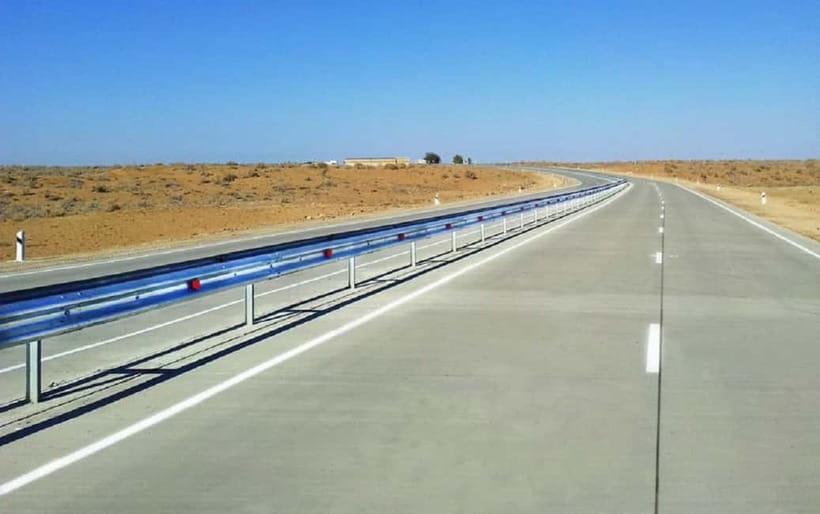
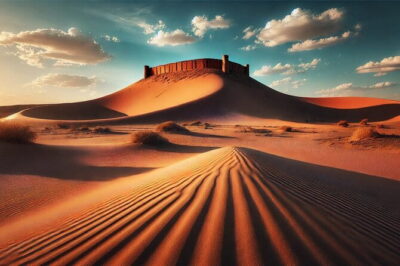
The Kizilkum Desert is part of the day’s character, not just scenery outside the window. The road links isolated fortresses across a broad, dry region, and the spaces between the sites help explain why these defensive structures were needed.
You will spend hours in an air-conditioned vehicle, which is welcome in hot weather. The car is also important in winter, when the open steppe can feel bitterly cold. Bring your own water, even though food and drinks are not allowed in the vehicle. The no-food and no-drink rule means you should plan to eat and hydrate during stops rather than while driving.
A camera belongs in your bag. The ruins, clay walls, and open desert provide the day’s strongest images, especially if you enjoy wide views rather than crowded city scenes. Keep your expectations realistic, though. This is not a landscaped park or a series of restored monuments. You are visiting exposed ruins in a dry region.
Lunch, fruit, and the human side of the trip
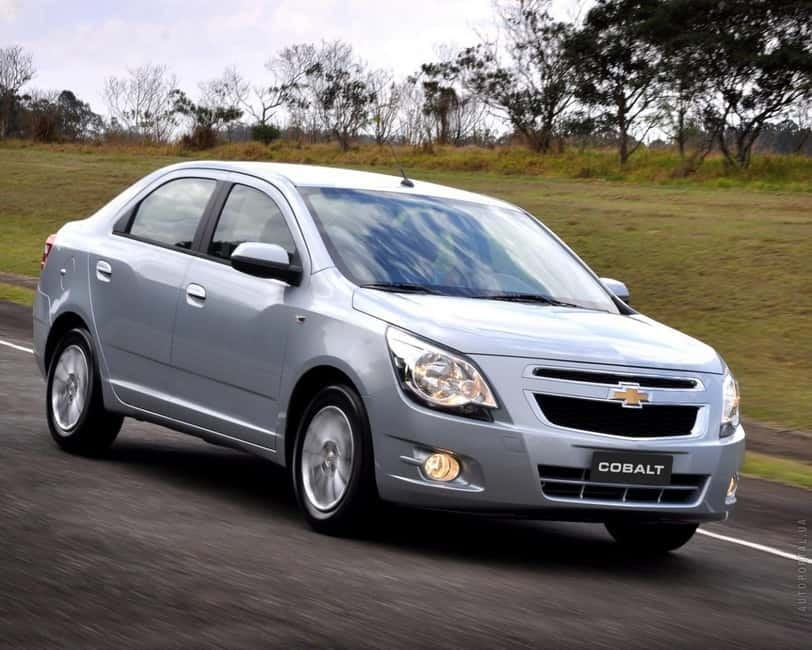
Lunch is planned as an estimated stop along the road, with the cost of personal expenses outside the tour price. You should confirm the exact arrangement with your driver at the start of the day. The trip is more enjoyable when you treat lunch as part of the road experience rather than expecting a formal restaurant program.
One particularly memorable option has been a stop at a local fruit market, where the melon was described as exceptional. That kind of pause adds something a standard point-to-point transfer cannot offer. It gives you a small look at everyday food culture in the region.
At the same time, the schedule is long. A market stop, lunch, and three fortresses all take time, so you should not expect to arrive in Bukhara early in the afternoon. If you have a fixed evening booking or a train to catch, leave a generous margin after the planned arrival.
What the private car changes

The private group format is one of the strongest reasons to choose this trip. You can book for up to three people, share the vehicle with companions, and avoid coordinating with strangers at every stop. The air-conditioned car is included, along with pickup and drop-off.
The flexible pace is especially useful at Ayazkala, where you may want more time, and at Toprakkala, where a quick glance does not do justice to the site’s importance. You can also ask for a practical break when needed, subject to the day’s route.
The driver may speak English or Russian. Past departures have included Jasur and Bek, both noted for friendly service, careful driving, and useful advice. Communication can vary by driver. One English-speaking driver had limited English but enough to handle the day effectively. If you need detailed historical interpretation, state that preference when booking.
The strong overall rating of 4.8 out of 5, along with 93 percent perfect transport scores, fits the main strength of the experience: dependable movement between difficult-to-reach sites. The service is at its best when you view the driver as your transport partner and local contact, not as a guaranteed professional historian.
Who should book this transfer
I would recommend this trip to anyone already planning to travel from Khiva to Bukhara and interested in ancient sites. It is especially useful for couples, friends, or small families who can split the private price.
You should also consider it if you prefer unusual places over heavily restored monuments. The fortresses are remote, open, and sometimes stark. Their power comes from their location and age, not from polished exhibits.
This is less suitable if you dislike long drives, struggle with uneven ground, or want a short, guided city excursion. Wheelchair access is listed, but the ruins themselves may still involve outdoor walking and uneven surfaces, so ask specific questions before booking.
Wear comfortable clothes and shoes. Add warm layers in winter, sun protection in warmer months, and a camera. Water is important, and you should expect a full day rather than a quick transfer.
Cancellation is free up to 24 hours before departure, and reserve-now, pay-later booking is available. Those policies make it easier to fit the trip into a changing Uzbekistan itinerary, but they do not change the basic fact that this is a demanding road day.
My booking verdict for this Khiva to Bukhara route
I would book this experience if I had one day to move between Khiva and Bukhara and did not want to sacrifice the Khorezm fortresses. The combination of private transport, three sites, flexible stops, and hotel drop-off gives the $180 group rate real value for two or three people.
I would skip it only if I wanted a relaxed travel day or a formal archaeological guide. For the right person, the rewards are clear: Toprakkala’s former capital, Kizilkala’s defensive role, Ayazkala’s remote scale, and the quiet road through the Kizilkum Desert. Bring water, wear good shoes, and let the long drive be part of the story.
FAQ
How long does the transfer from Khiva to Bukhara take?
The experience lasts about nine hours, including the fortress visits, driving, an estimated lunch stop, and arrival at your Bukhara hotel.
Where does pickup take place in Khiva?
Pickup is available at Ata Darwaza, the west gate of Ichan Kala. Hotel pickup is also allowed.
Which fortresses are included?
The route includes Toprakkala, Kizilkala, and Ayazkala.
Is the vehicle private?
Yes. This is a private group experience for up to three people.
What languages does the driver speak?
Drivers are listed as speaking English or Russian.
Are entrance tickets included?
No. Entrance tickets cost about $1 to $2 per monument per person and are paid separately.
Is lunch included?
A lunch stop is planned along the road, but personal expenses such as lunch are not included in the stated price.
What should I bring?
Bring comfortable shoes, comfortable clothing, warm clothing in winter, a camera, and your own water.
Can I cancel the booking?
Yes. You can cancel up to 24 hours in advance for a full refund. Reserve-now, pay-later booking is also available.
Just added around Khiva
- Uzbekistan 6 Days Private Tour Khiva-Bukhara-Samarkand by Train★ 5.0 · 4 reviews
- Traditional Khiva Cooking Class with Market Visit & Lunch★ 5.0 · 4 reviews
- 6- Day Private Tour to Tashkent, Khiva, Bukhara and Samarkand★ 5.0 · 5 reviews
- Master Class – Uzbek Bread (Khiva)★ 3.5 · 4 reviews
- Old Khiva Stories with Your Local Guide★ 5.0 · 5 reviews
- Khorezm Fortress and KyzylKum Desert Private Tour★ 5.0 · 3 reviews
- A Night In The Kyzylkum Desert [2] From Khiva★ 4.5 · 3 reviews
- Best of Khiva: Exclusive Private Tour!★ 5.0 · 3 reviews
Ancient Fortress Tours, compared.
Daytrip From Khiva to Savitsky Museum & Mizdakhan & Chilpik
Read our review →

Private Bukhara-Khiva Transfer via Ancient Fortresses
Read our review →
Browse the lists this tour appears in