
Reviewed · DESERT YURT CAMPS
A Night In The Kyzylkum Desert [2] From Khiva
The boldest part of this two-day trip is the contrast: one day takes you to the Aral Sea ship cemetery, where rusting boats sit far from the vanished water, and the next puts you beside ancient fortresses in the Kyzylkum Desert. Between them comes a night in a yurt near Ayaz-Kala, with camels nearby and a wide sky overhead.
I like the tour’s private format and its unusual range. You get Nukus art, Karakalpakstan’s difficult environmental story, local desert life, and seven archaeological sites in one fast-moving route. The chance to see camels and drink camel milk from local families adds a human touch that a standard ruins tour would miss.
The drawback is distance. This is a packed two days with long road sections and short visits at several sites. The $499 price covers a group of up to three, but the yurt, meals, and admission tickets cost extra, so you should budget beyond the advertised fare.
Key points to know before you book
- Aral Sea history feels starkest at Muynak’s ship cemetery, where old vessels recall a sea that once supported a major fishing town.
- The Savitsky Museum in Nukus adds real cultural weight, with one hour set aside for its remarkable art collection.
- Your overnight stop is near Ayaz-Kala, not in a city hotel, so expect a simple desert stay rather than polished comfort.
- Seven fortresses fill the second day, including Toprak-Kala, Guldursun Qala, Kyzyl Kala, Koi Krylgan Kala, Angka Kala, Ayaz-Kala, and Itchan Kala.
- The $499 rate is per private group of up to three, with a $50 yurt charge and separate museum and fortress tickets.
- The route suits active adults and children aged seven or older, but the amount of driving calls for patience and reasonable fitness.
Why this route is unlike a normal Khiva day trip
Khiva’s Itchan Kala is one of Uzbekistan’s great sights, but it can also keep you inside the familiar tourist path. This trip moves far beyond the old city. It reaches Nukus, Muynak, the edge of the former Aral Sea, and a chain of desert fortresses scattered across Karakalpakstan.
That matters because the region makes more sense when you see both its past and its present. The fortresses show how rulers protected settlements, roads, and farmland in ancient Khorezm. Muynak shows what happened when the Aral Sea receded and the local economy collapsed.
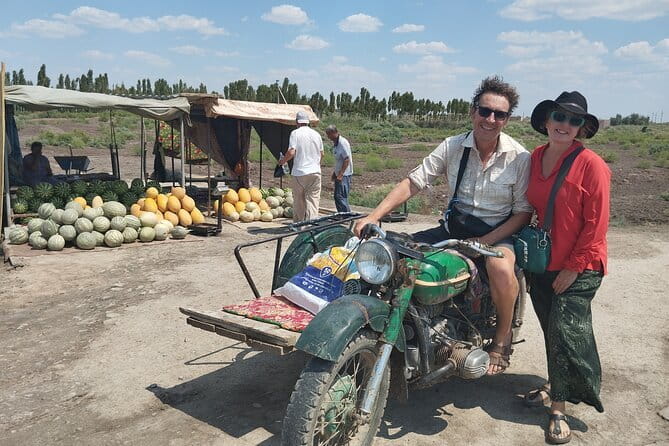
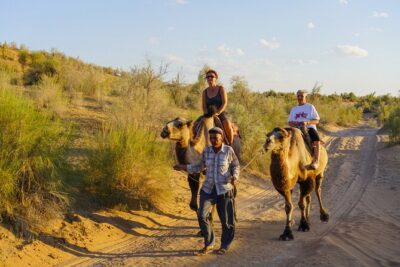
You also get a glimpse of life in the desert zone. Camels walk around the yurt area, and camel milk may be available from local families. That detail is small, but it changes the tone of the trip. You are not simply checking off archaeological sites. You are seeing how people still live in a dry region shaped by old traditions and hard conditions.
The route is private, with only your group participating. That gives you more control than a large coach tour, though the supplied plan does not promise a dedicated historian or a named guide. Instead, an audio guide is provided and the driver takes you from site to site.
More yurt camp nights out of Khiva:
- From Khiva To Aral Sea 2-Days One Night In Yurt Stay
★ 4.6 · 20 reviews - Khorezm Fortress and KyzylKum Desert Private Tour
★ 5.0 · 3 reviews - Yurt Camp Tour with Night from Bukhara
★ 3.8 · 35 reviews
Day one: Chilpiq, Nukus, and the vanished Aral Sea
The first stop is Chilpiq, also called Shilpiq or Chilpak Kala. This round, roofless Zoroastrian monument sits on a hill and is more than 2,200 years old. The tower is about 15 meters high and 65 meters across, giving it a strong profile against the flat surroundings.
You have about 30 minutes here. That is enough to see the structure and take in its position, but not enough for a long archaeological study. Admission is not included, so keep a little cash available for site tickets. The stop works best as an introduction to the older religious world of the region before the day turns toward museums and modern environmental history.
Next comes the State Museum of Art named after I.V. Savitsky in Nukus. You get one hour inside, with admission listed separately at $10. This is not a filler stop. The museum is one of the main reasons to go to Nukus, especially if you care about art that developed outside the usual European and Russian museum circuit.
The museum’s unusual collection is tied to Igor Savitsky, whose work helped preserve art that might otherwise have been lost or ignored. You should give this hour your full attention. After a long road journey, it can be tempting to hurry through a museum, but the Savitsky collection gives the trip a needed cultural pause.
The stop also helps balance the desert ruins. You see that Karakalpakstan is not only a place of ancient walls and environmental damage. It has its own artistic story, too.
Muynak and the stark lesson of the Aral Sea
The route then reaches the Muynak Regional Studies Museum, also known as the Ecological Museum of Muynak. The visit lasts about 30 minutes, and admission is listed at $7. This is a modest local museum, so do not expect the scale or finish of a capital-city institution.
Its value is in the subject. Muynak was once linked to the Aral Sea fishing economy. The museum helps explain the local side of the disaster, rather than presenting the Aral Sea only as a distant environmental headline.
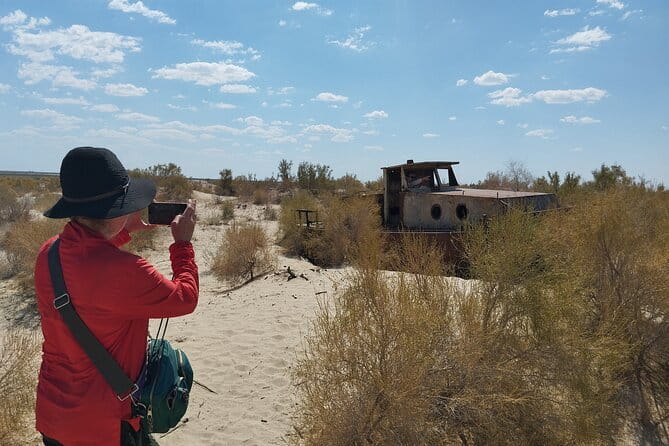
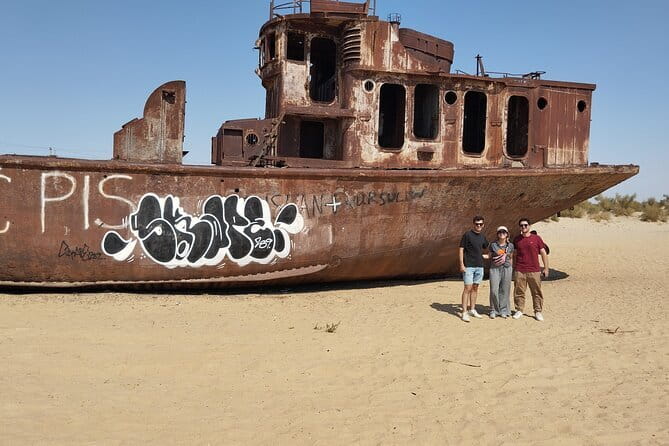
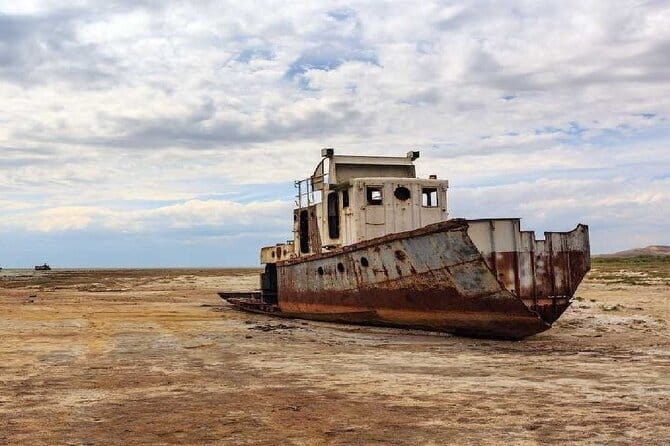
The most haunting stop is the ship cemetery. You have about 30 minutes, and admission is free. The boats sit on dry ground, far from the water they once used. That simple image does much of the explaining for you.
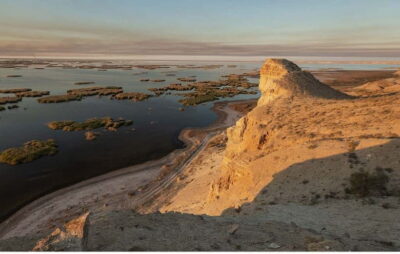
The Aral Sea was once the fourth-largest inland sea in the world. Water diversion for agriculture caused it to shrink dramatically within a single lifetime. At Muynak, the result is not an abstract statistic. It is visible in the stranded ships and in the distance between the old port town and the remaining water.
I would treat this stop with respect. It can be photogenic, but the setting is also a record of lost livelihoods and poor environmental choices. The combination of the museum and ship cemetery makes the first day more than a scenic outing. It gives you a direct look at a modern tragedy and at the people who had to live with its effects.
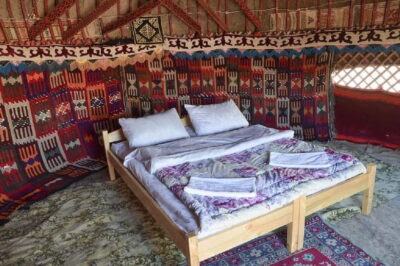
After such a long day, the overnight arrangement becomes important. The plan places you near Ayaz-Kala in the Kyzylkum Desert, in a yurt rather than a conventional hotel. The yurt stay costs an additional $50 per day and includes dinner and breakfast. You should confirm the sleeping setup and meal details when booking, since the supplied information does not describe the facilities beyond the yurt accommodation.
A night near Ayaz-Kala under the Kyzylkum sky
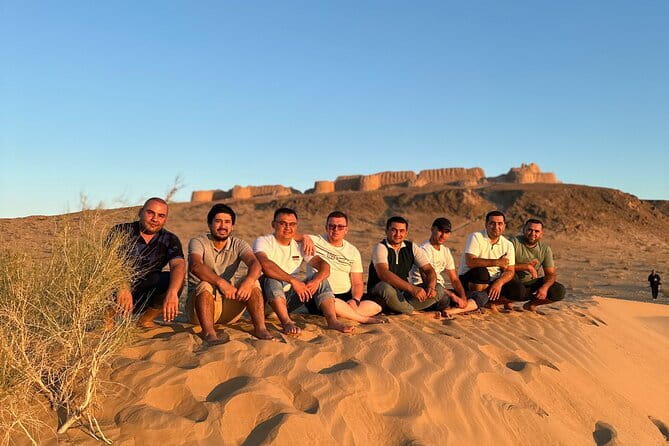
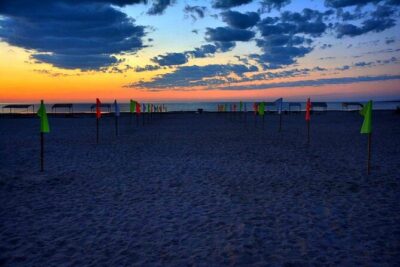
The yurt is the emotional center of the trip. After museums, empty port facilities, and long roads, you spend the night in a desert setting connected to traditional Central Asian life. Camels may walk around the camp, and camel milk can be available from local families.
The point is not luxury. The point is setting. At night, the open desert offers the chance to look up and see a sky filled with stars. Actual viewing depends on conditions, but the location gives you the kind of darkness and space that city hotels cannot provide.
Dinner and breakfast are available as part of the $50 yurt charge. Since those meals are not part of the $499 tour price, include them in your real budget. You should also be ready for a simpler night than you would have in Khiva or Urgench.
This part will suit you if you value local contact, unusual surroundings, and a little discomfort in exchange for a memorable setting. It may not suit you if you need a private bathroom, a soft hotel bed, or a tightly controlled schedule. The tour information calls for moderate physical fitness, and that is sensible advice for a trip involving desert stops, ruins, and a long first day.
More things to do in Khiva:
- Khiva: Historical City Highlights Guided Walking Tour
★ 4.8 · 156 reviews - Transfer: Bukhara – Khiva via Ancient Fortresses
★ 4.5 · 101 reviews - Daytrip From Khiva To Ancient Fortresses
★ 4.6 · 60 reviews - Daytrip from Khiva to Aral Sea Cemetery of Ships. All in one
★ 4.3 · 52 reviews
Day two: the fortress country of ancient Khorezm
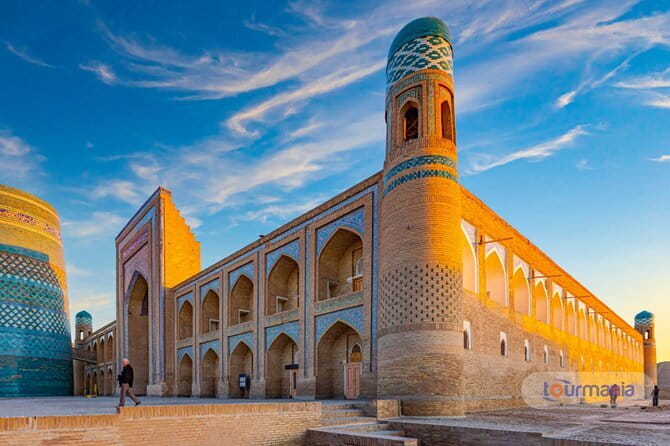
The second day begins at Ayaz-Kala, one of the best-known fortress sites in the region. The ruins sit on a hill above the Kyzylkum Desert and date from between the fourth century BCE and the seventh century CE.
You have about an hour here, and admission is free according to the supplied details. The elevated position is a large part of the appeal. You can see why this was useful defensive ground, while the dry setting makes the walls feel isolated and exposed.
Ayaz-Kala is also the site most closely tied to the overnight stay. Seeing the ruins after sleeping nearby gives the stop more weight than a quick photo break from a distant hotel.
Toprak-Kala follows, with about 30 minutes on site. It dates mainly to the second and third centuries CE and served as a royal residence for the kings of Khorezm. It first functioned as a royal sanctuary before being abandoned for a time.
This is one of the more important sites on the route, but 30 minutes is short. You will get the basic shape and atmosphere of the ruins rather than a full archaeological reading. Admission is not included, with fortress tickets generally around $2.
Guldursun Qala is a fortified town whose outer walls and towers date to the 12th century. The site has produced ancient and medieval pottery, bronze objects, and coins during archaeological work. You get about 30 minutes here, and admission is free.
The word town matters. Guldursun Qala is not simply a lone watchtower. It points to a settled community with defenses, daily life, and trade. The short stop means you will need to use your audio guide well and focus on the main walls and layout.
Kyzyl Kala was first built during the Late Antique period, roughly the first to fourth centuries CE. It was later abandoned and rebuilt in the 12th or 13th century, shortly before the Mongol invasions. That repeated use gives the site a layered character.
You have 30 minutes, with admission not included. The ruins are useful for understanding that these fortresses were not frozen in one period. Buildings changed as political power and military needs changed.
Koi Krylgan Kala adds a different kind of archaeological interest. It lies outside the village of Taza-Kel’timinar in the Ellikqala District. You get another 30-minute visit, with free admission listed.
As with several stops, the appeal is partly the setting and partly the sense of scale. Ancient Khorezm was not just a single royal center. It was a network of settlements and fortified places spread across a demanding environment.
Angka Kala comes next. The settlement dates from the first to third centuries and again from the 10th to 12th centuries. It lies about 22 kilometers north of Turtkul and has a nearly square plan with relatively well-preserved fortifications.
The half-hour stop gives you time to see the form of the fortress and compare it with the other sites. Admission is free. For you, the main benefit is the comparison: after several ruins, the differences in layout, age, and preservation become easier to notice.
The last listed stop is Itchan Kala, with about 20 minutes and free admission. The description identifies Duman Kala as having three adjoining sections: a square western enclosure with corner towers, a smaller square citadel, and an irregular northern enclosure.
The name may cause some confusion because Khiva’s famous walled old town is also called Itchan Kala. Here, the supplied route description points to the fortress complex known as Duman Kala. Ask the operator to confirm the exact site before departure, especially if you have already planned a separate visit to Khiva’s Itchan Kala.
What the $499 group price really buys you
The advertised cost is $499 per private group of up to three people. That can be fair value if you are traveling with two companions, since the price is not charged per person. It covers private transportation, an air-conditioned vehicle, hotel pickup from Khiva or Nukus, and drop-off in Khiva or Urgench.
The driver takes you to the sites, and an audio guide is provided. You are paying for a private road-based journey across a large part of Karakalpakstan, not simply for entry to a single attraction.
The extra costs are easy to overlook:
- Yurt accommodation with dinner and breakfast: $50 per day
- Savitsky Museum: $10
- Muynak museum: $7
- Fortress tickets: generally around $2 where charged
If you are alone, the group price is a larger commitment. For three people, the per-person share is much easier to justify, particularly because the route would be difficult to arrange as efficiently with separate taxis and hotels.
The price does not include a named personal guide. If detailed archaeological explanation is important to you, ask how the audio guide works and whether the driver provides commentary. The information supplied confirms transportation and audio guidance, but not a live specialist guide.
Who should book this two-day desert route?
I would recommend it to you if you want a strong regional story rather than a gentle sightseeing schedule. It suits people who are interested in the Aral Sea, Soviet-era environmental damage, ancient Central Asian states, and local desert life.
It also works well for a small private group that wants an unusual overnight stop. Families can book for children aged seven and older, though parents should consider the driving time, heat, ruins, and basic yurt setting.
You should think twice if you dislike long road journeys or prefer to spend an hour or more at every archaeological site. Seven fortresses in one day sounds impressive because it is. It also means several stops are brief, with only 20 or 30 minutes at a time.
The route is not designed as a slow archaeological study. It is a broad introduction to the region, using short visits to build a larger picture.
Practical details before departure
Pickup is available from hotels in Khiva or Nukus. The listed start time is 8:00 am, so plan to be ready early. Drop-off is offered in Khiva or Urgench.
You need a moderate level of physical fitness. The information does not give detailed accessibility notes, so ask ahead if you have difficulty walking over uneven ground or climbing around fortress sites.
The youngest age accepted is seven. This is a private activity, which means only your group participates. That is useful for families and small parties, especially when you need a short pause, a little flexibility, or room for your own pace.
Free cancellation is available if you cancel at least 24 hours before the local start time. Inside that period, the amount paid is not refunded, and changes are not accepted.
Should you book it?
Book this tour if you want to connect three very different stories: the lost Aral Sea, Karakalpak art and daily life, and the old fortress belt of Khorezm. The night in a yurt near Ayaz-Kala, with camels and a star-filled desert sky, gives the route its strongest personal touch.
The main warning is simple: this is a lot of ground in two days. You will spend plenty of time in the vehicle, and the archaeological stops are brief. For a group of up to three, the private rate can be good value, but calculate the extra $50 yurt cost and admission fees before booking.
If you accept the pace and want a serious taste of a remote part of Uzbekistan, this is one of the more unusual routes available from Khiva.
FAQ
Where does the tour start?
The tour starts at 8:00 am, with pickup offered from Khiva or Nukus.
Where does the tour end?
Drop-off is offered in Khiva or Urgench.
How much does the tour cost?
The price is $499 per private group of up to three people.
Is the yurt accommodation included?
No. Yurt accommodation costs $50 per day and includes dinner and breakfast.
Are museum and fortress tickets included?
No. The Savitsky Museum costs $10, the Muynak museum costs $7, and fortress tickets are generally around $2 where admission is charged.
Is this a private tour?
Yes. Only your group participates, and private transportation in an air-conditioned vehicle is included.
What is the youngest accepted age?
The youngest age accepted is seven years old.
Can I cancel for a full refund?
Yes, if you cancel at least 24 hours before the experience start time. Cancellations within 24 hours are not refunded.
Just added around Khiva
- Uzbekistan 6 Days Private Tour Khiva-Bukhara-Samarkand by Train★ 5.0 · 4 reviews
- Traditional Khiva Cooking Class with Market Visit & Lunch★ 5.0 · 4 reviews
- 6- Day Private Tour to Tashkent, Khiva, Bukhara and Samarkand★ 5.0 · 5 reviews
- Master Class – Uzbek Bread (Khiva)★ 3.5 · 4 reviews
- Old Khiva Stories with Your Local Guide★ 5.0 · 5 reviews
- Khorezm Fortress and KyzylKum Desert Private Tour★ 5.0 · 3 reviews
- Best of Khiva: Exclusive Private Tour!★ 5.0 · 3 reviews
- Khiva: Historical City Highlights Guided Walking Tour★ 4.8 · 156 reviews
Desert Yurt Camps, compared.
Desert Adventure from Samarkand: Yurt Camp & Aydarkul Escape
Read our review →
Kyzylkum Desert tour from Samarkand (1Night 2 Days)
Read our review →Browse the lists this tour appears in