
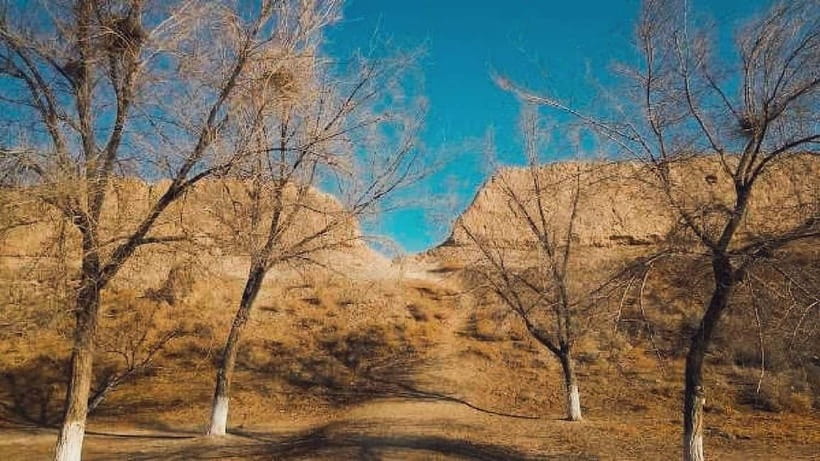
Reviewed · ANCIENT FORTRESS TOURS
Daytrip from Khiva to Five Ancient Fortresses
The best part of this private seven-hour trip is the sheer change of scene. Khiva’s polished old town gives way to open Karakalpakstan, where huge mud-brick fortresses rise from the dry plain. Ayaz-Kala and Toprak-Kala offer the clearest remains, while the other three add scale and context.
I like the flexible pickup from Khiva or Urgench, plus a private car for up to three people at $115. You can set your departure time and stop for photographs without sharing the vehicle. The main catch is that this is transport with sightseeing, not a fully guided archaeological tour. English may be limited, and one serious complaint concerned fast driving on rough roads.
Key points to know before you book
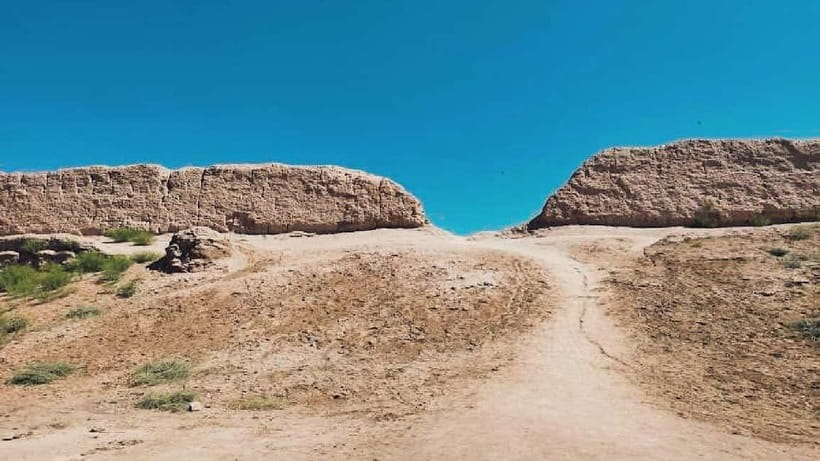
- Five fortresses in one long loop: You visit Guldursun-Kala, Ayaz-Kala, Kavat-Kala, Toprak-Kala, and Kyzyl-Kala in about seven hours.
- Ayaz-Kala is the visual highlight: Its hilltop setting and three-fortress complex make it the most rewarding stop for photographs and scale.
- Toprak-Kala gives the best historical detail: This former royal residence produced coins, ceramics, fabrics, jewelry, and Zoroastrian ossuary fragments.
- The driver is not necessarily a guide: Some drivers offer useful comments, but limited English means you should read up before going.
- Bring extra cash: Entry tickets are not included, and a recent account put some site fees at 20,000 Uzbek som each.
- Private transport is the value: At $115 for up to three people, the cost is reasonable if you split it, but lunch and admissions add to the final bill.
Why these fortresses matter beyond a day out
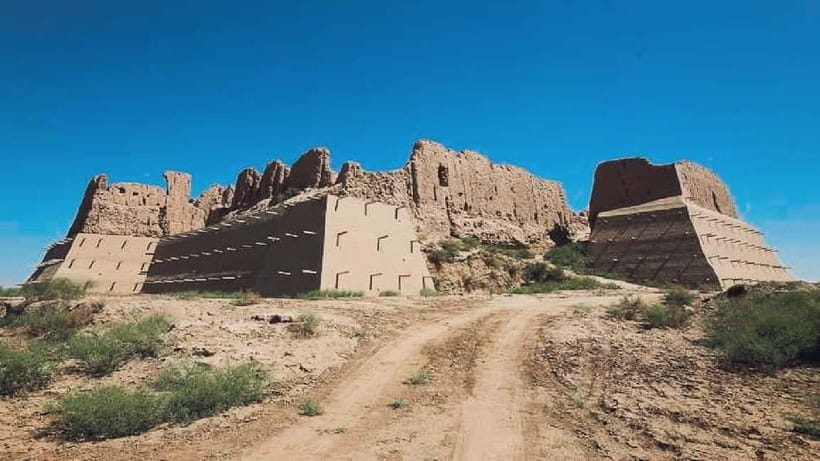
Khorezm was not protected by one famous castle. It was a broad network of fortified settlements, royal centers, farming communities, and watch posts spread across today’s Karakalpakstan. The dry setting has helped preserve mud-brick walls that would have vanished in a wetter climate.
You will not find polished galleries, detailed signboards, or a neatly staged archaeological park at every stop. Instead, you get wide views, rough paths, exposed walls, and a strong sense of how settlements were built to control water, farmland, and movement across the region.
That raw quality is part of the appeal. It also explains why preparation matters. With no included guide, you need to know what you are looking at, and three of the five sites may feel sparse if your interest is limited to clearly recognizable ruins.
The route begins with pickup at your hotel in Khiva, or at an airport or railway station in Urgench. Drop-off is available in either city. The drive is private, air-conditioned, and flexible, which matters in a hot, open region where there is little shade around the ruins.
More Day Trips in Khiva
- Daytrip From Khiva To Ancient Fortresses
★ 4.6 · 60 reviews - Daytrip from Khiva to Aral Sea Cemetery of Ships. All in one
★ 4.3 · 52 reviews - Private Daytrip to 7 Ancient Fortresses of Khorezm
★ 5.0 · 25 reviews
Guldursun-Kala, the broad fortified beginning
Guldursun-Kala is a large rectangular fortress covering about 35 hectares. Its adobe walls were built in two rows and fitted with loopholes, giving you an immediate sense of military planning rather than simple village defenses.
The site dates back to the second or first century BC, though its story continued much later. Archaeological evidence points to occupation around 1220, during the rule of Shah Ala ad-Din Muhammad, just before the Mongol invasions of the Khwarezmian Empire.
Much of the visit is a photo stop and walk. You explore independently, so take time to look at the wall lines and the scale of the enclosure rather than expecting intact rooms. The fortress was already in ruins by the fifth century BC for reasons that remain unclear, adding a little mystery without a tidy explanation.
Guldursun-Kala is useful as an opening stop because it shows the size of these settlements. It is less about a single dramatic building and more about reading the outline of a fortified town from the ground.
Ayaz-Kala, the most rewarding stop
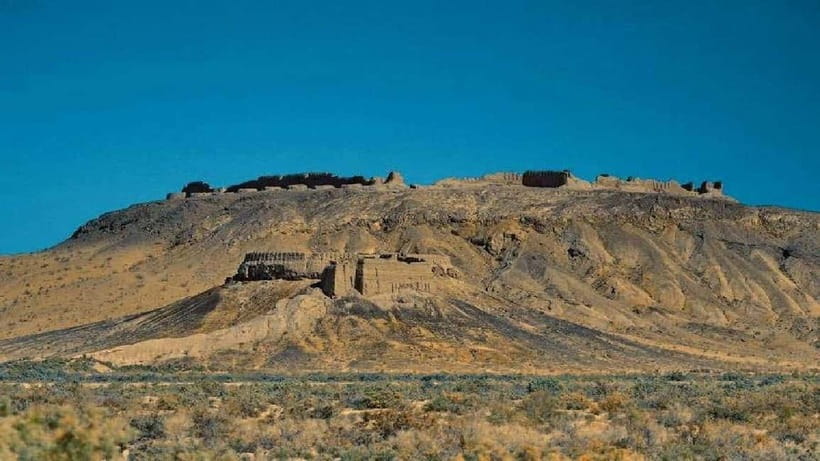
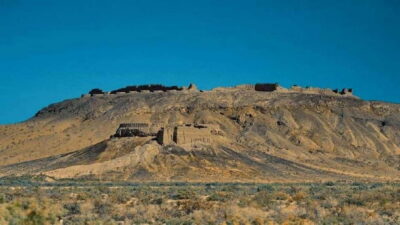
Ayaz-Kala is usually the high point of the day. The name is linked to a Turkic word meaning frosty or cold, and the site sits near the Sultan Uizdak ridge, about 96 kilometers from Khiva.
One important detail is often missed: Ayaz-Kala is not just one fortress. It is a group of three fortresses arranged around a hill. That arrangement gives the visit more variety than a single isolated ruin, and the elevated position makes the site especially striking in photographs.
You get free time to walk and take pictures. The setting is open and exposed, so sturdy shoes and water are sensible. The attraction here is the combination of wall remains, hill views, and distance from modern development.
If you want one fortress that feels most like the classic image of an ancient desert citadel, this is the one. It also rewards patience. Walk a little beyond the first viewpoint, look back at the walls, and notice how the fortifications fit the ridge and surrounding plain.
The visit is self-guided, so you will get more from it if you already know that the complex contains three fortresses. Ask the driver for the planned stopping time before you begin walking, especially if you want enough time for photographs.
Kavat-Kala, where the remains are harder to read
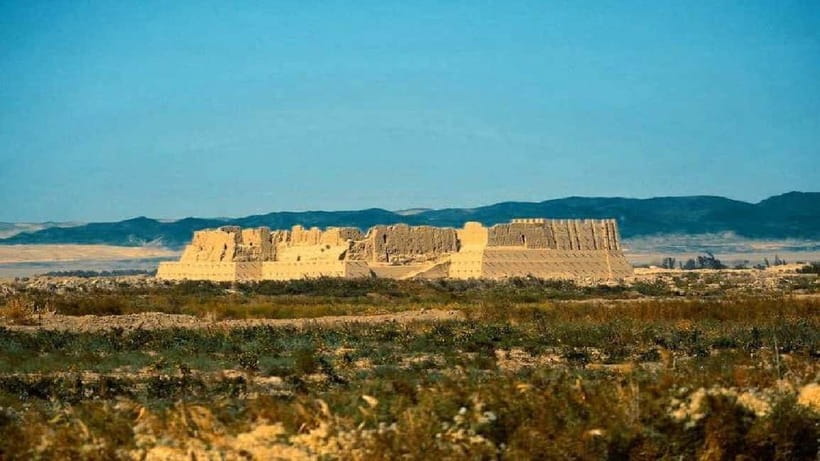
Kavat-Kala is a different kind of stop. The complex stretches for about 15 kilometers along the Gavhore Channel and is two to three kilometers wide. The central fortress measures roughly 160 by 190 meters.
From the twelfth to the thirteenth centuries, this was a busy populated area with as many as 90 estates. Ruins of homes and clay buildings were still visible in the area in recent times, though the remains can be difficult for an untrained eye to interpret.
This is the site most likely to test your patience. You may see earth shapes, partial walls, and traces of a once-settled oasis rather than a fortress that reads instantly. Its value is in the size of the wider complex and the chance to see a place still being studied.
The tour includes a break here, and the stop may work well as a pause between the more dramatic fortresses. Keep your expectations realistic. If you want five equally impressive monuments, Kavat-Kala may disappoint. If you like archaeology in progress and less polished sites, it adds useful depth.
More desert fortress trips from Khiva:
- Transfer: Bukhara – Khiva via Ancient Fortresses
★ 4.5 · 101 reviews - Guided Tour To Old Fortresses
★ 5.0 · 25 reviews - Tranfer Khiva – Bukhara via Ancient Fortresses
★ 4.8 · 24 reviews - Daytrip From Khiva to Savitsky Museum & Mizdakhan & Chilpik
★ 4.9 · 13 reviews
Toprak-Kala, the royal center
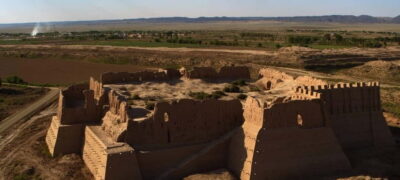
Toprak-Kala is the strongest stop for anyone interested in the ruling power of ancient Khorezm. Built in the third century, it served as the residence of the Khorezmshahs, the region’s rulers, until about AD 305.
The city later declined after repeated aggressive wars forced the rulers to leave. Excavations have uncovered coins, Zoroastrian ossuary fragments, fine ceramics, wool and silk fabrics, gold ornaments, and a necklace made with 300 beads of glass paste, amber, and coral.
You will not see all of those treasures lying around the ruins. They are archaeological finds that help explain the importance of the site. What you can appreciate on location is the plan and scale of a former royal settlement, along with the remains of a city that served political rather than purely defensive purposes.
Toprak-Kala is a good place to slow down. Look at the wall construction, the layout of the compound, and the difference between a royal center and a remote watch fortress. The stop includes walking, photographs, and a break.
For me, this is one of the two essential stops, along with Ayaz-Kala. If you are short on time or have limited interest in rough ruins, those are the sites to prioritize.
Kyzyl-Kala and the practical side of defense
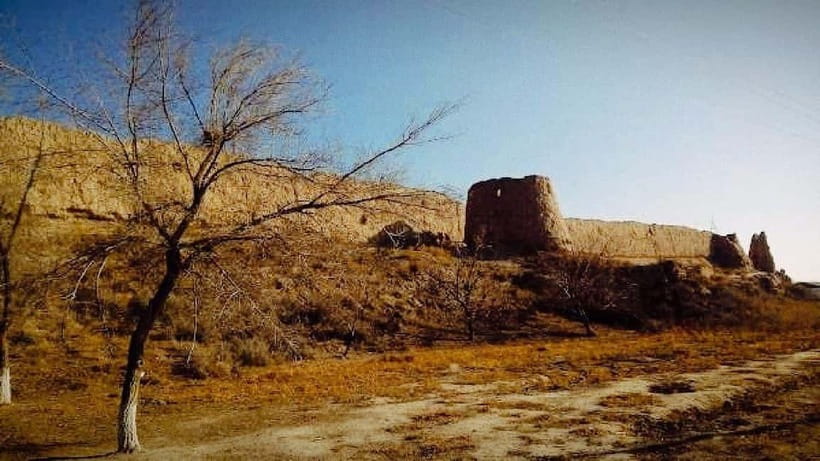
Kyzyl-Kala served as a refuge during raids by nomadic groups. Its double wall and corner watchtowers made it a defensible shelter, while smoke signals could warn nearby communities that an enemy army was approaching.
The fortress also had ceramic pipes designed to carry a continuing water supply into the fort. That small detail makes the place especially interesting. Defense was not only about thick walls. People inside also needed warning systems, water, and enough space to wait out an attack.
The stop includes a walk, photographs, and a safety briefing. Like the other sites, it is self-guided. Bring your attention to the practical features: wall layers, tower positions, and the way a settlement could function under pressure.
Kyzyl-Kala may not have the same visual impact as Ayaz-Kala, but it helps complete the story. You see how the Khorezmian fortresses worked as part of a wider system rather than as isolated monuments.
What the seven-hour schedule really feels like
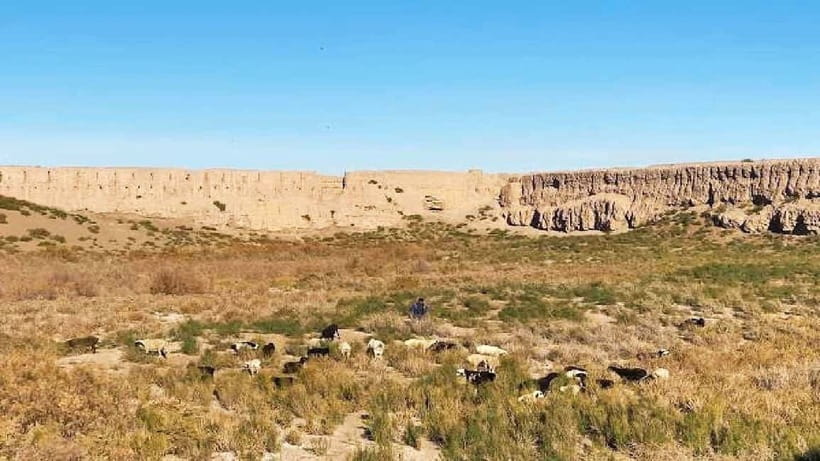
Five fortresses in seven hours means a steady pace. You will spend part of the day in the car, and the actual walking time at each stop may be limited by the route, road conditions, and your departure time.
The flexible start is useful. An early departure gives you more room for photographs and reduces the chance of rushing later. The listed program includes sunset periods at several stops, but you should confirm the exact timing with the driver rather than assume every site will receive golden evening light.
The route works best for a small group that wants to see a lot in one day. A private vehicle lets you stop for pictures and avoid the fixed pace of a larger coach. You can also ask for a little more time at Ayaz-Kala or Toprak-Kala if one site matters more to you.
The tradeoff is depth. With five stops, you are sampling the fortress zone rather than studying each site in detail. A seven-hour trip cannot provide long archaeological walks, extensive lectures, and relaxed meals all at once.
Driver quality and the need to set expectations
The most praised part of the experience is the personal service from the driver. The driver may be friendly, accommodating, and willing to stop where you ask. One driver named Izzat received especially warm feedback for sharing local culture and helping make the day pleasant despite the language barrier.
That does not mean every driver will provide the same level of explanation. Some drivers speak little English and mainly handle the route. You should treat the trip as private transportation with sightseeing, not as a guaranteed English-language guided tour.
Driving style is another point to clarify. One serious complaint described very fast driving on poor roads. Even though other accounts praised the driver, this is worth addressing at pickup. Ask the driver to keep the speed comfortable, especially on damaged sections of road, and speak up if you feel rushed.
If history is central to your trip, arrange a separate guide or bring reliable notes. The tour includes no guide, and the fortresses make far more sense when you understand the dates, defensive systems, and role of each site.
Lunch, entry fees, and the real cost
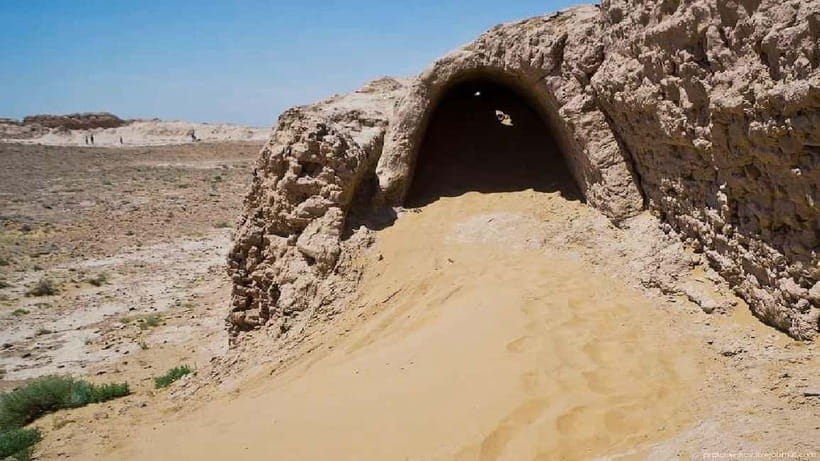
The listed price is $115 per private group of up to three people. Split between three, that is a fair rate for private round-trip transport from Khiva or Urgench, an air-conditioned car, hotel or airport pickup, parking, and drop-off.
For one person, the price is less compelling, but the private format still offers convenience. You are paying for the long ride into Karakalpakstan and the ability to set your departure time, not for a museum-style tour with a specialist guide.
Entry tickets are extra. A recent account reported paying 20,000 Uzbek som at three sites, though you should confirm the current fees and carry Uzbek currency. The booking price does not include lunch either.
Be careful with restaurant suggestions. One experience involved pressure to use a poorly rated restaurant and a second place with a menu that had no prices. You can ask to choose the restaurant yourself, confirm prices before ordering, or bring food and snacks from Khiva. The tour description allows an optional lunch, but it does not promise a particular restaurant.
Free cancellation up to 24 hours before departure and reserve-now, pay-later booking make the plan easier to adjust. Those terms are useful if your schedule in Khiva depends on train or flight timing.
Who should book this fortress day trip?
I would choose this tour if you want to get beyond Khiva’s old city and see the wider Khorezm region in one efficient day. It suits couples, friends, and families of up to three who value a private car and do not need a formal lecture at every stop.
It is also a good match for photographers and anyone curious about ancient defensive architecture. Ayaz-Kala and Toprak-Kala provide the strongest payoff, while Guldursun-Kala and Kyzyl-Kala add scale and practical military detail.
I would hesitate if you dislike long drives, rough archaeological sites, or independent sightseeing. The ruins are not all equally clear, and one or two stops may feel like piles of earth and broken walls rather than complete fortresses.
Before booking, ask three direct questions: Who will drive, how much English does the driver speak, and can the vehicle keep to a comfortable speed? Also confirm the entry fees, lunch plan, and how much time you will get at Ayaz-Kala.
Should you book it?
Book it if your priority is seeing five ancient Khorezm sites without arranging transport yourself. The private car and flexible schedule make the $115 group price reasonable, especially for three people.
Do not book it expecting a fully guided archaeology lesson. The strongest version of this day includes an English-speaking driver, sensible driving, your own background reading, and a firm plan for lunch and cash fees. If those conditions suit you, this is a worthwhile way to see the fortresses beyond Khiva. If they do not, arrange a smaller route focused on Ayaz-Kala and Toprak-Kala instead.
FAQ
Where does the tour begin?
Pickup is available from hotels in Khiva, as well as from Urgench airport or railway station.
Where does the tour end?
Drop-off is available in Khiva or Urgench.
How long does the experience last?
The day trip lasts about seven hours.
Which fortresses are included?
The route includes Guldursun-Kala, Ayaz-Kala, Kavat-Kala, Toprak-Kala, and Kyzyl-Kala.
Is this a private tour?
Yes. The transport is for a private group of up to three people.
Is a guide included?
No guide is included. The driver takes you between the sites, and some drivers may provide limited information. English ability can vary.
Are entry tickets included?
No. Entry tickets are paid separately. A recent account reported fees of 20,000 Uzbek som at three sites, but you should confirm the current prices.
Is lunch included?
No. Lunch is optional and not included in the price. You can discuss a restaurant stop with the driver or make your own food plans.
What is included in the $115 price?
The price includes private round-trip air-conditioned transport, pickup and drop-off in Khiva or Urgench, parking fees, and a flexible departure time.
Can I cancel the booking?
You can cancel up to 24 hours in advance for a full refund, and the reserve-now, pay-later option lets you avoid paying at the time of booking.
Just added around Khiva
- Traditional Khiva Cooking Class with Market Visit & Lunch★ 5.0 · 4 reviews
- Uzbekistan 6 Days Private Tour Khiva-Bukhara-Samarkand by Train★ 5.0 · 4 reviews
- 6- Day Private Tour to Tashkent, Khiva, Bukhara and Samarkand★ 5.0 · 5 reviews
- Master Class – Uzbek Bread (Khiva)★ 3.5 · 4 reviews
- Old Khiva Stories with Your Local Guide★ 5.0 · 5 reviews
- A Night In The Kyzylkum Desert [2] From Khiva★ 4.5 · 3 reviews
- Khorezm Fortress and KyzylKum Desert Private Tour★ 5.0 · 3 reviews
- Best of Khiva: Exclusive Private Tour!★ 5.0 · 3 reviews
Ancient Fortress Tours, compared.
Daytrip From Khiva to Savitsky Museum & Mizdakhan & Chilpik
Read our review →

Private Bukhara-Khiva Transfer via Ancient Fortresses
Read our review →
Browse the lists this tour appears in