
Reviewed · PRIVATE TOURS
Best of Khiva: Exclusive Private Tour!
Khiva’s old city is the star here: a compact, walled Silk Road town where blue tile, mud-brick lanes, minarets, madrasas, and palace courtyards appear one after another. With a private historian beside you, you can focus on the stories behind the monuments instead of simply walking past them.
I especially like the private format, since your guide can keep the pace suited to your group and help you see the key sights in limited time. The included entrance tickets are another plus, and guides such as Nilufer and Nargis bring clear explanations to the mosques, madrasas, and museums.
The main consideration is the pace. Ten listed stops fill roughly five to six hours, and several visits last 30 to 40 minutes. You will cover a lot of ground, but this is not a slow, empty-calendar stroll. Lunch is not included, and climbing the highest tower costs an additional $15.
Key points to know before booking
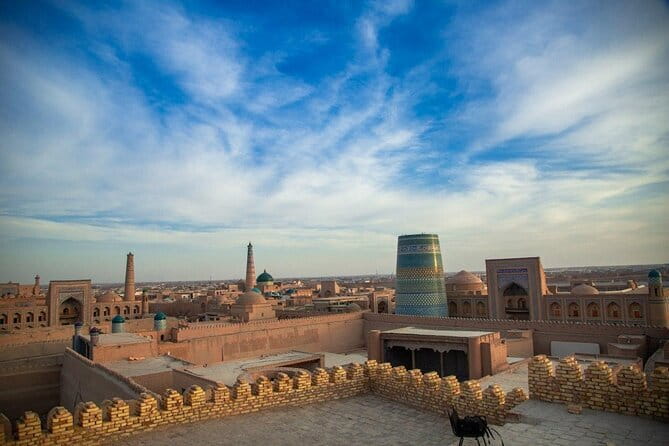
- Khiva’s Itchan Kala is the setting: You spend the tour inside the UNESCO-listed old town, with its historic gates, narrow lanes, and major monuments.
- You get a private historian: Only your group takes part, with guides including Nilufer and Nargis named among the available guides.
- The route covers the essential sights: Kunya-Ark, Tosh-Hovli Palace, Juma Mosque, Pahlavan Mahmoud Mausoleum, two madrasas, Kalta Minor, and two city gates are included.
- Tickets are built into the price: Monument admission, taxes, photo stops, and the walking pickup are included.
- The tour is useful on a short stay: A guide helps you link the main sights efficiently instead of working out the old city’s sequence alone.
- Extras are limited but worth noting: Lunch is separate, and the highest tower climb costs $15 more.
Why a private walk works well in Khiva
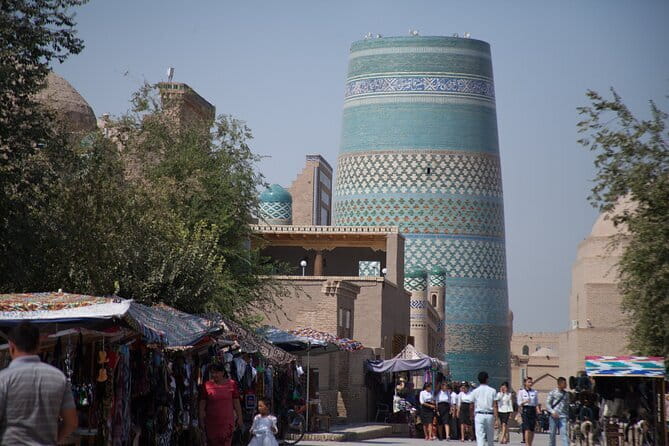
Khiva’s old town is not a scattered collection of sights. It is a walled historic quarter, formally called Itchan Kala or Ichan Qal’a, with buildings packed along an old street pattern. That makes walking the natural way to see it, but the density can also make the city feel like a puzzle.
A private guide solves that problem. You do not have to stop every few minutes to check a map or decide which doorway matters. Your guide can point out the important buildings, explain how they fit into Khiva’s Silk Road past, and keep the visit moving.
The private setup also gives the tour a useful sense of scale. You are not being carried from one major sight to another by vehicle, with the old city reduced to a series of quick photographs. Instead, the monuments connect as you walk from the gates to the palace, mosque, madrasa, and mausoleum.
The advertised price is $76.80 per person. Its value depends on your group size, but the package includes a private historian, monument tickets, taxes, photo stops, and pickup on foot. For a small group trying to see Khiva’s main sights in one half-day, that is a practical bundle. If you prefer to wander without a schedule, you may find the route too structured.
More Private Tours in Khiva
- Uzbekistan 6 days private tour Tas-Khiva-Buk-Sam-Tas
★ 5.0 · 45 reviews - Private Daytrip to 7 Ancient Fortresses of Khorezm
★ 5.0 · 25 reviews - Private Bukhara-Khiva Transfer via Ancient Fortresses
★ 4.5 · 8 reviews
Starting inside the walls of Itchan Kala
The first stop is Itchan Kala, Khiva’s UNESCO-listed fortress city. The scheduled visit is only 10 minutes, but it functions as the doorway to the whole experience rather than a full monument visit.
This is where you get your bearings. The walls help explain why Khiva feels so distinct from a modern Uzbek city. Once inside, the tour becomes a sequence of courtyards, tiled facades, old gates, religious schools, royal spaces, and lanes that reward looking up and around.
A short opening stop is sensible because the main monuments come next. Still, do not expect a lengthy introductory talk here. The deeper explanations are spread through the later visits.
Kunya-Ark: the khan’s old castle
Kunya-Ark means old castle, and the complex dates to the late 17th century, with construction in 1686 to 1688 under Anushakhan’s son, Arangakhan. Its footprint measures about 130 by 93 meters, so this is more than a single decorated building.
You spend about 40 minutes here. The complex included an official reception hall and other spaces tied to the khan’s rule. That makes Kunya-Ark a good early stop because it gives political context to the religious schools and public buildings that follow.
I like this part of the route for its sense of power and daily administration. Khiva is not only a pretty old town. It was also a working center of authority, and the castle helps you see the city from the ruler’s side.
Mohammed Rakhim Khan Madrasa and Kalta Minor
The Mohammed Rakhim Khan Madrasa sits east of Kunya-Ark. The tour allows 40 minutes, enough time for your guide to explain the building and its connection to Said Muhammad Rahim Bahadur Khan, also known locally as Madraim Khan II.
Madrasas were religious schools, but they were also major parts of the city’s public architecture. Their facades, courtyards, and entrances tell you how education and faith shaped the old town. Your guide’s explanation matters here because a madrasa can otherwise look like one more beautiful tiled facade.
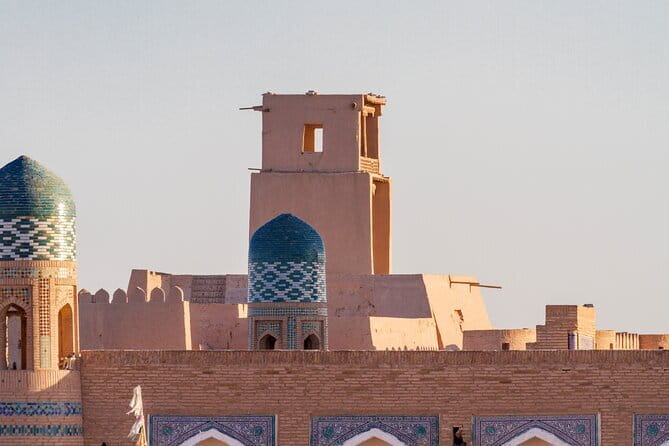
Next comes Kalta Minor, one of Khiva’s most recognizable sights. You spend about 30 minutes with this unfinished 19th-century minaret, commissioned by ruler Mukhammad Amin Khan. Its name means low tower, a fitting reminder that the project was never completed.
The unfinished state is the point. You are not looking at a damaged monument that once reached its intended height. You are looking at an ambitious plan left incomplete, which gives the site a different character from the finished minarets nearby.
Same city, a completely different kind of day:
- Khiva: Historical City Highlights Guided Walking Tour
★ 4.8 · 156 reviews - Transfer: Bukhara – Khiva via Ancient Fortresses
★ 4.5 · 101 reviews - Daytrip From Khiva To Ancient Fortresses
★ 4.6 · 60 reviews - Daytrip from Khiva to Aral Sea Cemetery of Ships. All in one
★ 4.3 · 52 reviews
Tosh-Hovli Palace and the royal side of Khiva
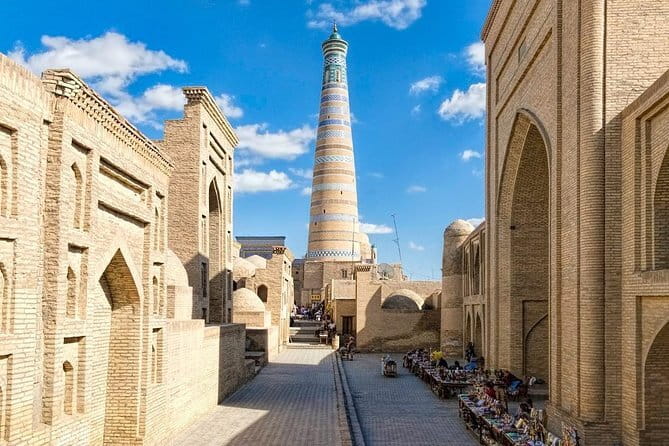
The tour gives Tosh-Hovli Palace a full hour, making it the longest scheduled stop. That extra time is welcome. Palace architecture needs room for courtyards, rooms, tilework, and stories about how the complex functioned.
Tosh-Hovli is also written as Tash-Hauli or Tosh-Hauli. It is a prominent historic complex inside the walled city, and its name is often translated in connection with a stone courtyard. The tour’s longer visit lets you move beyond a quick exterior photograph.
For me, this is one of the most valuable stops because it balances the religious architecture. After seeing madrasas and minarets, you get a closer look at royal life and formal spaces. Ask your guide to connect the palace to Kunya-Ark, since the two sites show different sides of Khiva’s ruling world.
The practical drawback is that an hour inside a palace can feel long if you are mainly interested in street scenes. If ornate architecture is your priority, though, this is precisely where the schedule gives you time to look carefully.
Pahlavan Mahmoud Mausoleum
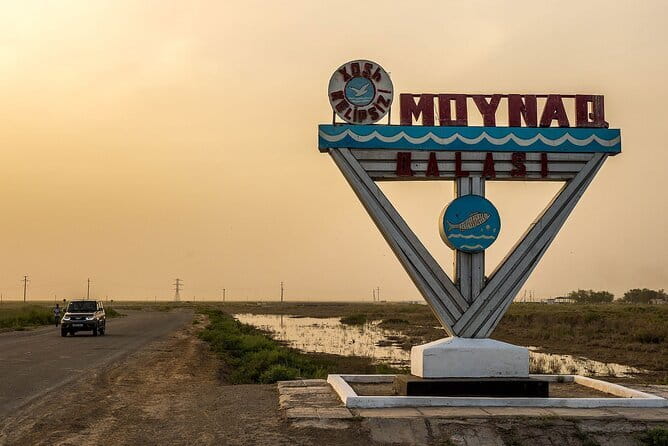
The Pahlavan Mahmoud complex is scheduled for 40 minutes and lies near Juma Mosque. Pahlavan Mahmoud was a local poet and philosopher, also known for heroic strength and the ability to heal people.
That combination of poetry, philosophy, physical strength, and healing gives the site a more personal feel than a royal palace. It connects Khiva’s architecture to a local figure remembered for more than political power.
A mausoleum can be easy to rush through, especially on a full sightseeing route. The 40-minute allocation suggests that this stop is meant to receive real attention. Listen for the guide’s explanation of Pahlavan Mahmoud and the meaning of the complex, rather than treating it as another tiled building on the way to the mosque.
Juma Mosque and its place in the old town
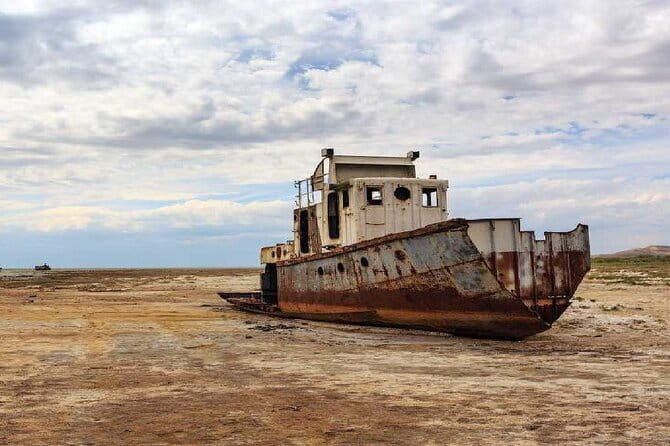
Juma Mosque sits in the central part of Itchan Kala, near several of Khiva’s major structures. The visit lasts about 40 minutes.
The central location matters because it shows how closely the religious heart of the old town sits beside palaces, madrasas, and commercial routes. You are not visiting an isolated monument. You are seeing one part of an urban center where worship, education, government, and trade existed close together.
The mosque is also a useful place to slow the tour down. After the strong colors and grand facades of other stops, a mosque visit can shift your attention toward interior space and atmosphere. Your guide’s explanation is especially helpful here, since the meaning of the building is not always obvious from the outside.
Gates that frame Khiva’s Silk Road story
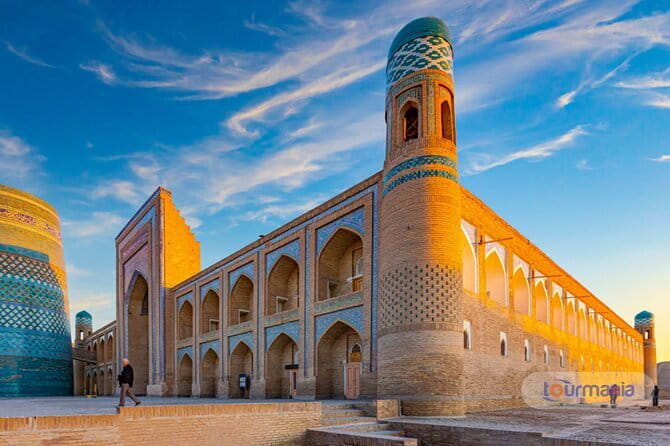
Polvon Darvaza receives about 30 minutes. It is one of the historic gates through Khiva’s old walls and once controlled access to the city, welcoming merchants and other people moving along Silk Road routes.
Ota Darvaza also receives 30 minutes. It was a key entrance for traders and travelers, and its architecture helps you understand how the walled city met the world beyond it.
These stops might sound less exciting than a palace or minaret, but I would not skip them. Gates explain movement. They show where people entered, where goods passed, and how Khiva’s walls shaped city life.
The two gate visits also give the route a useful beginning-to-end frame. You are not only looking at buildings inside the walls. You are seeing the entrances that made the old town part of a larger trading network.
What the guides add to the day
The strongest reason to book this as a private tour is the human explanation. Nilufer is named as one guide, and Nargis is another. Both are associated with clear storytelling about the mosques, madrasas, and museums.
Nilufer is specifically praised for explanations and stories, as well as helping a short visit cover the important sights. That is exactly the service this route needs. Khiva has enough monuments to fill a day, and an informed guide helps you decide what deserves your attention first.
Nargis is described as bringing the city’s religious schools, mosques, and museums to life. That matters because the architecture is impressive but can blur together after several hours. Good interpretation gives each stop its own identity.
Since this is a private activity, only your group participates. You can ask for more detail at Kunya-Ark, spend longer at Tosh-Hovli, or keep moving if a particular building is less important to you. The actual flexibility will depend on the guide and timing, but the format allows for it in a way a large group usually cannot.
Timing, transport, and what to budget
The experience lasts about five to six hours. The listed stop times add up to close to six hours, so plan on a substantial half-day rather than a brief orientation walk.
Pickup is offered, and the inclusions specify pickup on foot. Private transportation transfer is included only with the Pick-Up with Transportation option. Check that selection carefully when booking, since a walking pickup and a vehicle transfer are not the same service.
Entrance tickets to the monuments are included, as are all fees and taxes. Photo stops at the best spots are also part of the package. You do not need to build a separate admission budget for the scheduled sites.
Lunch is not included. Carrying money for a meal is simple, but your exact lunch timing is not described, so do not assume the tour includes a restaurant stop. The highest tower climb costs an additional $15. If climbing is a priority, include that amount in your day’s budget.
The tour has a mobile ticket and offers group discounts. Confirmation is received at booking, and free cancellation is available if you cancel at least 24 hours before the local start time. Changes or cancellations inside that window are not refunded.
Who will get the most from this tour
I would choose this experience if you have only one day, or less, in Khiva and want the main historic sights explained in a sensible order. It suits first-time visitors who want context rather than a self-guided checklist.
It is also a good fit for couples, families, or friends who prefer a private pace. The route is packed, but you are not sharing the guide with strangers, and the private structure can make a busy sightseeing day feel more manageable.
You may want a different plan if your ideal visit means sitting in one courtyard for an hour, taking unplanned side streets, or stopping often for meals and shopping. Ten stops create strong coverage, but they also create a schedule.
Most people can participate, according to the supplied activity information. The tour is a walking experience through an old city, so you should be comfortable spending several hours on your feet, though the material does not provide a more specific mobility assessment.
Should you book the Best of Khiva tour?
Book it if you want efficient coverage with a private historian. The price includes the key monument admissions, and the route reaches the places that define Khiva: the old castle, royal palace, unfinished minaret, central mosque, mausoleum, madrasas, and historic gates.
The clearest value comes when your time is short. Guides such as Nilufer and Nargis add the stories and connections that turn a string of beautiful buildings into a readable city.
Think twice if you dislike fixed routes or want lunch and tower climbing included. For most first visits, though, this is a strong half-day choice, especially if you confirm the pickup option and set aside extra money for the $15 tower climb.
FAQ
Where does the tour take place?
The experience takes place in Khiva, Uzbekistan, mainly inside the UNESCO-listed Itchan Kala, the old walled city.
How long does the tour last?
The tour lasts approximately five to six hours.
Is this a private tour?
Yes. Only your group participates in the activity.
Is a guide included?
Yes. A historian guide is included. The named guides associated with the experience include Nilufer and Nargis.
Are entrance tickets included?
Yes. Entrance tickets to the listed monuments are included in the tour price.
Is transportation included?
Private transportation transfer is included with the Pick-Up with Transportation option. Pickup on foot is also offered.
Is lunch included?
No. Lunch is not included.
Does the tour include the highest tower climb?
No. Climbing the highest tower costs an additional $15.
Can most people participate?
The activity information states that most travelers can participate.
Can I cancel for a full refund?
Yes, if you cancel at least 24 hours before the experience start time. Cancellations made less than 24 hours before the start time are not refunded.
Just added around Khiva
- Uzbekistan 6 Days Private Tour Khiva-Bukhara-Samarkand by Train★ 5.0 · 4 reviews
- Traditional Khiva Cooking Class with Market Visit & Lunch★ 5.0 · 4 reviews
- 6- Day Private Tour to Tashkent, Khiva, Bukhara and Samarkand★ 5.0 · 5 reviews
- Old Khiva Stories with Your Local Guide★ 5.0 · 5 reviews
- Master Class – Uzbek Bread (Khiva)★ 3.5 · 4 reviews
- Khorezm Fortress and KyzylKum Desert Private Tour★ 5.0 · 3 reviews
- A Night In The Kyzylkum Desert [2] From Khiva★ 4.5 · 3 reviews
- Best of Khiva: Exclusive Private Tour!★ 5.0 · 3 reviews
Private Tours, compared.
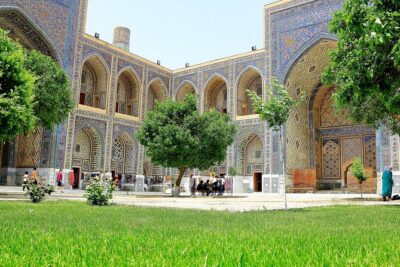
Private Samarkand City Tour With Transportation
Read our review →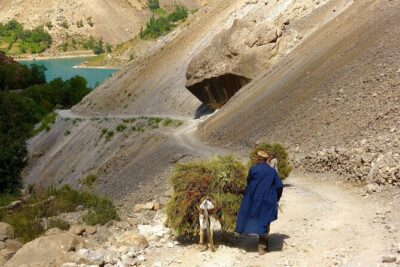
Full Day Private Tour in Seven Lakes from Samarkand
Read our review →
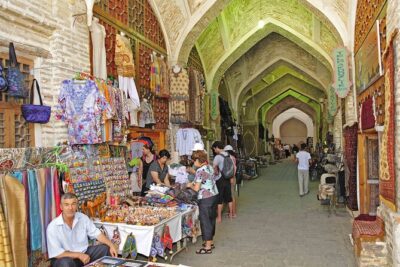
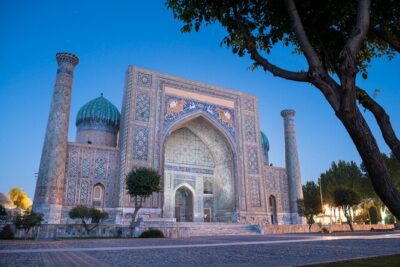
Uzbekistan 6 days private tour Tas-Khiva-Buk-Sam-Tas
Read our review →
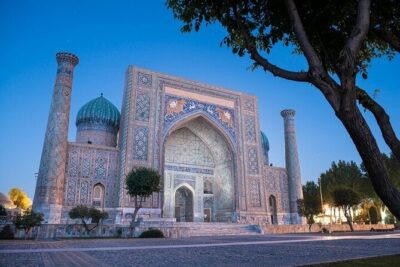
Uzbekistan 8 Days Private Tour Tashkent-Urgench-Bukhara-Samarkand-Tashkent
Read our review →Browse the lists this tour appears in