
Reviewed · WALKING TOURS
Khiva Walking Tour
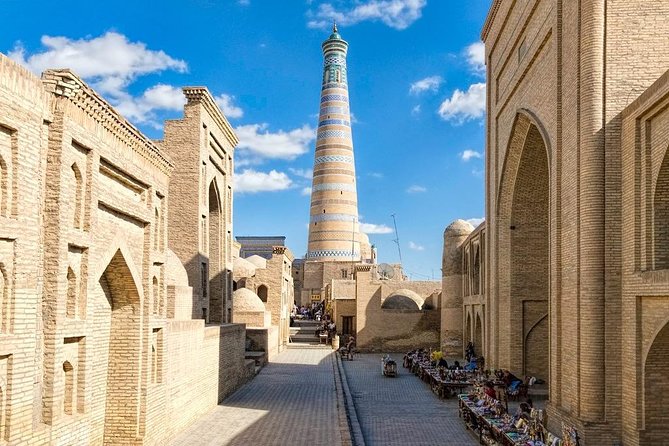
Khiva’s great attraction is Itchan Kala, a walled medieval city where minarets, madrassas, mosques, palaces, and mausoleums crowd into a compact walking area. This private tour gives you a guide to explain what you are seeing instead of leaving you to guess at the details behind the tilework and mud-brick walls.
I like the flexible approach to monument visits, since you pay only for the places you choose. I also like the chance to hear local social history from a guide such as Moxira, who grew up inside Itchan Kala. The main caution is that entrance fees are not included, and one reported booking failure makes it wise to confirm the appointment before setting out.
Key points to know before you book
- Itchan Kala is the entire focus: You spend the tour inside Khiva’s UNESCO-listed old city, with more than 10 minarets, over 20 madrassas, several mosques, and two former khan residences to explore.
- The tour is private: Only your own group takes part, so you can ask questions and adjust the pace more easily than on a large group walk.
- Monument tickets cost extra: One price mentioned by a participant was 200,000 Uzbek som per person at the old-town entrance. Confirm the current fee before booking.
- Moxira may add local insight: One highly praised guide, Moxira, grew up in Itchan Kala, and her family still lives there.
- Languages are broad but worth confirming: English, Russian, and French are listed, while the description also mentions German.
- Allow a full half-day: The advertised length is about four to five hours, though one participant found three hours sufficient for a shorter visit.
Why Itchan Kala deserves a guided walk
Khiva is not a city where the main sights are scattered across a wide modern center. Its historic core is enclosed within Itchan Kala, a compact walled district that feels more like a preserved town than a single monument. That makes it easy to walk, but it does not make it easy to understand.
The same sandy walls, blue tiles, domes, and tall towers can begin to blur together without context. A guide helps you separate a madrassa from a mosque, a khan’s residence from a mausoleum, and a working neighborhood from a monument restored for visitors.
Itchan Kala has been described as the City of a Thousand Minarets and as an open-air museum. Those labels are a little grand, but they point to the unusual density of historic buildings here. More than 10 minarets, over 20 madrassas, about five mosques, and several mausoleums occupy a relatively small area.
I especially like the fact that this is not only a monument tour. The experience is meant to explain Central Asian social history, including how religious schools, royal residences, places of worship, and ordinary homes fitted together. That broader view is useful in Khiva, where the walls can be beautiful enough to distract you from the people and institutions that shaped the city.
More Walking Tours in Khiva
- Khiva: Historical City Highlights Guided Walking Tour
★ 4.8 · 156 reviews - Khiva Historical City Highlights Guided Walking Tour
★ 5.0 · 30 reviews - Khiva Walking Tour
★ 4.7 · 22 reviews
Starting at the west gate
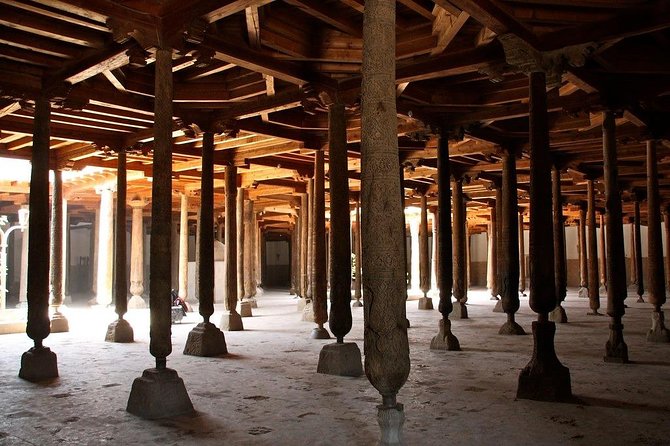
The meeting point is the west gate of Itchan Kala. The listed address is 99H4+CRQ in Khiva, in the Xorazm Region of Uzbekistan. The tour ends at the same meeting point, so you are not left trying to find your way back from an unfamiliar part of town.
This is a sensible starting point for a walking tour because the old city is the main subject from the first step. Pickup is offered, though the exact arrangement should be confirmed when you book. The experience is private, which means your group alone takes part rather than joining a large crowd.
The tour is advertised at four to five hours, but the timing can vary. One person found three hours enough for a satisfying visit, while another felt that a full afternoon was worthwhile. The difference will depend on how many buildings you enter, how many questions you ask, and how much time you want for photographs.
I would plan on the full half-day rather than treating the shorter estimate as a guarantee. Khiva rewards a slower pace, especially if your guide is explaining the purpose of each building instead of simply naming it.
A flexible route through palaces and madrassas
The route focuses on Itchan Kala rather than promising a fixed list of every monument. That is a strength for some visitors. You can decide which buildings matter most to you, then pay their admission charges separately.
If you want architecture, you can focus on decorated facades, minarets, courtyards, and former royal buildings. If you are more interested in religious education and daily life, ask your guide to spend more time on the madrassas, mosques, and local customs connected with them.
The flexibility also keeps the base price clear. You are not paying in advance for every possible monument, including places you might skip. On the other hand, you need to keep extra cash available. The tour fee does not include admission to the monuments, and one participant specifically reported paying 200,000 som per person to enter the old town.
The supplied details also say all fees and taxes are included, but separately list monument admission as excluded. The practical reading is that the guide service and listed tour charges are covered, while the tickets for individual sights are not. Ask for the current total before the walk so there is no confusion at the gate.
What a good guide adds to the buildings
A guide is most valuable here when the explanation moves beyond dates and names. The best version of this walk connects the buildings to the way Khiva worked as a city: who lived in the residences, what madrassas were used for, how religious sites served local communities, and why the old city developed such a concentrated group of institutions.
Several guides are described as speaking English, Russian, and French, with German also mentioned in the general description. Since the language list is not perfectly consistent, I would confirm your preferred language when booking.
Moxira is a particularly interesting possibility. She grew up inside Itchan Kala, and her parents still live there. That kind of personal connection can give a walk a different feel. It may help you understand the old city as a lived-in place rather than a museum display.
Do not assume that Moxira will be your assigned guide, however. Her name appears in the available feedback, not as a guaranteed part of every booking. If local background is important to you, ask whether she is available.
The strongest comments about the guiding praise clear answers, detailed explanations, and a pleasant manner. One person described an in-depth tour packed with information. That is good news if you like history explained at length, but it also means you should speak up if you prefer a lighter walk with more time to wander.
There is one caution. One participant found the guide rushed and distracted by conversations with other guides. That is not the dominant impression, but it is a useful reminder to agree on the pace at the start. Tell your guide if you want time for photographs, quiet observation, or questions.
Same city, a completely different kind of day:
- Transfer: Bukhara – Khiva via Ancient Fortresses
★ 4.5 · 101 reviews - Daytrip From Khiva To Ancient Fortresses
★ 4.6 · 60 reviews - Daytrip from Khiva to Aral Sea Cemetery of Ships. All in one
★ 4.3 · 52 reviews - Uzbekistan 6 days private tour Tas-Khiva-Buk-Sam-Tas
★ 5.0 · 45 reviews
The human side of a medieval city
Khiva’s visual appeal is immediate, but the social story is what can make the visit memorable. Itchan Kala is presented as the most authentic city in Central Asia and the only city in the region still occupying the place where it was founded. Those claims are broad, yet the central idea is useful: Khiva’s old core is not just a collection of buildings moved into a museum.
The presence of homes inside the historic district matters. A guide with family ties to the area can help you notice that the walls belong to a neighborhood as well as to a tourist attraction. You may hear about local life, customs, and the relationship between residents and the grand buildings around them.
The two former khan residences offer a window into political power. The madrassas show the importance of education and religion. Mosques and mausoleums point to worship, memory, and community life. Seeing these places together gives you a better sense of how the city functioned than visiting one impressive facade at a time.
I would use the walk to ask direct questions. What was this building used for? Who could enter? Was it a school, a residence, a religious site, or several things over time? Which buildings are still connected to local life? A private format makes those questions easier to ask without holding up a group.
The observation tower and the promised lunch
The description of the experience refers to views from an observation tower and a delicious lunch. Those could add welcome variety to several hours of walking, especially in a city where high viewpoints help you understand the compact shape of Itchan Kala.
At the same time, lunch and tower access are not clearly listed among the included services. The formal inclusion details name a professional guide and all fees and taxes, while also excluding monument admission and personal expenses. I would ask exactly what lunch includes and whether tower entry is extra before you pay.
This is a small but important point. A tour can be good value even when lunch is not included, but you should know the final cost. If the meal is arranged separately, you may prefer to choose your own restaurant and keep the schedule flexible.
Is $25 good value for Khiva?
At $25, the tour can be a sensible purchase if you want a private guide for a half-day. Khiva’s old city is walkable, but the value of the service comes from interpretation rather than transportation. You are paying for help making sense of a dense historic center and for the chance to ask questions at your own pace.
The price looks especially fair for a small private group. A private format usually gives you more control than a standard group walk, and the tour does not force you to buy admission to every monument. You can keep costs lower by choosing only the sights that interest you.
The extra ticket charges change the calculation. If the 200,000 som old-town fee still applies, add it to the advertised price. Individual monument tickets may also be separate, so budget beyond the $25 headline rate.
The tour is less useful if you already have a guidebook, have several days to study each building, and prefer to wander without commentary. It is more useful on a first visit, especially if you have only one day in Khiva and want a structured introduction before exploring alone.
Timing, comfort, and practical planning
Four to five hours on foot is a serious portion of the day. Wear shoes suited to walking and bring what you need for sun or changing weather, though specific equipment is not provided in the tour details.
The walk begins and ends at the west gate, which keeps the logistics simple. Pickup is offered, but you should confirm where and when the guide will meet you. Booking confirmation is issued at the time of reservation.
The tour is described as suitable for most participants. No special accessibility details are provided, so ask directly if your group has mobility concerns or needs a particular pace.
Free cancellation is available up to 24 hours before the start time for a full refund. Changes or cancellations within 24 hours are not refunded, and the cut-off follows local time in Uzbekistan. That policy is reasonable, but it makes confirmation important, particularly because one person reported that the provider did not appear and the hotel had to arrange another, cheaper tour.
I would send a short message before the day of the walk to confirm the meeting point, language, start time, guide name, and expected entrance charges. This takes little effort and removes the biggest practical uncertainty.
Who will get the most from this walk?
This tour suits you if you want a private introduction to Khiva without arranging a guide on arrival. It is also a good fit if you enjoy asking questions, want cultural context, or have just one day to make sense of Itchan Kala.
It works well for couples and small groups because the pace can be adjusted. Families may also appreciate the private format, though the four to five hour length could be long for younger children.
You will get the most from it if you choose your priorities before starting. Tell the guide whether you care most about palaces, religious buildings, architecture, local life, photography, or the city’s wider story. The flexible route then becomes a practical advantage.
I would be less eager to book if you want a fully packaged outing with every admission, meal, and viewpoint included in one price. This tour leaves some costs open, and the lunch and observation tower details need clarification.
Should you book the Khiva Walking Tour?
I would book this tour if you want a private, half-day introduction to Itchan Kala and value a guide who can explain more than the names of the monuments. The chance of meeting a guide with local roots, such as Moxira, adds real interest, and the flexible admission plan lets you shape the visit.
Before booking, confirm the guide’s language, the meeting arrangement, the current old-town fee, individual monument prices, and whether lunch or the observation tower is included. Also confirm the appointment close to the tour date.
Book it for context, structure, and local perspective. Skip it if you prefer to explore independently or want one all-inclusive price with no extra decisions. For a first look at Khiva, the balance of private attention and freedom to choose what you enter makes the $25 starting price appealing, provided you plan for the added tickets.
FAQ
Where does the Khiva walking tour start?
The tour starts at the west gate of Itchan Kala, listed at 99H4+CRQ in Khiva, Xorazm Region, Uzbekistan.
Where does the tour finish?
The activity ends back at the same meeting point.
How long does the tour last?
The advertised duration is approximately four to five hours. One participant found that three hours was enough for a shorter visit, but you should allow the full half-day.
Which languages can the guide speak?
English, Russian, and French are listed for the guide. German is also mentioned in the general tour description, so confirm your preferred language before booking.
Are monument entrance fees included?
No. Entrance to the monuments is excluded. One participant reported paying 200,000 Uzbek som per person at the entrance to the old town, but you should confirm the current amount.
Can I cancel for a full refund?
Yes. You can cancel at least 24 hours before the experience starts for a full refund. Cancellations or changes made within 24 hours are not refunded.
Just added around Khiva
- Uzbekistan 6 Days Private Tour Khiva-Bukhara-Samarkand by Train★ 5.0 · 4 reviews
- Traditional Khiva Cooking Class with Market Visit & Lunch★ 5.0 · 4 reviews
- 6- Day Private Tour to Tashkent, Khiva, Bukhara and Samarkand★ 5.0 · 5 reviews
- Master Class – Uzbek Bread (Khiva)★ 3.5 · 4 reviews
- Old Khiva Stories with Your Local Guide★ 5.0 · 5 reviews
- A Night In The Kyzylkum Desert [2] From Khiva★ 4.5 · 3 reviews
- Khorezm Fortress and KyzylKum Desert Private Tour★ 5.0 · 3 reviews
- Best of Khiva: Exclusive Private Tour!★ 5.0 · 3 reviews
Walking Tours, compared.
Samarkand One Day Tour: one day walking & group tour
Read our review →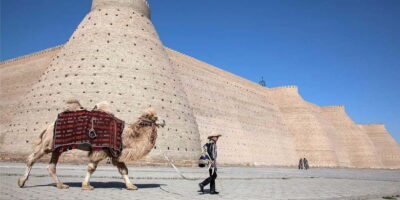
All You Need To Know About Bukhara. A Walk In The Town
Read our review →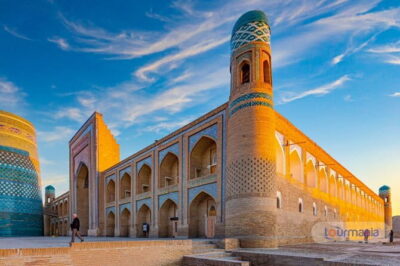
Khiva Historical City Highlights Guided Walking Tour
Read our review →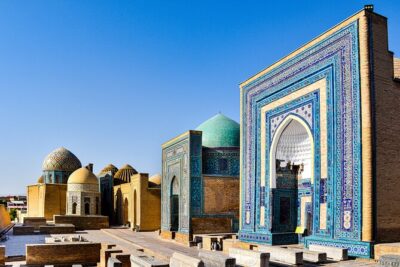
Browse the lists this tour appears in