
Reviewed · DAY TRIPS
Khiva day tour
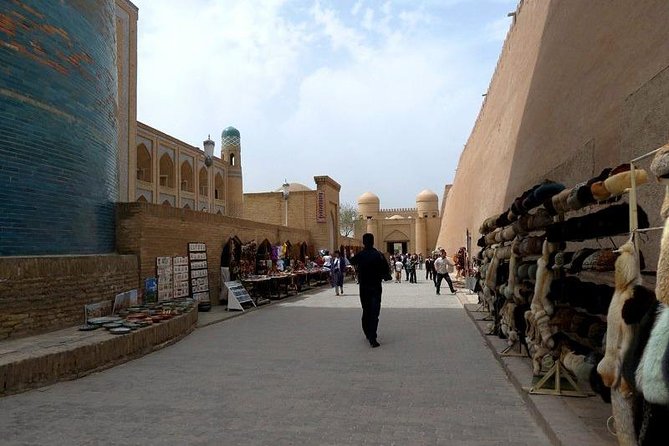
Khiva’s main attraction is wonderfully compact: behind the walls of Itchan-Kala, a private guide can lead you from turquoise-tiled minarets to quiet courtyards, grand palaces, and a forest of carved wooden mosque columns. This tour covers the city’s essential sights in about five to six hours, giving you a useful historical map of the old town.
I like the private format, since your guide can adjust the pace and focus on what catches your eye. I also like the practical touches: air-conditioned transport, bottled water, an 8:00 am start, and guides such as Charos, who have been praised for arriving on time and keeping the route moving even on hot days. The main consideration is cost beyond the $60 tour price, since admission tickets, taxes, and personal expenses are not included.
Key points to know before you book
- Itchan-Kala in one focused morning: See Khiva’s major monuments within the UNESCO-listed old town.
- A private tour for your group: You are not joining a large mixed party, so the guide can respond to your interests.
- An 8:00 am start: The early timing helps you make good use of the day and may be more comfortable in warm weather.
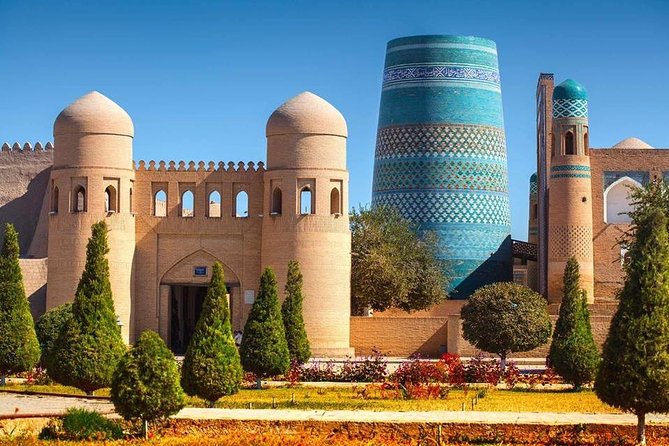
- Several headline sights in one route: Expect Kalta-Minor, Kunya-Ark, Juma Mosque, Tash-Khovli Palace, and the Islam-Khoja Minaret.
- Comfort built into the price: Bottled water, professional guide service, and air-conditioned transport are included.
- Budget for entrance charges: Admission tickets, taxes, and personal spending are extra.
Why Itchan-Kala is the right focus for a half-day tour
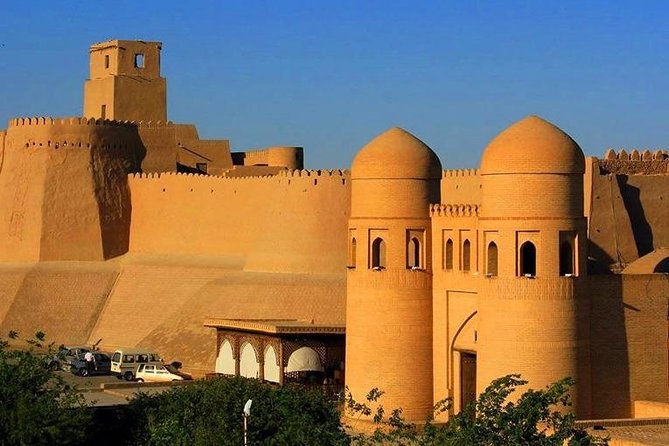
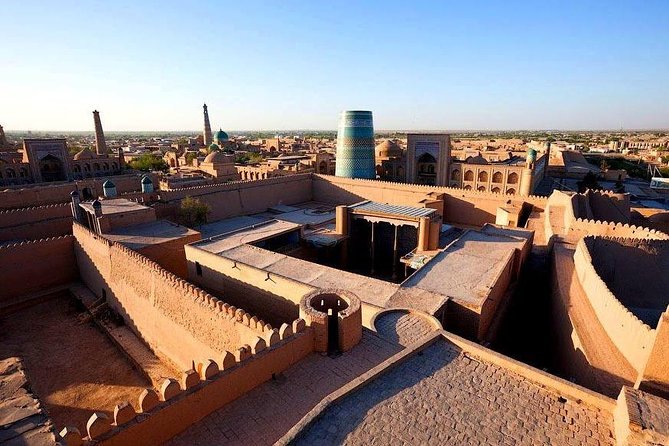
Khiva is easiest to understand inside Itchan-Kala, the walled inner city and UNESCO World Heritage site. Rather than spreading a short visit across distant parts of town, this tour concentrates on the area where Khiva’s major religious, royal, and civic buildings sit close together.
That makes the experience useful on your first morning. You get the basic layout, learn which buildings served religious or royal purposes, and can return later to the places that deserve more time. The private setup also means you can ask questions as they come up instead of waiting for a group to catch up.
The tour lasts roughly five to six hours. That is enough time for a serious introduction, but not enough for a slow examination of every tile, inscription, and museum display. I would treat it as an orientation with substance, not a complete study of every corner of the old city.
The 8:00 am meeting time is another practical advantage. Khiva can be hot, and one guide, Charos, is specifically praised for maintaining the full route on a very warm day. Starting early gives you more comfortable walking conditions and leaves the rest of your day open.
More Day Trips in Khiva
- Daytrip From Khiva To Ancient Fortresses
★ 4.6 · 60 reviews - Daytrip from Khiva to Aral Sea Cemetery of Ships. All in one
★ 4.3 · 52 reviews - Private Daytrip to 7 Ancient Fortresses of Khorezm
★ 5.0 · 25 reviews
Kalta-Minor and the madrasahs: Khiva’s grand first impression
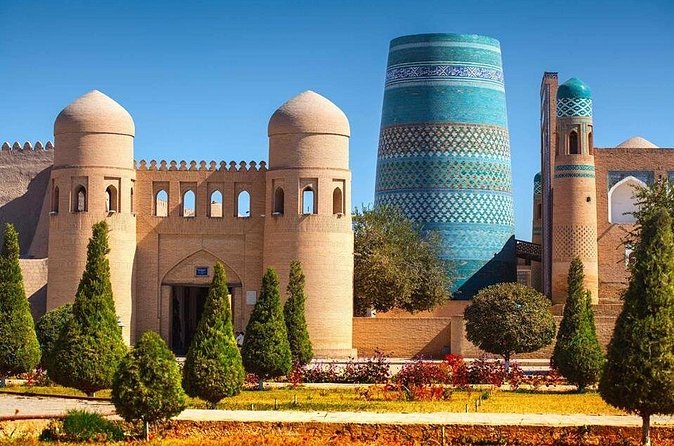
Kalta-Minor is one of the first sights likely to catch your attention. Built in 1855, the short, broad minaret is covered in blue and green tile and has a distinctive unfinished appearance. It does not look like a conventional slender tower, and that unusual shape makes it one of Khiva’s most memorable landmarks.
Nearby, Mukhammad Aminkhan Madrasah dates from 1851 to 1854. Its scale helps explain the ambition of nineteenth-century Khiva, when religious schools were also important public buildings. Your guide can place the structure within the city’s wider development rather than leaving you with only a photograph and a date.
Mukhammad Rahimkhan Madrasah, completed in 1876, adds another layer to the walk. Seeing the two madrasahs together helps you notice the changing details in their decoration and design. You do not need to be an architecture specialist to appreciate the contrast, but a good explanation makes the buildings more than colorful backdrops.
The useful thing about a guide here is context. On your own, you may remember Kalta-Minor as the blue-tiled tower and the madrasahs as attractive facades. With interpretation, you can connect them to the rulers, religious life, and urban planning that shaped Itchan-Kala.
Kunya-Ark: the old citadel within the walls
Kunya-Ark, a citadel dating from the seventeenth through nineteenth centuries, gives the tour a different focus. The madrasahs and minarets announce Khiva’s public and spiritual life. Kunya-Ark points you toward power and administration.
The name means old fortress, and the complex functioned as a royal center. Its courtyards and enclosed spaces help you picture how a ruling household and government operated inside the larger walled city. The dates span several periods, so it is worth listening for how the site changed over time.
I like this stop because it breaks up the procession of tiled facades. You are not simply moving from one monument to another. You are seeing how Khiva worked as a city, with religious institutions, royal quarters, markets, and defensive spaces tied together.
The tour is not advertised as an extended archaeological visit, so your time here will be part of the wider route. If one area interests you most, the private format lets you tell the guide. The ability to direct some of the conversation is a real benefit when a city offers more detail than a short visit can absorb.
Juma Mosque and its remarkable wooden columns
Juma Mosque, dating from the eighteenth century, is one of the most atmospheric stops in Itchan-Kala. Its interior is known for rows of carved wooden columns, creating a quieter and more shaded experience than the open courtyards outside.
This is the kind of place where a guide adds real value. The space can seem simple at first glance, but the columns reward closer attention. Their shapes, age, and arrangement give the mosque a strong sense of continuity. You may find yourself looking upward and sideways rather than rushing through for a single wide photograph.
The mosque also offers a welcome change of pace. Khiva’s major monuments often compete for attention with bright tilework and tall silhouettes. Juma Mosque is more restrained, and that restraint makes it memorable.
Admission is not included in the tour price, so keep that in mind before you arrive. The supplied information does not specify the separate entrance cost, so you should confirm current fees when booking or at the meeting point.
Same city, a completely different kind of day:
- Khiva: Historical City Highlights Guided Walking Tour
★ 4.8 · 156 reviews - Transfer: Bukhara – Khiva via Ancient Fortresses
★ 4.5 · 101 reviews - Uzbekistan 6 days private tour Tas-Khiva-Buk-Sam-Tas
★ 5.0 · 45 reviews - Khiva Historical City Highlights Guided Walking Tour
★ 5.0 · 30 reviews
Tash-Khovli Palace and the world of royal courtyards
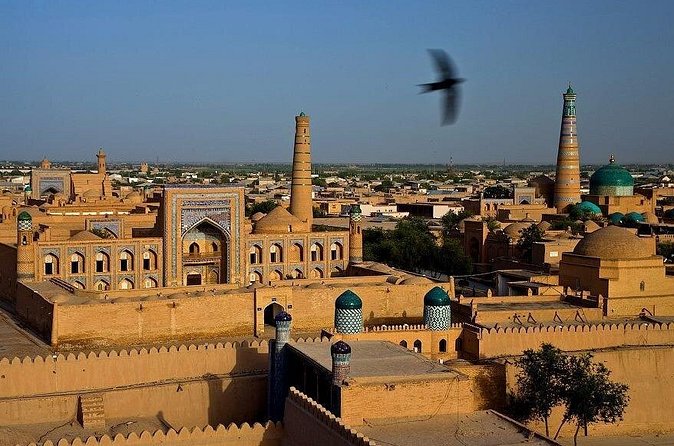
Tash-Khovli Palace, built in the nineteenth century, is another major stop. The name is often translated as stone courtyard, and the complex is best understood through its enclosed spaces, decorative tilework, and division into different areas of palace life.
A palace visit is more rewarding when someone explains how the courtyards were used. Look for the way rooms open onto shared outdoor spaces, how decoration marks important areas, and how privacy and ceremony shaped the building. Your guide can help you read those details instead of treating the palace as a sequence of beautiful rooms.
This is also a good place to ask about daily life. The palace represents rulers and formal power, but the buildings become more interesting when you consider the people who worked, lived, met, and waited there. A responsive guide can steer the explanation toward architecture, politics, customs, or practical details according to your interest.
The pace matters here. Itchan-Kala contains so many decorated surfaces that it is easy to suffer from visual overload. A five-to-six-hour tour can cover a lot, but you should not expect unlimited time at every courtyard. If you want long photography stops, say so early.
Pakhlavan Makhmud Mausoleum and local devotion
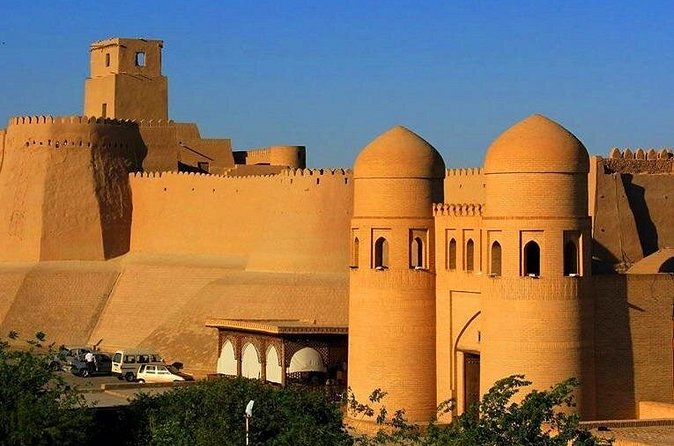
The Pakhlavan Makhmud Mausoleum dates from 1701 and adds a spiritual dimension to the route. It is associated with Pakhlavan Makhmud, a celebrated figure in Khiva’s cultural and religious tradition.
Mausoleums ask for a different kind of attention from palaces and fortresses. Decoration matters, but so do atmosphere, customs, and the meaning of the site to local people. Dress and behavior should be respectful, and you should follow your guide’s instructions about where to stand and when photography is appropriate.
This stop helps prevent the tour from becoming a parade of royal buildings. You see how memory and devotion shaped the city as strongly as government did. I would listen closely here, since a short explanation can make the difference between seeing a decorated shrine and understanding why it matters.
Islam-Khoja Minaret and the final view upward
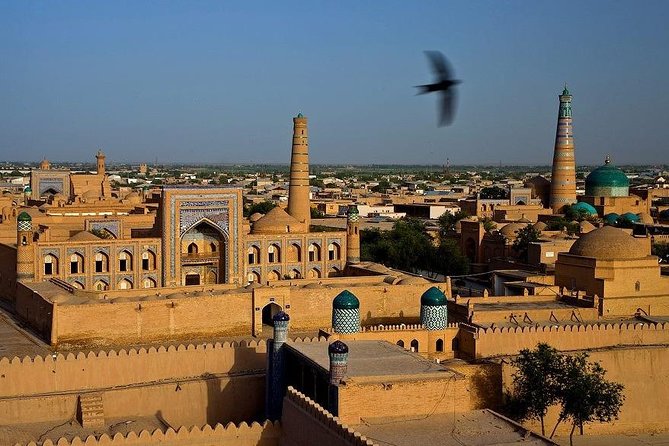
The Islam-Khoja Minaret, dating from the nineteenth century, is among the most recognizable structures in Khiva. Its narrow, patterned form contrasts sharply with Kalta-Minor’s squat shape, giving you a useful visual comparison between two of the city’s most famous towers.
The minaret is also a reminder that Khiva’s skyline was designed to be seen from a distance. As you walk through the tight streets of Itchan-Kala, the tower helps orient you. It is both a monument and a landmark.
The supplied details do not promise a climb, so you should not book this tour expecting a guaranteed tower ascent or a particular panoramic viewpoint. The confirmed experience is a guided visit to the minaret as part of the old-city route.
By this point, the sequence of sights should make better sense. You have seen the royal citadel, religious buildings, schools, a palace, a mausoleum, and major towers. Together, they show how much civic life was packed inside Khiva’s walls.
What the $60 price really covers
At $60 per person, this is not simply a ticket to walk around Khiva. The price covers a private experience, professional guide service, air-conditioned transportation, and bottled water. For a small party that values explanation and a flexible pace, those inclusions can make the fee reasonable.
The private format is especially important. A large group tour might cost less, but it would be less likely to adjust its commentary to your interests. One guide was praised for noticing what the group cared about and changing the focus accordingly. That is the main value here: you are paying for access to a person who can connect the buildings and respond to your questions.
There are extra costs. Entrance admission is not included, and the tour information also excludes all fees and taxes, along with personal expenses. Since the exact ticket price is not provided, ask for the current total before setting your budget.
Group discounts are offered, so the per-person value may improve if you are traveling with several people. This is also a practical choice for anyone who would otherwise hire separate transport and arrange a guide on arrival.
Timing, meeting point, and comfort
The tour begins at 8:00 am at Itchan Kala, Boltaeva 41, in Khiva. It ends back at the same meeting point. Pickup is offered, but the published meeting details identify the Itchan Kala address, so confirm the exact pickup arrangement when booking.
Air-conditioned transport is included, though the information does not spell out how much of the route uses the vehicle. Since the main sights are inside the old city, expect walking to be an important part of the experience. Wear comfortable shoes, carry sun protection, and use the supplied water as needed.
Most people can participate, and the meeting point is near public transportation. The tour is private, so only your own group takes part. Confirmation is provided at booking, and the activity is generally booked well ahead, with an average booking time of 36 days in advance. That makes early planning sensible if your Khiva dates are fixed.
You can cancel free of charge up to 24 hours before the start time. Changes or cancellations made less than 24 hours before the 8:00 am start are not refunded, and the same local-time cutoff applies if plans change.
Who will get the most from this Khiva tour?
I would choose this experience if you have limited time in Khiva and want a strong introduction without arranging several separate visits. It suits first-time visitors, couples, families, and small groups who prefer asking direct questions rather than following a large crowd.
It is also a good match for people who care about historical context. The route includes the city’s headline buildings, but the real benefit is the connection between them. A guide can explain why a madrasah, mosque, palace, and fortress belong in the same story.
You may want a different plan if you prefer to explore entirely alone, spend long stretches photographing one building, or avoid extra entrance charges. Five to six hours is a substantial introduction, but it is not a slow, specialist architectural study.
Should you book it?
Book this tour if you want to understand Khiva quickly and prefer a private guide who can adjust the conversation to your interests. The strongest reasons are the focused route through Itchan-Kala, the early start, the private format, and the chance to see major sites such as Kunya-Ark, Juma Mosque, Tash-Khovli Palace, and both famous minarets in one outing.
Before paying, confirm the pickup details and the separate admission costs. If those extras fit your budget, the $60 price offers a practical way to get your bearings in one of Central Asia’s most distinctive old cities.
FAQ
Where does the Khiva day tour begin?
The tour begins at Itchan Kala, Boltaeva 41, 220900, Khiva, Xorazm Viloyati, Uzbekistan.
What time does the tour start?
The start time is 8:00 am.
How long does the tour last?
The experience lasts approximately five to six hours.
Is the tour private?
Yes. Only your group participates in the activity.
Is pickup available?
Pickup is offered. The listed meeting point is at Itchan Kala, so confirm the exact pickup arrangement when booking.
What is included in the price?
The price includes bottled water, professional guide service, and air-conditioned transportation.
Are entrance tickets included?
No. Admission tickets are not included. All fees and taxes and personal expenses are also excluded.
Can I cancel for a full refund?
Yes, if you cancel at least 24 hours before the experience start time. Cancellations or changes made less than 24 hours before the start are not accepted for a refund.
Just added around Khiva
- Uzbekistan 6 Days Private Tour Khiva-Bukhara-Samarkand by Train★ 5.0 · 4 reviews
- Traditional Khiva Cooking Class with Market Visit & Lunch★ 5.0 · 4 reviews
- 6- Day Private Tour to Tashkent, Khiva, Bukhara and Samarkand★ 5.0 · 5 reviews
- Master Class – Uzbek Bread (Khiva)★ 3.5 · 4 reviews
- Old Khiva Stories with Your Local Guide★ 5.0 · 5 reviews
- A Night In The Kyzylkum Desert [2] From Khiva★ 4.5 · 3 reviews
- Khorezm Fortress and KyzylKum Desert Private Tour★ 5.0 · 3 reviews
- Best of Khiva: Exclusive Private Tour!★ 5.0 · 3 reviews
Day Trips, compared.
Samarkand One Day Tour – Departure From Tashkent
Read our review →
Samarkand One Day Tour: one day walking & group tour
Read our review →
Daytrip from Khiva to Aral Sea Cemetery of Ships. All in one
Read our review →
Browse the lists this tour appears in