
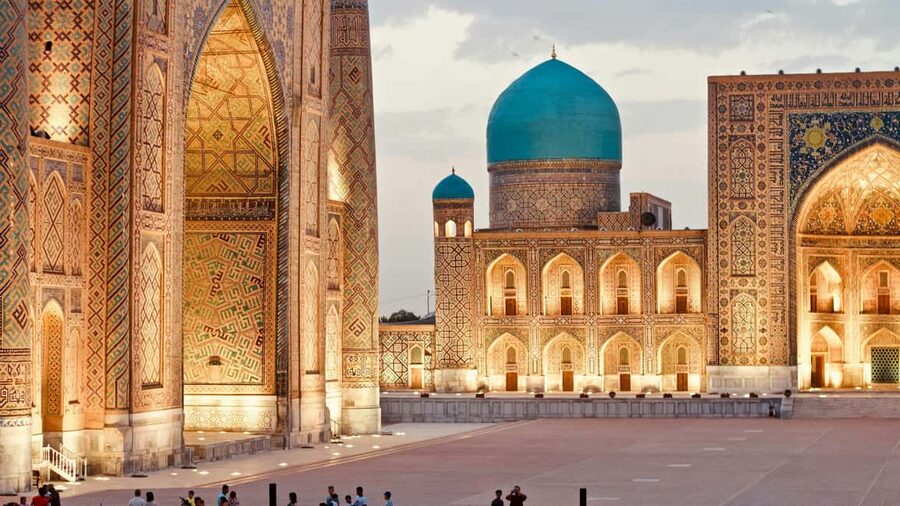
Reviewed · WALKING TOURS
Samarkand: Photo Walking Tour
Samarkand becomes much more interesting when you stop treating it like a list of monuments and start looking for one strong picture at a time. This two-hour photo challenge takes you from the huge symmetry of Registan to the small tile patterns of Bibi-Khanym and the everyday color of Siyob Bazaar.
I like the small group of six or fewer, which gives Azim Khayrullaev room to help with framing and even take photos of you. I also like the Treasure Passport, a simple local keepsake that turns the walk into a small game. The main thing to consider is time: five listed stops and several 30-minute segments are a lot to fit into two hours, so this is a brisk introduction rather than a slow, detailed tour of every site.
Key points
- Frame all three madrasahs at Registan with guidance on scale, symmetry, and viewpoint.
- Study Bibi-Khanym up close, focusing on tilework, texture, and architectural details.
- Photograph daily life at Siyob Bazaar, from fruit displays to candid street scenes.
- Use your own smartphone, with tips suitable for beginners and experienced photographers.
- Visit Shah-i-Zinda and Hazrat Khizr as part of a route built around pictures and local stories.
- Collect stamps in a Treasure Passport and finish with a small reminder of Samarkand.
A photo challenge instead of a standard city walk
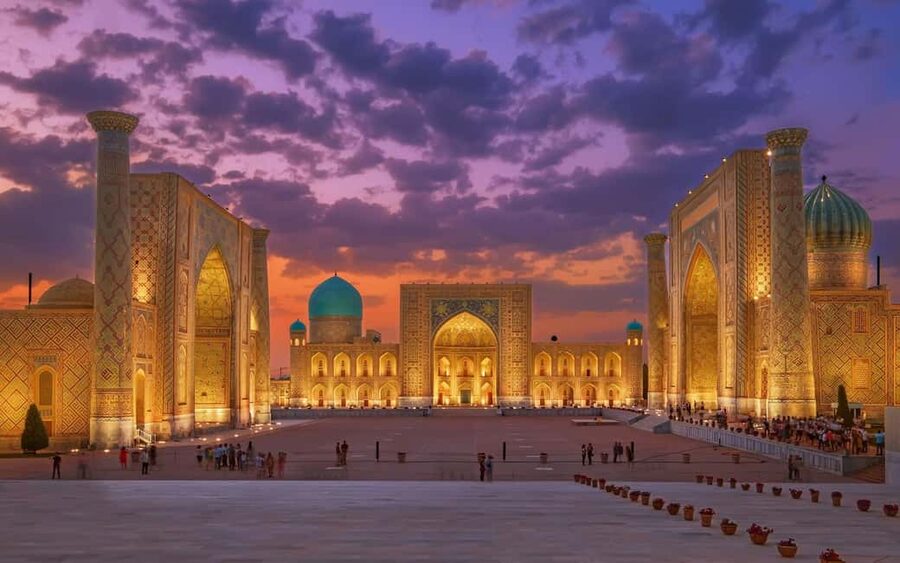
Many city tours ask you to follow a guide, listen, and move on. This one asks you to do something at each stop. You may need to fit Registan’s three madrasahs into one composition, search Bibi-Khanym for a close-up pattern, or catch a useful moment at the market.
That approach gives the tour a clear purpose. You are not simply told that a building is important. You are asked to study its shape, light, color, and scale. Even if your phone camera stays in automatic mode, you will begin to notice why one angle works better than another.
Azim Khayrullaev is the named experience provider, and the guide is described as a licensed local professional with fluent English. The strongest praise focuses on his clear communication, warmth, and willingness to take photos for guests while suggesting useful angles and poses. That matters if you want pictures of yourself in Samarkand, not just another folder full of buildings.
The experience is designed for all skill levels. You do not need a camera with manual controls or any photography background. Bring a charged smartphone, comfortable shoes, and a willingness to try a few visual tasks without worrying about getting every shot perfect.
More Walking Tours in Samarkand
- Samarkand: Historical Monuments Guided Walking Tour
★ 4.8 · 446 reviews - Samarkand One Day Tour: one day walking & group tour
★ 4.4 · 87 reviews - Samarkand: Historical Monuments Group Walking Tour
★ 5.0 · 29 reviews
Starting at Registan Square with one big composition
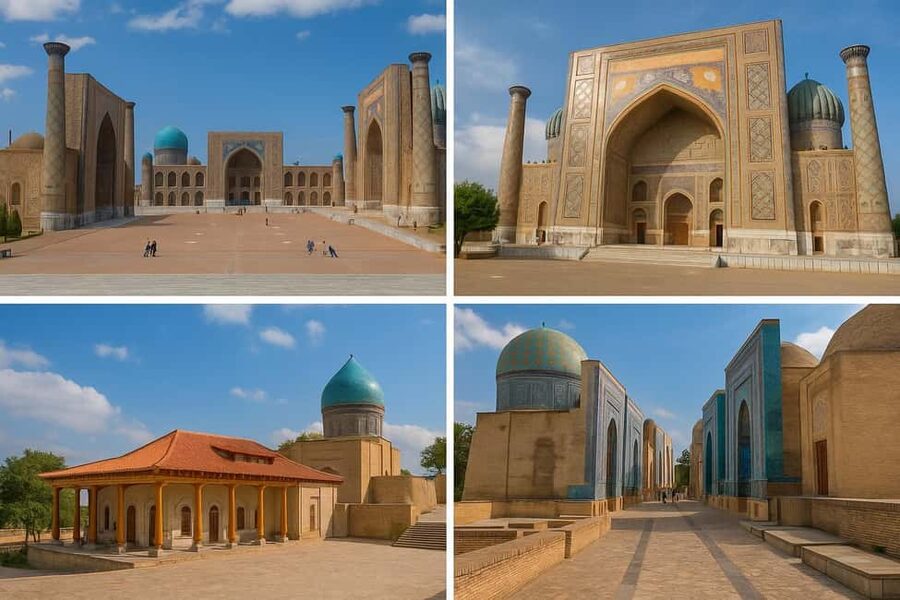
The meeting point is the photo-shooting area of Registan Square, beside the section protected by a glass fence. Look for the guide holding a sign marked 777. Since Registan is one of Samarkand’s busiest meeting points, that clear sign should help you connect with the group.
Registan is the right place to begin. Its three grand madrasahs create one of the most recognizable views in Central Asia, but that familiarity can make people take the same centered picture and walk away. Here, your first task is to capture all three buildings in one frame.
That sounds easy until you look at the scale. The square is wide, the facades are tall, and the decorative surfaces can pull your attention in several directions. The guide’s advice on symmetry, distance, and viewpoint helps you make the building arrangement the subject rather than allowing one facade to dominate.
You will have about 30 minutes listed for the Registan photo stop. That is enough for a few attempts and some quick guidance, but not enough for a long architectural session from every side. I would arrive with your phone charged and your camera app open. A few minutes saved at the start gives you more time to work on the composition.
The best part of this stop is the shift from I saw Registan to I figured out how to photograph Registan. That small change makes the site more memorable.
Bibi-Khanym, where the details take over
At Bibi-Khanym Mosque, the exercise changes. Registan is about width and balance. Bibi-Khanym asks you to move closer and notice tile patterns, surface texture, and small architectural features.
This is useful because large monuments can look flat in a quick phone photograph. A close detail gives the image a subject and helps you avoid filling every frame with the entire building. Your guide can suggest where to stand, how to isolate a pattern, and how to use lines in the decoration to lead the eye through the picture.
The stop is listed as a 30-minute guided visit. That should give you time to hear local context while working on several detail shots. Still, do not expect an extended historical lecture. The tour’s focus is practical photography and visual observation, not a full study of Samarkand’s past.
Bibi-Khanym also rewards patience. You might find that the strongest photograph is not the grand entrance but a small section of blue tile, a shadow along an arch, or a repeating shape. The guide’s role here is especially useful for beginners, since it gives you a clear assignment instead of leaving you to guess what to photograph.
Siyob Bazaar brings color and movement
Siyob Bazaar is where the tour leaves formal architecture behind. The task here is to photograph ordinary activity: fruit displays, bright colors, movement, and the people who give the market its character.
This can be the most rewarding stop, but it also calls for tact. A market is a working place, not a stage set. Keep your camera ready, follow the guide’s lead, and use common sense when photographing people. The supplied information promises guidance on candid scenes, but it does not promise that every person will want to be photographed. A respectful approach is the right one.
The market stop includes time for shopping. That gives you a useful break from concentrating on composition, and it lets you experience Siyob as more than a photo backdrop. You can look at local produce and daily trade while practicing pictures that show color and action.
A phone is well suited to this part of the walk. You can respond quickly when a good moment appears, and you will not draw as much attention as someone carrying a large camera. Try different distances: one frame showing the whole stall, one close-up of produce, and one image that includes a person or hand in motion.
The 30-minute slot is short for a market, especially if you also want to shop. Decide ahead of time if your priority is photography, purchases, or a little of both. If you try to do everything, this may feel rushed.
Same city, a completely different kind of day:
- Samarkand One Day Tour – Departure From Tashkent
★ 5.0 · 313 reviews - Private Samarkand City Tour With Transportation
★ 5.0 · 149 reviews - A City Tour Of Samarkand: The Pearl Of The East
★ 5.0 · 133 reviews - Full Day Private Tour in Seven Lakes from Samarkand
★ 5.0 · 94 reviews
Shah-i-Zinda and Hazrat Khizr add a quieter finish
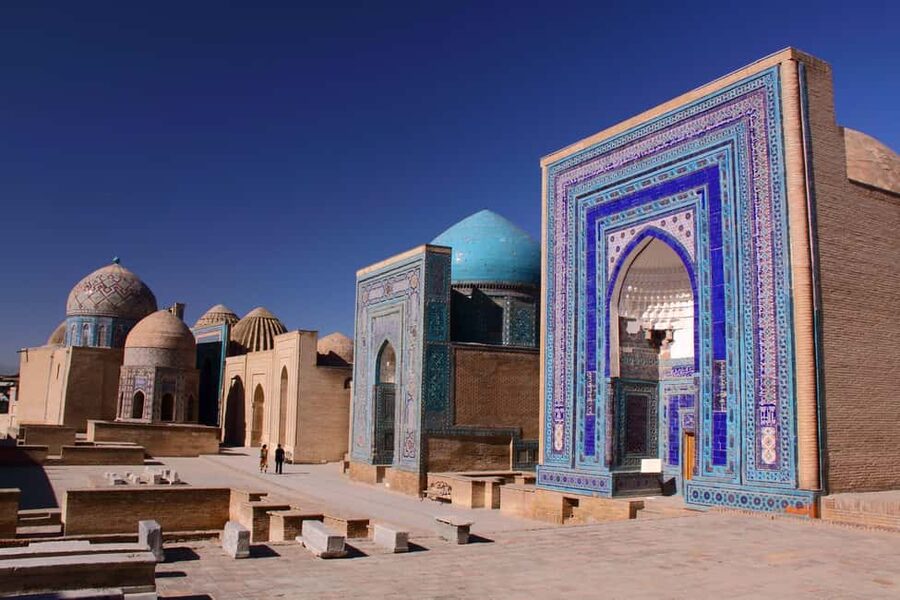
The route continues to Shah-i-Zinda, one of Samarkand’s most striking architectural areas. The focus returns to decorated surfaces and carefully framed views, but the walk has already trained you to look more closely. Instead of photographing the whole complex on autopilot, you can search for repeating tilework, narrow viewpoints, and strong vertical lines.
The supplied route also includes Hazrat Khizr, with the final entry describing another guided photo stop. The exact timing for that last section is not fully spelled out, so you should expect the guide to manage the pace according to the group and the available time.
These final sites help balance the tour. Registan gives you scale, Bibi-Khanym gives you detail, and Siyob gives you daily life. Shah-i-Zinda and Hazrat Khizr add more chances to combine architectural details with personal portraits.
The practical point is that this is not a route for lingering at every monument. The listed itinerary assigns roughly 30 minutes to each stop, while the full activity lasts two hours. Since the meeting and walking time also count, some sections may be compressed or combined. If your main goal is a slow historical visit, book a longer conventional tour. If your goal is a focused set of photographs from several famous places, the pace may suit you.
What the guide adds to your photographs
Photography advice is most useful when it is specific. Here, the guide’s tasks give you a simple way to practice:
- At Registan, work with symmetry and the scale of all three madrasahs.
- At Bibi-Khanym, move closer and isolate patterns or textures.
- At Siyob Bazaar, look for color, motion, and genuine daily activity.
- At Shah-i-Zinda and Hazrat Khizr, combine decorative detail with wider architectural views.
That is a good sequence for a beginner because each stop teaches a different habit. You start with structure, then move to detail, action, and layered compositions.
You can also ask the guide to take your portrait. Susan, from the United States, specifically praised the help with angles and poses, as well as the guide’s kindness and fluent English. That is an important benefit for solo visitors who often return with excellent scenery but no photographs of themselves.
The group limit of six keeps this personal. In a larger group, a guide might give one general tip and move on. In a small group, you have a better chance to show the guide a picture and ask what could improve. The experience is still only two hours, so do not expect a personal photography course, but the format supports quick, useful feedback.
The listed tour languages are English and Japanese. One separate guest praised Spanish-speaking staff, but Spanish is not listed as a regular tour language, so English or Japanese speakers should make the booking decision based on the stated information.
The Treasure Passport and the value of a small souvenir
The Treasure Passport is more than a paper extra. You collect stamps at the major stops, giving the walk a clear thread from beginning to end. It is a lighthearted touch, but it also helps you remember the route after the photos have been posted or forgotten.
The activity ends with a symbolic local keepsake from Samarkand. No specific item is named, so you should not book this expecting a particular souvenir. Think of it as a small physical reminder of the challenge and the places you photographed.
At $63 per person, the tour is not the cheapest way to walk between Samarkand’s major sights. You are paying for a licensed guide, a small group, photography instruction, access to suggested viewpoints, bottled water, and the Passport, rather than only for transport or entry into monuments.
The price makes the most sense if you value three things: personal help with photos, local guidance, and a structured route. For a solo visitor, the assistance with portraits alone may be worth more than it first appears. For a couple or friends, the guide can help turn ordinary snapshots into better shared pictures.
The value is less clear if you already know Samarkand well, prefer to set your own pace, or mainly want a long historical explanation. It is also worth checking whether site entry fees are needed, since personal expenses are not included and no entry arrangement is specified here.
Who should book this Samarkand walk?
I would recommend it to solo visitors who want someone to take good pictures of them, couples who want more than standard vacation snapshots, and friends who enjoy a playful challenge. It also suits beginners who want practical advice without signing up for a technical photography class.
You do not need expensive equipment. The tour is built around your own smartphone, and the guide works with angles and composition rather than assuming advanced camera skills. A charged phone is essential, and comfortable shoes matter because the route covers several sites on foot.
The walk is not suitable for wheelchair users, and it is not intended for people over 95. The route is described as mostly flat and easy to walk, but the full route still includes several stops and regular movement, so plan for an active two hours.
Free cancellation is available up to 24 hours before the start, and you can reserve now and pay later. That is useful if your Samarkand schedule is still changing. English and Japanese guiding is available, and the group is capped at six participants.
Should you book the Samarkand Photo Walking Tour?
Book it if you want to see Samarkand through a camera rather than simply pass through its monuments. The strongest reasons are the small group, Azim Khayrullaev’s personal help with framing and portraits, and the clear assignments at Registan, Bibi-Khanym, and Siyob Bazaar.
Skip it if you want a slow, detailed history tour, a private session with unlimited time, or a fully specified itinerary with equal time at every stop. The two-hour schedule is ambitious, and the listed 30-minute sections suggest a quick pace.
For most visitors, this works best early in a Samarkand stay. You get your bearings, learn a few picture-making habits, and leave with a route you can revisit on your own. At $63, it is a fair choice for a small-group creative walk, especially if taking memorable portraits and learning how to frame the city matter as much to you as seeing the sights.
FAQ
How long does the Samarkand Photo Walking Tour last?
The activity lasts two hours. The route includes Registan Square, Bibi-Khanym Mosque, Siyob Bazaar, Shah-i-Zinda, and Hazrat Khizr.
Where do I meet the guide?
Meet at the photo-shooting area of Registan Square, beside the section protected by a glass fence. The guide will hold a sign marked 777.
What languages are available?
The listed tour languages are English and Japanese.
Do I need a professional camera?
No. You use your own smartphone, and the guide provides advice on angles and composition. A charged smartphone is listed as essential.
What is included in the price?
The price includes a licensed local guide, the Treasure Passport, the guided photo walk, photography tips, access to suggested photo locations, a small-group format, and bottled water. Personal expenses are not included.
Can I cancel or pay later?
You can cancel up to 24 hours in advance for a full refund. The activity also offers reserve now and pay later booking.
Just added around Samarkand
- Uzbekistan 6 Days Private Tour Khiva-Bukhara-Samarkand by Train★ 5.0 · 4 reviews
- Private Intercity Transfer Tashkent – Samarkand – Tashkent★ 3.5 · 3 reviews
- Tashkent-Samarkand-Bukhara tour-3nights/4 days★ 5.0 · 5 reviews
- 6- Day Private Tour to Tashkent, Khiva, Bukhara and Samarkand★ 5.0 · 5 reviews
- The Golden City of Samarkand: A Self-Guided Audio Tour★ 4.0 · 4 reviews
- Samarkand Capital of Amir Timur Private Tour with Transport★ 5.0 · 3 reviews
- Seven Lakes Panjakent: One-Day Adventure from Samarkand★ 5.0 · 3 reviews
- Shakhrisabz Private Day Tour from Samarkand★ 5.0 · 4 reviews
Walking Tours, compared.
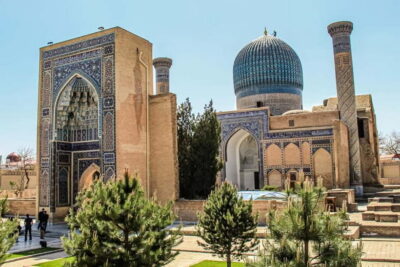
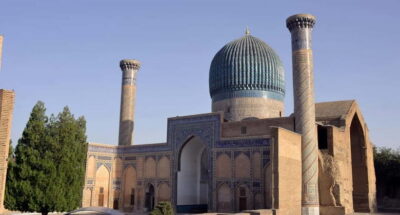
Samarkand One Day Tour: one day walking & group tour
Read our review →
All You Need To Know About Bukhara. A Walk In The Town
Read our review →
Khiva Historical City Highlights Guided Walking Tour
Read our review →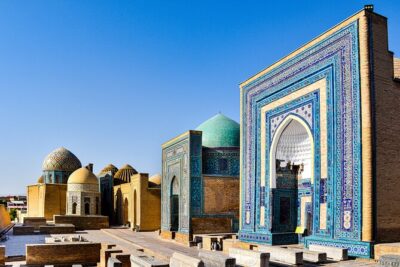
Browse the lists this tour appears in