
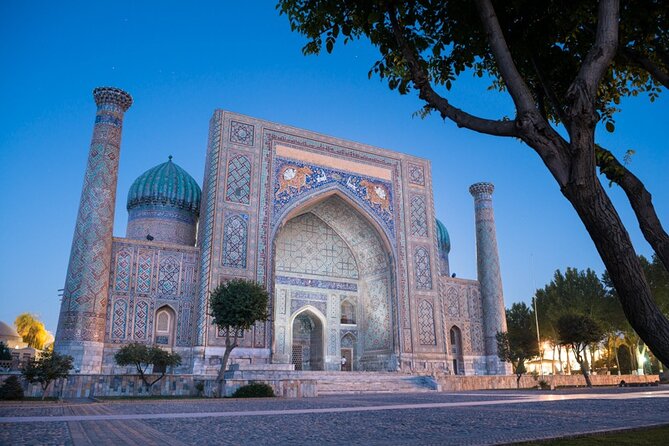
Reviewed · MULTI-DAY TOURS
Uzbekistan 6 days private tour Tas-Khiva-Buk-Sam-Tas
Khiva’s blue-tiled walls, Bukhara’s old trading quarter, and Samarkand’s grand Timurid monuments make this six-day Silk Road route one of Uzbekistan’s strongest short trips. You cover four major cities without having to arrange every hotel, transfer, train, and guide yourself.
I like the private format, which lets you request changes, and I like the practical setup: centrally located hotels, five breakfasts, city guides, drivers, and site tickets are bundled into the $850 price. The drawback is pace. Long rail journeys and an early Samarkand to Tashkent transfer leave little room for wandering, and the Tashkent to Urgench flight is extra.
Key points to know before booking
- Four historic cities in six days: Tashkent, Khiva, Bukhara, and Samarkand are linked in one efficient route.
- Khiva is the visual highlight: Most sights sit inside the compact, walled Itchan Kala, making the first full touring day easy to follow on foot.
- The price covers the costly basics: Hotels, breakfast, trains, local guides, drivers, and entrance tickets are included.
- The domestic flight is separate: You must pay for the Tashkent to Urgench flight, so add that to the advertised price.
- Train availability can shape the trip: Fast trains may sell out, sometimes leaving a slower regular service.
- Private means flexible, not leisurely: You can request changes, but the four-city schedule still involves substantial transit.
What $850 buys you across Uzbekistan
At $850 per person, this tour offers solid value if you want the main Silk Road cities and prefer one company to handle the moving parts. The package includes twin-share rooms in centrally located, well-rated three-star or boutique hotels, five breakfasts, an air-conditioned vehicle, city guides, site admissions, and the Khiva to Bukhara, Bukhara to Samarkand, and Samarkand to Tashkent train tickets.
That matters in Uzbekistan, where station transfers and city distances can make independent planning fiddly. You also receive pickup and drop-off help, including border pickup on request, plus local internet access. The package does not include the Tashkent to Urgench flight, photo and video fees at museums, or a single-room supplement of $20 per room per night.
For two people sharing a room, the cost is easier to justify. A solo visitor pays more for room use, though the single supplement is modest compared with many organized tours. Group discounts are available, and the private arrangement means you are not tied to strangers or a fixed group timetable.
The main value is not luxury. It is time saved. You can arrive at a station or airport and expect a driver to meet you, rather than deciphering local transport after a long journey. Coordinators including Amir and Umid have been praised for quick replies and smooth arrangements, but the exact coordinator and local guides may vary by departure.
More Private Tours in Khiva
- Private Daytrip to 7 Ancient Fortresses of Khorezm
★ 5.0 · 25 reviews - Best of Khiva: Exclusive Private Tour!
★ 5.0 · 9 reviews - Private Bukhara-Khiva Transfer via Ancient Fortresses
★ 4.5 · 8 reviews
Day 1: A soft landing in Tashkent
The first day is deliberately light. You are collected on arrival and taken to your hotel, with about 30 minutes set aside for the transfer. Since the tour begins in Tashkent and the next morning includes a domestic flight, this short opening gives you time to check in and recover from your journey.
Do not expect a full city tour on this first day. Think of it as a practical arrival day. If your flight lands early, ask whether the schedule can be adjusted, since the tour is customizable at no or small charge.
Day 2: Khiva’s walled city and tiled skyline
You begin with a transfer to Tashkent’s domestic terminal, then fly to Urgench. The flight takes about two hours, and its cost is not included in the tour price. On arrival, your driver takes you to Khiva, where the old city is known as Itchan Kala.
Itchan Kala occupies about 26 hectares and has more than two thousand years of history. This is the kind of place where orientation comes quickly. Once you enter the walls, much of the sightseeing is close together, with narrow lanes, mud-brick walls, carved doors, blue tile, and minarets rising above the roofs.
The Kunya Ark citadel gives you a useful starting point. This fortified compound was once the seat of Khiva’s rulers, and its position beside the western wall helps explain how the old city was governed and defended. Allow about an hour, since the complex is more than a single courtyard or photo stop.
The Pahlavan Mahmud Mausoleum adds a quieter, more personal note. Mahmud was a poet, philosopher, wrestler, and healer, and the mausoleum grew from a modest tomb into an important religious site. Its decoration rewards a slower look than the itinerary’s 40-minute stop may suggest.
At Juma Mosque, you see a very different interior. More than two hundred wooden columns support the roof, and the dim, column-filled space feels calm after the sunlit streets. The visit is short, about 20 minutes, but it is one of Khiva’s most memorable interiors.
The Islam Khoja complex brings together a madrasa and a tall minaret. The minaret is a strong landmark for understanding Khiva’s layout, although climbing conditions and access can vary. Nearby Tash Khauli Palace, built between 1830 and 1838 for Allakuli Khan, shows the courtly side of Khorezm architecture through courtyards, tiled rooms, and formal decoration.
You finish near Kalta Minor, the unfinished minaret covered in glazed tile and majolica. Its truncated shape is not a ruin in the usual sense. The incomplete project became one of Khiva’s most recognizable sights, and it looks especially striking from the surrounding old-city lanes.
This is a full sightseeing day, even though the stops are close. Wear comfortable shoes, carry water, and remember that Khiva’s appeal comes partly from simply walking between the listed sights. If your priority is photography or quiet exploration, ask to trim a stop or protect free time.
Day 3: Six hours from Khiva to Bukhara
You get some free time in Khiva before traveling to Bukhara by train or car. The journey takes about six hours, so this is the tour’s first major transit day. The train is included, while the car option gives the coordinator another way to manage the schedule.
The long transfer is useful because it connects the western and central sections of Uzbekistan without sending you back through Tashkent. It is also the day most likely to feel tiring. You will not have much time for serious Bukhara sightseeing until the following day, so do not book this tour expecting a relaxed arrival afternoon.
The train is part of the experience. It lets you watch the country pass by and gives you a break from road traffic, but comfort depends on the service assigned. Ask early about the exact train and whether a faster option is available.
A few more Khiva days to weigh up
- Uzbekistan 6 Days Private Tour Khiva-Bukhara-Samarkand by Train
★ 5.0 · 4 reviews - From Tashkent: Uzbekistan Private 6-Day Tour
★ 5.0 · 6 reviews - Uzbekistan Tour – 6 Days 5 Nights
★ 5.0 · 4 reviews
Day 4: Bukhara’s courtyards, mosques, and royal fortress
Bukhara offers a different mood from Khiva. Khiva feels like a preserved walled town, while Bukhara spreads through a larger historic center with old trading streets, religious buildings, squares, and working city life around them.
Begin at Lyab-i-Hauz, a 16th and 17th-century ensemble arranged around a pool. It remains one of Bukhara’s best places to pause, with shade, seating, and a sense of how public life once gathered around water in a dry region.
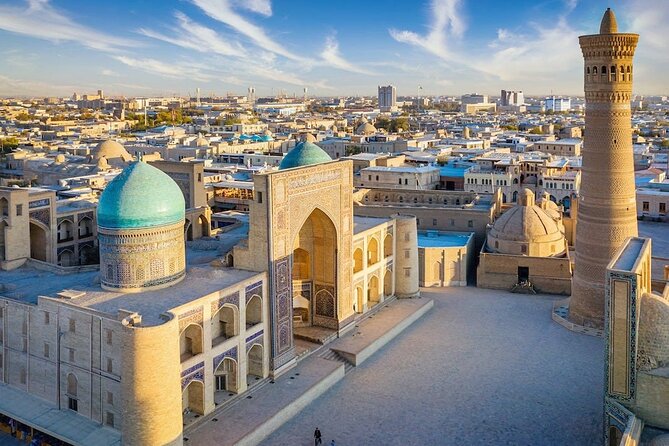
The Kalyan Minaret is the day’s great vertical marker. Built in 1127, it survived the Mongol conquest and rises about 45.6 meters above the old city. Look beyond its size. The minaret belonged to a religious and civic center, and its survival helps connect present-day Bukhara with the city’s medieval period.
Bolo Hauz Mosque sits opposite the Ark Fortress. Its name refers to the pool in front of it, and the carved wooden columns create a graceful covered porch. The scheduled visit is only about 20 minutes, so take a moment to look up at the ceiling and column work before moving on.
The Ark is Bukhara’s old royal citadel, a fortified town within the city. It served the rulers of Bukhara for centuries and gives the itinerary a useful political counterpoint to the mosques and madrasas. The one-and-a-half-hour visit is justified, though uneven surfaces and open courtyards mean you should pace yourself.
Later, you transfer about 15 kilometers to Kagan station for the train to Samarkand. The transfer and train are included, but the schedule is subject to availability. Your Samarkand hotel transfer is arranged after arrival, which is especially helpful if the train reaches the city in the evening.
The published timing includes Lyab-i-Hauz twice, once during the sightseeing sequence and again around the station transfer. Treat the second reference as a logistics point, not a separate attraction.
Day 5: Samarkand’s grandest monuments
Samarkand is the visual climax of the route. The city’s Timurid buildings are larger and more ceremonial than Khiva’s intimate lanes or Bukhara’s courtyard complexes, and the itinerary gives you a full day to see the main sights.
Start at Gur Emir Mausoleum, the tomb of Timur, also known as Tamerlane. The reconstructed building has a blue dome and a richly decorated interior, but the real value is the historical connection. Timur’s campaigns changed Central Asia and much of the wider region, and this mausoleum became the model for later Timurid tomb architecture.
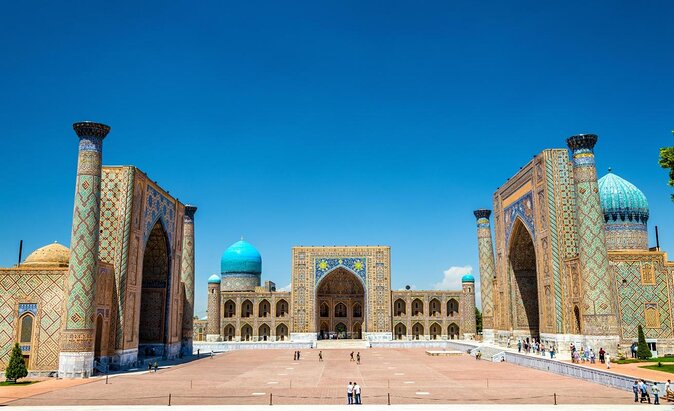
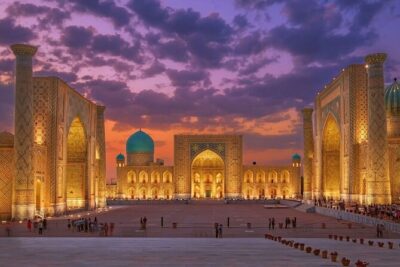
Registan follows, with its three madrasas: Ulugh Beg, Sherdor, and Tillokori. This is not just a square to photograph from the center. Walk toward each facade, compare the tile patterns, and look for the different balance of scale and ornament. The one-and-a-half-hour visit gives you enough time to understand the space rather than simply stop for a picture.
Bibi Khanym Mosque recalls the ambition of Timur’s building program. Constructed between 1399 and 1404, it was one of the great monuments of its day. Parts have been rebuilt, so your guide can help separate original fragments from later restoration.
Siab Bazaar provides a welcome change of pace. You can see produce, local food, and handicrafts, and it is a useful place to notice ordinary city life after several hours of monumental architecture. The schedule allows about 40 minutes, so you may have time to browse but not to linger over a long meal.
Shah-i-Zinda is among Samarkand’s most striking religious complexes. A line of mausoleums and tombs climbs the southeastern side of ancient Afrosiab, with blue tilework changing from building to building. The passage is visually intense, and respectful clothing is sensible because this remains a sacred site.
Finish at Ulugh Beg Observatory, connected with Timur’s grandson, who was an astronomer and ruler. Only the foundations of the original observatory remain, but the site explains an important side of Timurid Samarkand: science and astronomy mattered alongside conquest and court architecture.
This day is packed, with roughly five hours of visits before you count transport and meals. I would ask for the guide to protect enough time at Registan, Shah-i-Zinda, and the bazaar, since those are the places most likely to reward your own pace.
Day 6: Samarkand to Tashkent, then a city sampler
The final day starts early with a transfer to Samarkand station and a train to Tashkent. The fast train is subject to availability. A slower regular train may be used if the faster service has sold out, so do not schedule a tight international flight without checking the train time.
Once in Tashkent, you meet your guide and driver for a short city program. The Alisher Navoiy Theater, designed by Alexey Shchusev and built between 1942 and 1947, offers a look at the city’s Soviet-era architecture. The scheduled visit is only 20 minutes.
The Hazrati Imam complex presents old Tashkent as a religious center. The square includes the Tillya Sheikh Mosque and other important buildings, with about 90 minutes allowed. Site hours can change, and one past itinerary included places that had closed or moved to another museum, so confirm the day’s open attractions with your coordinator.
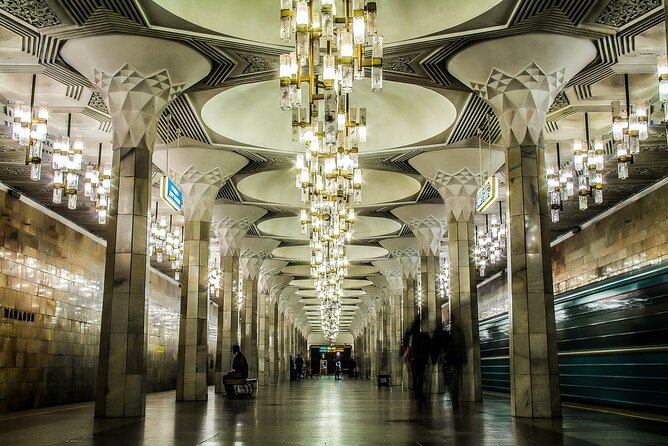
A ride on the Tashkent Metro is one of the smartest inclusions. Opened in 1977 as the first underground system in Central Asia, its stations use marble, granite, columns, reliefs, and decorative work. You see more of modern Tashkent while also getting a practical city ride.
Amir Temur Square offers a green central space and a statue of Timur on horseback. The State Museum of History of Uzbekistan is scheduled for an hour, but museum status should be checked before departure because operating information has changed in the past.
Finally, a short transfer takes you to Tashkent International Airport. The end of the tour is efficient rather than leisurely, so keep your departure day simple.
Guides, transport, and the private format
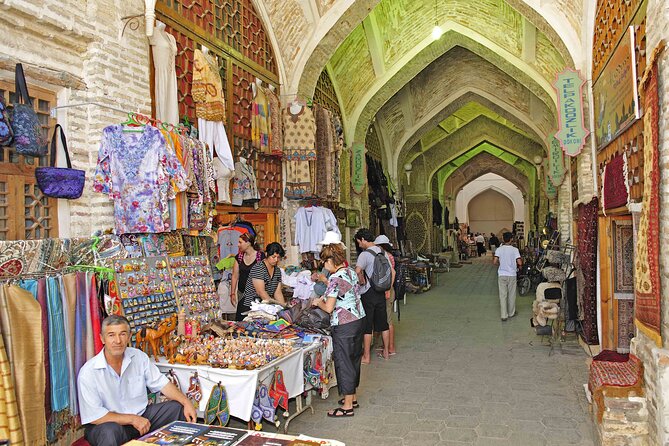
You receive a licensed local guide in each city rather than one person accompanying you from start to finish. That arrangement can be a strength because each guide focuses on a home city, though it also means the tone and depth may differ from one day to the next.
The company has used coordinators such as Amir and Umid, both praised for quick communication and practical problem solving. Those names are useful when you contact the operator, but they do not guarantee that either person will be your guide.
Private transport is particularly useful at airports and railway stations. Drivers meet you, carry out hotel transfers, and help bridge the gaps between central sights and stations. The tradeoff is that you have less unstructured time than on a self-guided trip.
Internet access, accommodation, breakfast, and entrance fees reduce small daily decisions. Museum photo and video charges of about $1 to $2 per museum remain payable in cash, so keep some small notes available.
Who should book this six-day route?
Book it if you want Uzbekistan’s major historic cities in a short window and value coordination more than a slow schedule. It suits first-time visitors, solo visitors who do not speak Russian or Uzbek, couples, families with older teenagers, and anyone who wants private guiding without paying for a luxury tour.
It also suits people who like to adjust plans. The itinerary can be changed at no or small charge, and past arrangements have included special requests such as a night in a traditional yurt. Ask before booking rather than assuming every request is included.
Think twice if you dislike early starts, six-hour transfers, or frequent hotel changes. You should also avoid booking this as a relaxed holiday. It is a focused introduction to Uzbekistan, not a leisurely stay in each city.
Free cancellation is available up to 24 hours before the start time. After that point, refunds and changes are not accepted.
Should you book this Uzbekistan tour?
I would book this tour if your main goal is to see Khiva, Bukhara, Samarkand, and Tashkent with the least possible planning. The price is fair for the number of hotels, trains, drivers, guides, admissions, and breakfasts included, but remember to add the Tashkent to Urgench flight and small museum charges.
Before paying, ask three questions: Which train services are confirmed? Is the Tashkent day’s museum and religious-site schedule current? What is the exact flight cost and hotel list? If the answers are clear, this private route gives you a practical, history-filled introduction to Uzbekistan with the hard logistics already handled.
FAQ
Is the Tashkent to Urgench flight included?
No. The domestic flight from Tashkent to Urgench is not included in the tour price.
Are hotels included?
Yes. Accommodation in centrally located, highly rated three-star or boutique hotels is included, based on twin-share rooms.
Is breakfast included every day?
The package includes five breakfasts.
Which train journeys are included?
Train tickets are included for Khiva to Bukhara, Bukhara to Samarkand, and Samarkand to Tashkent. Services are subject to availability.
Can the itinerary be customized?
Yes. The tour can be customized at no or small charge, and you should email your requested changes before the trip.
Are entrance tickets included?
Yes. Entrance tickets to the listed museums and sites are included. Photo and video museum charges of about $1 to $2 per museum are extra and are paid in cash.
Is this a private tour?
Yes. Only your group participates in the tour.
What is the cancellation policy?
You can cancel up to 24 hours before the experience start time for a full refund. Cancellations or changes made less than 24 hours before the start time are not accepted.
More Multi-Day Tours in Khiva
- From Khiva To Aral Sea 2-Days One Night In Yurt Stay
★ 4.6 · 20 reviews - Uzbekistan in 7 days Tashkent, Samarkand, Bukhara and Khiva
★ 5.0 · 10 reviews - 2 Days Tour to Bukhara and Samarkand from Tashkent by train
★ 5.0 · 53 reviews - Fergana – Golden Valley From Tashkent 1 night / 2 days
★ 4.5 · 41 reviews
Just added around Khiva
- Uzbekistan 6 Days Private Tour Khiva-Bukhara-Samarkand by Train★ 5.0 · 4 reviews
- Traditional Khiva Cooking Class with Market Visit & Lunch★ 5.0 · 4 reviews
- 6- Day Private Tour to Tashkent, Khiva, Bukhara and Samarkand★ 5.0 · 5 reviews
- Master Class – Uzbek Bread (Khiva)★ 3.5 · 4 reviews
- Old Khiva Stories with Your Local Guide★ 5.0 · 5 reviews
- Khorezm Fortress and KyzylKum Desert Private Tour★ 5.0 · 3 reviews
- A Night In The Kyzylkum Desert [2] From Khiva★ 4.5 · 3 reviews
- Best of Khiva: Exclusive Private Tour!★ 5.0 · 3 reviews
Multi-Day Tours, compared.
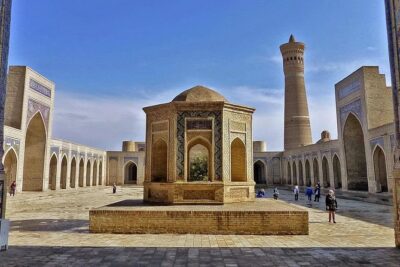
2 Days Tour to Bukhara and Samarkand from Tashkent by train
Read our review →
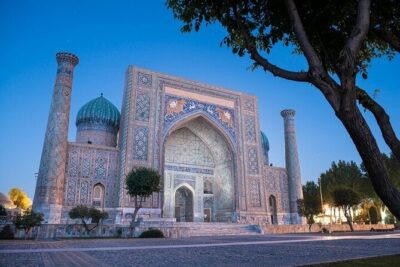
Uzbekistan 8 Days Private Tour Tashkent-Urgench-Bukhara-Samarkand-Tashkent
Read our review →
7-Day Uzbekistan with the Local: From Blue Domes to Mountains
Read our review →
Browse the lists this tour appears in