

Reviewed · HISTORICAL TOURS
Samarkand Walking Tour History Culture and Hidden Gems
Samarkand reveals itself best on foot, one blue-tiled monument at a time. This tour links the city’s big sights with local stories, market stops, legends, and quieter corners that are easy to miss when you move around by car. Guides such as Sevinch and Xumora bring a personal touch, and a photographer joins to help you take better pictures.
I like the small group size, capped at seven, and the way the route connects major monuments with everyday Samarkand at Siyob Bazaar. I also like the added photo help, plus the clear local storytelling praised by people who toured with Sevinch and Xumora.
The main drawback is that the $28.53 price does not include monument entry, food tastings, or public transport. You also need a moderate level of fitness, since this is a long walking route with several historic sites packed into four and a half hours.
Key points at a glance
- Six major stops: Visit Gur Emir, Registan, Bibi Khanym Mosque, Siyob Bazaar, Hazrat Khizr Mosque, and Shah-i-Zinda.
- Local guides with personality: Sevinch and Xumora are among the guides associated with the experience, with a focus on stories, questions, and photo locations.
- Small group format: The tour accepts no more than seven people, making it easier to hear the guide and ask questions.
- A real market stop: Siyob Bazaar adds fresh fruit, sweets, Samarkand bread, and ordinary local life to the monument-heavy route.
- Photography included: A professional photographer provides photo assistance during the walk.
- Extra costs to plan for: Entry fees, meals, food tasting, shopping, and transport are not included.
Why this route works in Samarkand
Samarkand can feel like a collection of grand monuments scattered across a large city. This route gives those sights a sensible story. You begin at the Gur Emir Mausoleum, move through the monumental center at Registan, continue toward Bibi Khanym and the market, then finish among the tombs of Shah-i-Zinda.
That order matters. Gur Emir introduces Amir Temur and the Timurid period. Registan shows how architecture, education, and public life came together. Bibi Khanym and Siyob Bazaar shift the focus toward religious life, legends, food, and commerce. The final stop, Shah-i-Zinda, brings the walk to a quieter and more sacred close.
The total time is about four and a half hours. The scheduled time at the six stops adds up to roughly three hours and 25 minutes, leaving time for walking between sites, explanations, photographs, and the natural pauses that come with a small group. You should not expect a rushed checklist, but you should expect a full morning or afternoon on your feet.
The route ends at Shah-i-Zinda rather than returning to the starting point. That is useful if you want to continue exploring the area on your own, but you should plan your next move before the tour ends.
More Walking Tours in Samarkand
- Samarkand: Historical Monuments Guided Walking Tour
★ 4.8 · 446 reviews - Samarkand One Day Tour: one day walking & group tour
★ 4.4 · 87 reviews - Samarkand: Historical Monuments Group Walking Tour
★ 5.0 · 29 reviews
Gur Emir, where the Timurid story begins
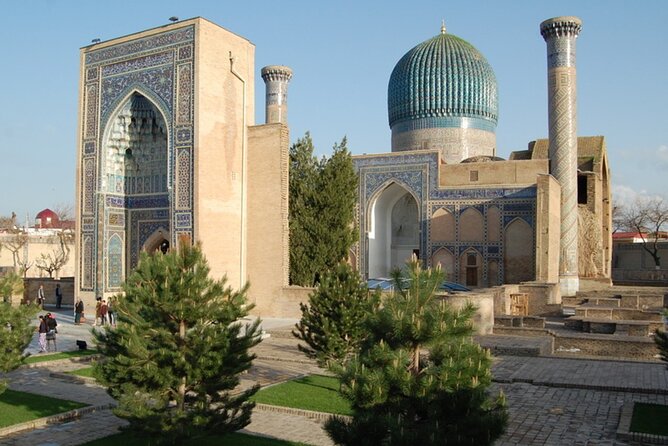
The tour starts at the Gur Emir complex on Universitetskiy Boulevard. You spend about 30 minutes here, with monument admission paid separately on site.
Gur Emir is the mausoleum of Amir Temur, the powerful ruler associated with the Timurid era. The building gives you an immediate sense of the visual language that defines Samarkand: a blue dome, intricate tilework, and gold decoration inside the mausoleum.
This first stop is short, so the guide’s explanation matters. You can expect a useful introduction to Amir Temur, the setting, and the artistic details rather than a long museum-style lecture. Ask questions early. A guide who knows the city well can help you understand why the monument matters before the route reaches the larger Registan complex.
The practical point is simple: keep your camera ready, but do not spend all 30 minutes taking pictures. This is the place to get your historical bearings and learn the names that will return throughout the day.
One hour at the Registan
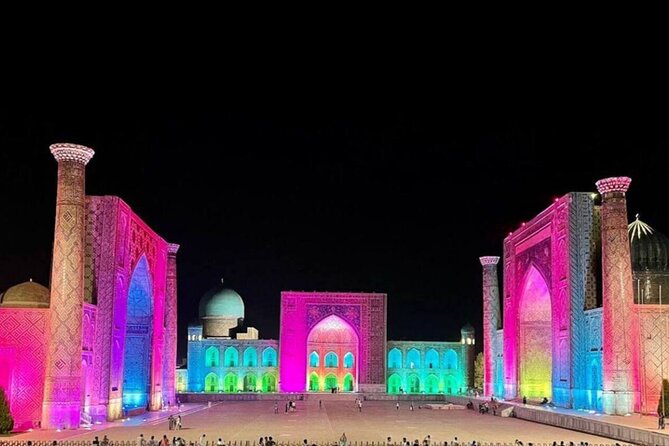
Registan receives the longest scheduled stop, about one hour. That is appropriate. The square is Samarkand’s best-known architectural ensemble, with three grand madrasahs: Ulugh Beg, Sher-Dor, and Tilla-Kori.
The guide explains how these buildings functioned as centers of Islamic education and places the architecture in its Timurid setting. You will have time to look at the facades, tile patterns, courtyards, and decoration without treating the square as a quick photo stop.
Admission is not included, so budget for an additional payment here. Since entry fees are paid on site, carrying some local currency or a suitable payment method is sensible, though the tour information does not specify which payment options are accepted.
Registan can be visually overwhelming. I find it more rewarding when you pause on the details. Look at how the three buildings frame the square, then let the guide explain what distinguishes each one. Ulugh Beg, Sher-Dor, and Tilla-Kori are not simply three similar facades. Their names, purposes, and decoration give the square its variety.
A full hour also gives you a chance to ask questions. The guides associated with this experience, including Sevinch and Xumora, are praised for making history easy to follow and for answering questions directly. That makes a difference here, where it is easy to take in the scale of the buildings but miss the human story.
Bibi Khanym Mosque and the city’s legends
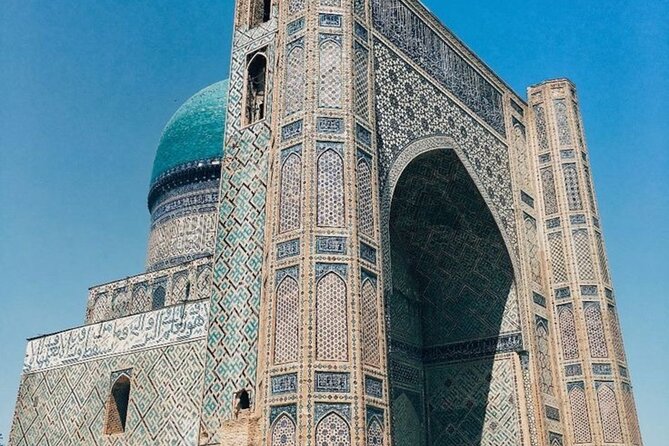
The next major monument is Bibi Khanym Mosque, with about 20 minutes set aside for the visit. It was built by Amir Temur for his beloved wife and was one of the largest mosques of the 15th century.
The stop combines architecture with legend. Your guide explains the story connected with the mosque’s construction and why the building is important. This is a good example of where a local guide adds value. A plaque can give you dates and names, but a spoken legend gives the building a memorable place in Samarkand’s culture.
Twenty minutes is enough for an introduction and photographs, but it is not a long architectural study. If you want to inspect every tile or spend quiet time inside, you may wish you had more time. The route has several major stops, so the schedule favors range over close study of one monument.
Entry is extra here as well. Keep that in mind when comparing the tour price with a simple self-guided walk.
More history walks around Samarkand:
- Private Guided Tour Samarkand city history and culture
★ 5.0 · 22 reviews - Samarkand Historical City Highlights Guided Walking Tour
★ 5.0 · 22 reviews - Khiva: Historical City Highlights Guided Walking Tour
★ 4.8 · 156 reviews - Bukhara: Historical City Highlights Guided Walking Tour
★ 4.6 · 102 reviews
Siyob Bazaar, where monuments give way to daily life
After the major monuments, the route reaches Siyob Bazaar. The market visit lasts about 20 minutes and is free to enter.
This is one of the most useful parts of the experience because it changes the pace. Instead of looking only at old buildings, you see a working market with fresh fruit, traditional sweets, Samarkand bread, and souvenirs. You may also get a better feel for the city’s food culture and ordinary rhythms.
Food tasting is not included, so anything you try or buy is your own expense. That is not a serious problem, but you should carry a little extra money if you want to sample local products. The tour description specifically mentions sweets, fruit, and bread, so this is a chance to taste or shop, not a formal included meal.
Twenty minutes passes quickly in a market. Use the guide for orientation and local suggestions, then decide what interests you. If you prefer shopping, the stop may feel too brief. If you mainly want a glimpse of the market atmosphere, it should fit the day well.
Hazrat Khizr Mosque above the city
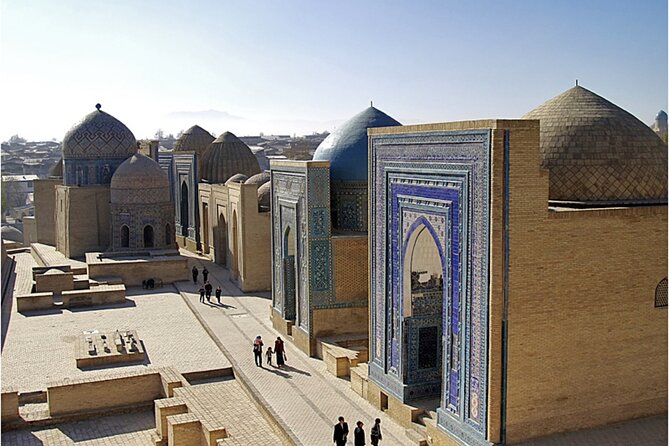
Hazrat Khizr Mosque receives about 15 minutes. It is described as one of Samarkand’s oldest and most sacred mosques, with elegant Islamic design and strong spiritual importance.
The mosque sits on a hill, giving the stop a peaceful setting and a different mood from the large monuments earlier in the route. It is not just another decorated building. The religious meaning of the site is part of what makes it worth visiting.
Because the visit is short, expect a focused explanation rather than extended free time. The hill also reinforces the need for sensible footwear. This is a walking tour, and the route includes enough movement and standing that comfortable shoes matter more than dressing for photographs alone.
Admission is listed as free. Respect the religious setting, follow the guide’s directions, and allow the atmosphere to speak for itself. The stop may be brief, but it gives the route a welcome pause before the final complex.
Shah-i-Zinda, the most detailed finish
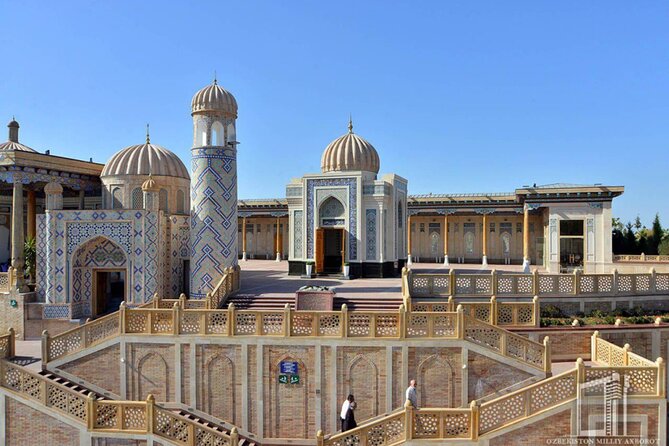
The tour ends at Shah-i-Zinda, with about an hour planned for the necropolis. This is the final and most atmospheric stop on the route, filled with tiled mausoleums connected to royals, scholars, and saints.
The complex includes the grave of Kusam ibn Abbas, identified as a cousin of the Prophet Muhammad. Your guide explains the religious and historical importance of the site as you walk through the collection of mausoleums.
An hour gives you time to notice the differences in tilework and the way the buildings line the sacred passage. It also lets the group move at a respectful pace. This is not a place to treat as a quick backdrop for photographs. The site has spiritual importance, and visitors should dress and behave accordingly.
Admission is not included. The walking surface, steps, and time spent standing may be difficult for anyone with mobility or health problems. The tour information recommends moderate physical fitness, and Shah-i-Zinda is one reason why.
Ending here is convenient if you want to keep exploring the area. It is less convenient if you need to return to the Gur Emir meeting point, since no return transport is included. Public transportation can be arranged for an additional fee, but you should ask about that before the tour begins.
What the guide and photographer add

The strongest feature of this experience is its human scale. A maximum of seven people means you are not trying to hear a guide across a crowd. You can ask about a tile pattern, a legend, a market product, or the best angle for a photograph without turning the whole group into a formal lecture.
Sevinch is praised for being engaging, generous with her time, and good at explaining historical context. Xumora is described as friendly, sharp, and particularly helpful with photo locations and camera tips. Since guide assignment can vary, you should not assume that one specific guide will lead your departure, but those names give you a useful sense of the approach.
The professional photographer is another unusual feature. Photo assistance does not mean a full private photo session is promised, so keep your expectations sensible. Still, help with framing, timing, and locations can be valuable in Samarkand, where the buildings are large and the light can make a major difference.
You should also expect local stories and legends, not only dates. That suits anyone who wants the city to feel like a place where people lived, worshipped, traded, and told stories, rather than a row of monuments to photograph.
Is $28.53 a fair price?
At $28.53 per person, the tour is reasonably priced for a four-and-a-half-hour guided walk with a small group, photo assistance, and six substantial stops. You are paying for structure, local interpretation, and company through a route that could otherwise require careful planning.
The total cost will be higher because monument admission is separate. Food tasting, meals, shopping, and public transportation are also extra. You should compare the price with the full day’s spending, not just the advertised amount.
The value is strongest if you want context and conversation. If you already know Samarkand’s history, prefer to move at your own pace, or want to spend a long time inside one monument, a self-guided visit may suit you better. If this is your first time in the city, the route covers a lot in one outing and helps you decide which places deserve a return visit.
Who should book this walk?
I would recommend it for first-time visitors, couples, solo visitors, and small groups who want the major sights explained in plain language. It also suits people who care about photographs and want help finding good angles without booking a separate photo session.
The tour is less suitable for anyone with mobility or health concerns, or anyone who dislikes long periods of walking and standing. There is no included meal, and the market stop is short, so this is a cultural walking experience rather than a food tour.
Book it if you want Samarkand’s headline monuments tied together by stories, local detail, and a little market life. Skip it if your priority is complete independence or a slow, specialist study of one site.
FAQ
How long does the Samarkand walking tour last?
The tour lasts approximately four hours and 30 minutes.
What places does the tour visit?
The route visits Gur Emir Mausoleum, Registan, Bibi Khanym Mosque, Siyob Bazaar, Hazrat Khizr Mosque, and Shah-i-Zinda necropolis.
Are entrance fees included?
No. Entrance fees for the monuments are paid on site and are not included in the tour price.
Is food included?
No. Meals and food tasting are not included. You pay separately for any food, sweets, fruit, bread, or other items you choose to buy at Siyob Bazaar.
Where does the tour start and end?
The tour starts at the Amir Temur Mausoleum, also called the Gur-i Amir Complex, on Oqsaroy 1 in Samarkand. It ends at the Shah-i-Zinda necropolis.
How many people can join the tour?
The group has a maximum of seven people.
Just added around Samarkand
- Uzbekistan 6 Days Private Tour Khiva-Bukhara-Samarkand by Train★ 5.0 · 4 reviews
- Private Intercity Transfer Tashkent – Samarkand – Tashkent★ 3.5 · 3 reviews
- Tashkent-Samarkand-Bukhara tour-3nights/4 days★ 5.0 · 5 reviews
- 6- Day Private Tour to Tashkent, Khiva, Bukhara and Samarkand★ 5.0 · 5 reviews
- Samarkand Capital of Amir Timur Private Tour with Transport★ 5.0 · 3 reviews
- The Golden City of Samarkand: A Self-Guided Audio Tour★ 4.0 · 4 reviews
- Seven Lakes Panjakent: One-Day Adventure from Samarkand★ 5.0 · 3 reviews
- Shakhrisabz Private Day Tour from Samarkand★ 5.0 · 4 reviews
Historical Tours, compared.
Khiva Historical City Highlights Guided Walking Tour
Read our review →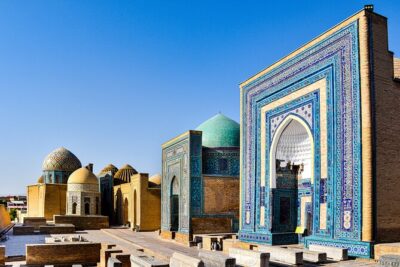
Samarkand Historical City Highlights Guided Walking Tour
Read our review →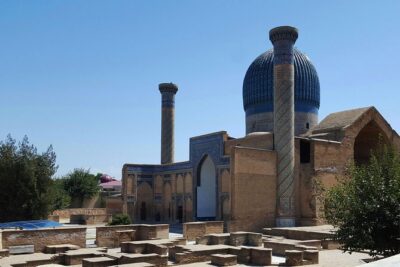
Private Guided Tour Samarkand city history and culture
Read our review →Browse the lists this tour appears in