
Reviewed · VILLAGE & COUNTRYSIDE TOURS
Samarkand: Uzbek Cooking Class in a Village Home
Uzbekistan’s most memorable meal may begin beside a wood-fired qozon in a village home, not at a restaurant in Samarkand. With guide Bekjon and his family, you help prepare plov, shape mantu, meet the animals, and eat what you made.
I like the personal welcome and the chance to see ordinary rural life up close. I also like that the cooking is practical: you chop, stir, fold, taste, and learn why each step matters. The main drawback is the one-hour drive each way, and the meat-centered menu will not suit vegetarians, vegans, or people with some food restrictions.
Key points to know
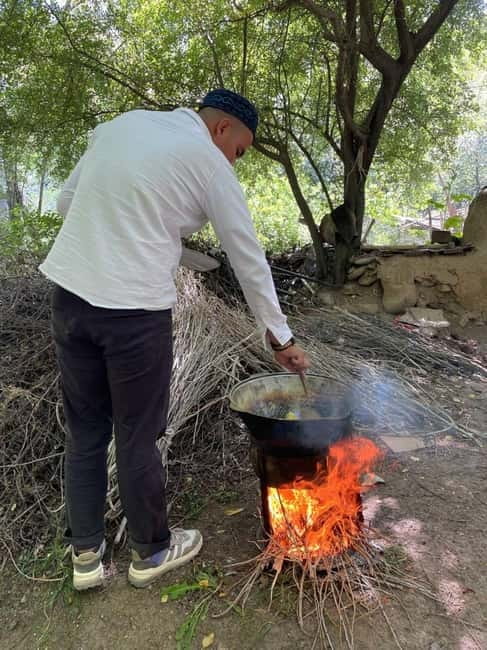
- Plov over an open fire: Prepare Uzbekistan’s national dish in a large cast-iron qozon with rice, carrots, onions, meat, and spices.
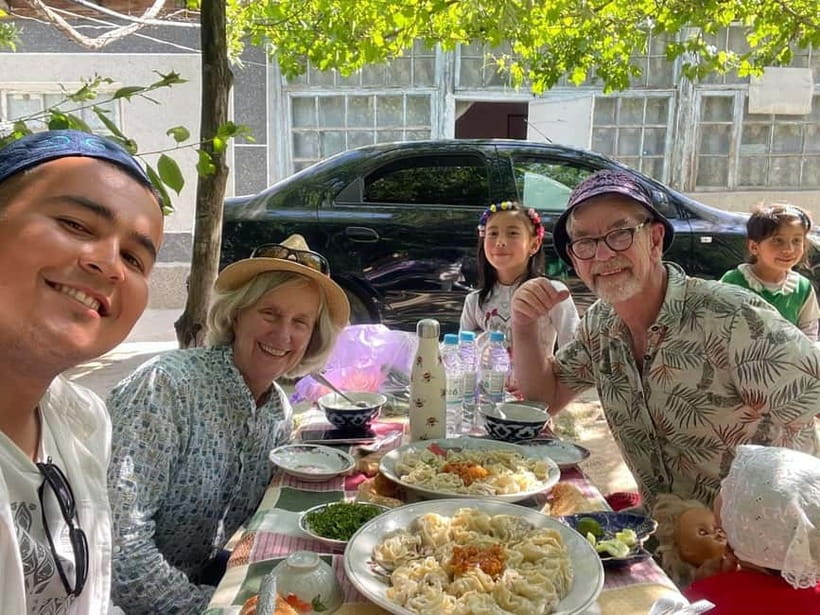
- Mantu from handmade dough: Roll, fill, fold, and steam dumplings with guidance from the family.
- A real village home: See gardens, animals, clay-brick buildings, and the everyday setting behind the food.
- Bekjon as host and guide: Expect help with pickup, translation, local customs, and questions about Uzbek life and history.
- Tea beneath grapevines: Waiting for the food becomes part of the experience, with tea, snacks, and time to relax.
- A half-day commitment: The full outing lasts 5.5 hours and includes transport from Samarkand.
Why this cooking class feels different
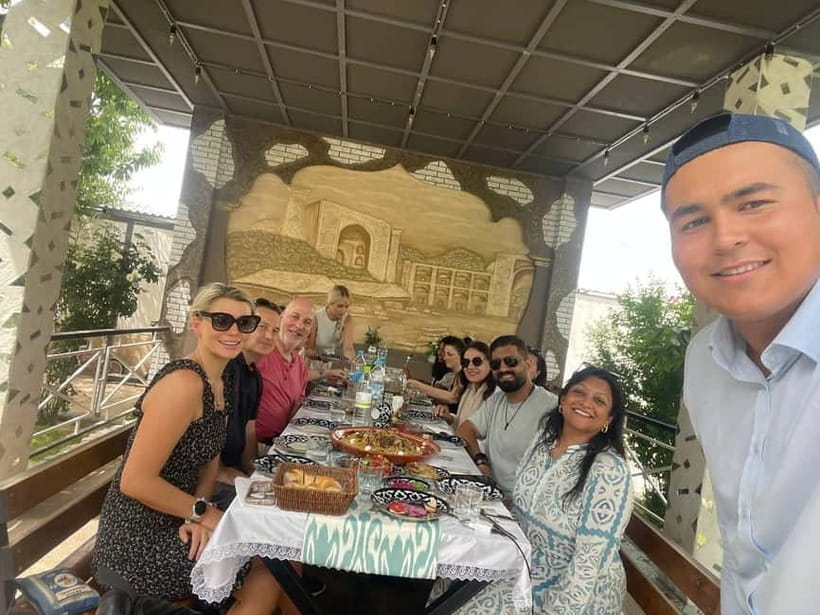
Many cooking classes take place in a polished kitchen designed for visitors. This one takes you to a family home in the Samarqand Region, about one hour from the city. That drive matters. It moves you from Samarkand’s grand monuments into fields, gardens, village lanes, and a slower daily routine.
I like the setting because food makes more sense when you see where it belongs. Plov is not simply a recipe to copy. It is a dish tied to family meals, holidays, weddings, and large gatherings. Mantu also has a social side, often prepared together in village homes when relatives gather.
You are not just shown a finished dish. You take part in the work. The cooking includes fresh ingredients, hand-prepared dough, a wood-fired stove, and shared eating. You may also get a look at wedding clothing and local customs, as one part of the day can include trying traditional clothes and learning what they mean.
The experience is led by Bekjon, who arranges the pickup and explains village life, culture, and history in English. His mother is closely involved in the cooking, and other family members may help with the mantu lesson. Communication has also been supported with translation apps when needed, so you should expect a friendly, practical exchange rather than a formal culinary lecture.
More Cooking Classes in Samarkand
- Samarkand: Village Tour with Plov Cooking Class & Home Visit
★ 5.0 · 29 reviews - Cooking class in Samarkand with local life experience
★ 5.0 · 19 reviews - cooking traditional food in Samarkand with local people
★ 4.8 · 17 reviews
The drive from Samarkand to the countryside
Your day begins with pickup in Samarkand. The service can collect you from a hotel, train station, or airport, provided you give the pickup address. Transport to the village and back is included, and punctual pickup has been a repeated strength of the experience.
The trip takes about one hour each way. That makes this a five-and-a-half-hour outing rather than a quick activity between visits to Registan Square and Samarkand’s other sights. I would schedule it on a day when you can give the morning or afternoon room to breathe.
The drive is useful in its own right. Bekjon can point out local features, explain cultural details, and answer questions along the way. One outing also included a stop at a local market to buy food before continuing to the family home. That gives you a better sense of how ingredients enter an Uzbek kitchen, though the exact route and stops may vary.
The time on the road is the clearest tradeoff. If you have only one day in Samarkand and want to see every major monument, this class uses a substantial part of it. If you want to understand life outside the city, the drive is part of the value.
Arriving at a traditional village home
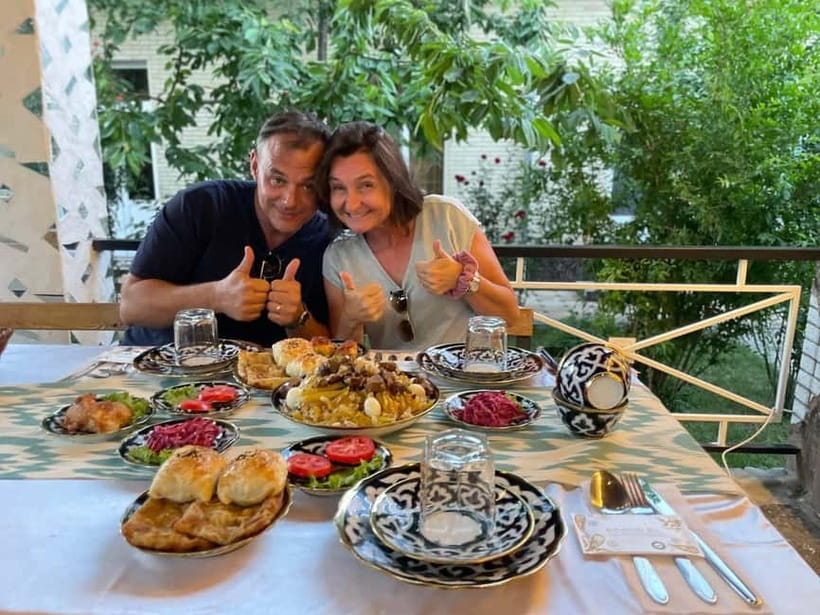
At the village, you enter a family home set among gardens and fields. The house is described as a traditional clay-brick home, with fruit trees and vegetable patches nearby. The setting is simple and lived-in, not arranged as a visitor center.
You can see cows, sheep, chickens, and donkeys, all part of the working rhythm of village life. You may have time to feed the animals, walk through the garden, or sit under a grapevine with green tea. Bring a camera if you like, but the best part is slowing down enough to notice the small details.
This is also where the class becomes personal. You are welcomed by Bekjon’s family, including his mother, who demonstrates cooking techniques and offers practical tips. Several people described the family atmosphere as warm, with time for conversation as well as food preparation.
Do not expect restaurant-style service or a silent demonstration. The point is to be present in a household where cooking is part of daily life. That can mean a less polished setting, but it also gives you a closer look at Uzbek hospitality.
Making plov in the qozon
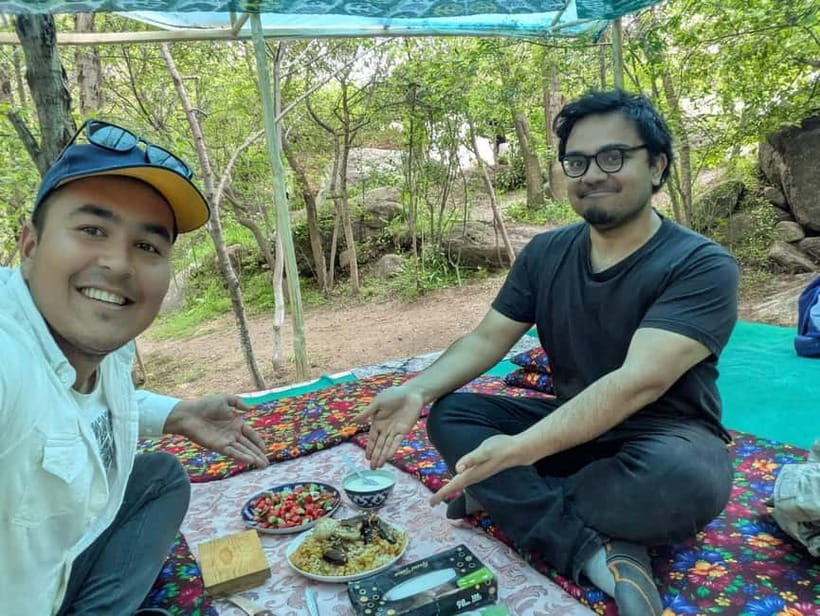
Plov, also called pilaf or pilov, is the center of the experience. It is Uzbekistan’s national dish and one of the country’s great communal foods. The version prepared here uses rice, carrots, onions, lamb or beef, and spices, all cooked in a large qozon over an open fire.
The cooking begins with selecting and preparing ingredients. You help cut and arrange the components, then learn how the flavors are built in stages. The order matters. The meat, onions, carrots, rice, liquid, and seasoning are not simply thrown together at once.
The large pot and outdoor stove change the feel of the lesson. You are working with live heat, smoke, timing, and a dish made for sharing. Bekjon and his family guide you through stirring, tasting, and watching the rice as the plov cooks slowly.
I like this format because it gives you useful knowledge without pretending that plov is a five-minute dish. You see how patience affects the final result. You also understand why plov is usually prepared in large quantities. The finished portion can be generous, and one person may find it more food than they can comfortably eat alone.
When the plov is ready, you eat it with the family. Sharing one dish creates a communal feel that is hard to reproduce in a standard cooking studio. If you prefer small portions, tell your host in advance or during the meal.
More village days around Samarkand:
- Cooking Class in the Village with Local Family in Samarkand
★ 5.0 · 11 reviews - Beyond the Walls: Countryside Tour with Transport and Lunch
★ 5.0 · 13 reviews - Hiking tour to Hayat, Uhum and Asraf villages – 4 days
★ 5.0 · 12 reviews - Bukhara Countryside Private Tour with Transport
★ 5.0 · 6 reviews
Folding mantu by hand
The mantu lesson adds a second kind of cooking skill. These are steamed dumplings made with thin dough and a filling of minced meat and onions. You learn to roll the dough, add the filling, shape the dumplings, and place them into a multi-layered steamer called a mantuvarka.
Mantu takes patience and finger work. The dough needs to be thin, and the folds need to hold during steaming. You may not produce perfect shapes on your first try, which is part of the fun. The family can show you traditional folding methods and help you adjust the amount of filling.
The social meaning matters here. Mantu is often made by women together during holidays and family gatherings. Working side by side gives you a glimpse of how food preparation becomes conversation, cooperation, and family time.
Vegetarian alternatives such as pumpkin or potato mantu are offered, but the overall activity involves cooking with meat. The provided information specifically warns that the class may not suit vegetarians or vegans, so contact the provider before booking if your diet is strict. People with food allergies should also discuss them in advance.
Tea, animals, and time to look around
The cooking is not nonstop. While the plov simmers or the mantu steams, you can explore the garden, feed the animals, or sit with tea and local snacks beneath a grapevine.
This pause is more important than it may sound. It gives you time to talk with the family instead of rushing from one cooking task to the next. You may hear about daily routines, village customs, food traditions, or family life. Bekjon has also discussed Amir Temur, local history, and cultural practices during time spent with visitors.
Tea is central to Uzbek hospitality, and the setting makes the ritual feel natural. You are not simply handed a cup while waiting for a class to resume. You are sharing a quiet moment in the place where your meal is being prepared.
The garden and animals also help children and first-time visitors connect with rural life. Still, this is not a zoo or organized farm tour. The animals belong to the household, and the experience is best approached respectfully and calmly.
What the 5.5-hour schedule means
The stated duration is 5.5 hours, including pickup, the village visit, cooking, eating, and the return to Samarkand. The cooking portion itself is listed at about 3 hours and 40 minutes, which leaves room for travel and the home visit.
That is enough time for a proper meal and conversation, but not enough for a long agricultural tour or a full day in the countryside. The schedule is compact and focused on food, family, and village life.
Pickup is available from a hotel, train station, or airport. You need to provide the exact address. The guide speaks English, and the transport has received perfect scores from all people included in the supplied rating information. That is useful if you are arranging the class around a train arrival or departure, but I would still avoid booking it too close to an important connection.
Wear comfortable clothes. Cooking over a fire can be messy, and you may be moving between the kitchen, outdoor stove, garden, and animal area. Sunscreen is sensible, especially during warmer months. The activity is not suitable for babies under one year, people with recent surgery, serious back problems, or several listed medical and allergy concerns.
Is $52 a fair price?
At $52 per person, this is not just a cooking lesson. The price includes pickup and return transport, ingredients, the cooking masterclass, a guided village visit, tea, and the meal you prepare.
The transport alone adds useful value because the village is about an hour from Samarkand. You do not have to arrange a private taxi, negotiate a rural fare, or find the family home yourself. You also receive an English-speaking guide who handles the cultural explanation and coordination.
I consider the price fair for someone who wants a personal cultural outing rather than a restaurant meal. It is less compelling if you only want to learn a recipe and are already staying in a city cooking school. The extra value comes from the setting, family contact, outdoor fire, animals, garden, and shared meal.
Personal expenses are not included, so plan to pay separately for anything outside the stated activity. The main meal ingredients and tea are covered.
Who will enjoy this most
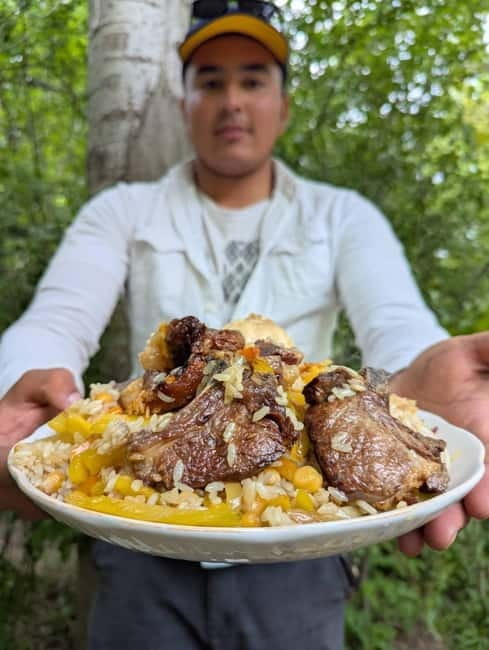
I would choose this for you if food is a way of meeting people. It suits curious cooks, couples, families with older children, and visitors who want to see more than Samarkand’s famous architecture.
It is especially good for anyone interested in plov. You will learn the basic flow of the dish, the role of the qozon, and the importance of timing. You may not leave with a professional chef’s technical course, but you will have a better chance of understanding what authentic home-style plov is meant to be.
The class also works well for people who value conversation. Bekjon is happy to answer questions about history and culture, and his family adds the household perspective. Some communication may use translation apps, so this is an informal exchange rather than a fully scripted English presentation.
I would hesitate if you have severe food allergies, diabetes, back problems, a recent operation, or an animal allergy. Vegetarians and vegans should not book without first confirming a suitable arrangement. The supplied information lists these groups as not suitable for the activity.
Booking advice and final verdict
Book this experience if you want your Samarkand visit to include a family table, a village garden, and food made with your own hands. The strongest reasons are the personal hosting from Bekjon and his mother, the open-fire plov, the handmade mantu, and the chance to see how rural life connects food with family.
Think carefully about the travel time and the meat-based menu. You should also allow enough energy for a half-day outing rather than trying to squeeze it between major city sights.
For most food lovers, I think the $52 price is good value because it covers transport and a genuine home setting as well as the class. It is a particularly strong choice after several days of monuments and museums. You leave with more than a recipe: you get a clearer sense of how Uzbek hospitality works at the family level.
FAQ
Where does the cooking class take place?
It takes place in a traditional village home in the Samarqand Region, about one hour from Samarkand.
How long does the full experience last?
The full activity lasts 5.5 hours, including transport between Samarkand and the village.
Is pickup included?
Yes. Pickup and return transport are included from a hotel, train station, or airport in Samarkand. You need to provide the pickup address.
What dishes will I learn to make?
You will learn to prepare Uzbek plov and handcraft mantu dumplings. The activity information describes plov as the main dish, with mantu prepared using traditional techniques.
Is the class suitable for vegetarians or vegans?
The activity involves cooking with meat and is listed as unsuitable for vegetarians and vegans. Vegetarian mantu fillings such as pumpkin or potato are offered, but you should confirm your needs before booking.
Is the tour conducted in English?
Yes. The live guide language is English, and Bekjon leads the cultural explanations and cooking guidance.
What should I bring?
Bring a camera, sunscreen, and comfortable clothes. Cooking and outdoor activities may require clothing that you do not mind getting dirty.
Can I cancel the booking?
You can cancel up to 24 hours in advance for a full refund. A reserve-now, pay-later option is also available.
Just added around Samarkand
- Uzbekistan 6 Days Private Tour Khiva-Bukhara-Samarkand by Train★ 5.0 · 4 reviews
- Private Intercity Transfer Tashkent – Samarkand – Tashkent★ 3.5 · 3 reviews
- Tashkent-Samarkand-Bukhara tour-3nights/4 days★ 5.0 · 5 reviews
- 6- Day Private Tour to Tashkent, Khiva, Bukhara and Samarkand★ 5.0 · 5 reviews
- Samarkand Capital of Amir Timur Private Tour with Transport★ 5.0 · 3 reviews
- The Golden City of Samarkand: A Self-Guided Audio Tour★ 4.0 · 4 reviews
- Seven Lakes Panjakent: One-Day Adventure from Samarkand★ 5.0 · 3 reviews
- Shakhrisabz Private Day Tour from Samarkand★ 5.0 · 4 reviews
Village & Countryside Tours, compared.
Village Tour with Plov Cooking Class & Home Visit
Read our review →
Beyond the Walls: Countryside Tour with Transport and Lunch
Read our review →
Hiking tour to Hayat, Uhum and Asraf villages – 4 days
Read our review →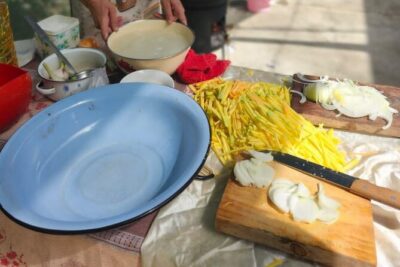
Cooking Class in the Village with Local Family in Samarkand
Read our review →
Browse the lists this tour appears in