
Reviewed · BUKHARA TOURS
Discover Uzbekistan – explore top destinations: Samarkand, Bukhara & Tashkent
Uzbekistan’s great Silk Road cities are spread across the country, but this three-day route connects Tashkent, Bukhara, and Samarkand with high-speed trains. You’ll see Timur’s monuments, blue-tiled madrasas, old mosques, a fortress, bazaars, and museums without having to arrange each transfer yourself.
I like the included train tickets and entrance fees, since those are the pieces that can make a short Uzbekistan trip hard to manage. I also like the small maximum group of eight, plus the chance of having a guide almost to yourself. The drawback is simple: this is a packed schedule, with many stops receiving only 20 or 30 minutes.
Key points
- Three historic cities in three days: Tashkent, Bukhara, and Samarkand are all covered.
- High-speed rail included: The route uses economy-class trains between Tashkent, Bukhara, Samarkand, and back to Tashkent.
- Major sights are bundled: Entrance tickets, three breakfasts, and three lunches are part of the price.
- Small group size: The tour accepts a maximum of eight people, though some outings may be private or nearly private.
- Strong local guide support: Sevinc in Samarkand and Outilla in Tashkent are named as especially helpful guides, while Ibrohim and Izzatullo handled wider trip arrangements.
- A fast pace: You need moderate physical fitness and should expect long sightseeing days.
What $999 buys you in Uzbekistan
At $999 per person, this is not a bare sightseeing package. The price includes an air-conditioned vehicle, entrance tickets, high-speed economy train tickets, three breakfasts, and three lunches. Pickup is offered, mobile tickets are available, and group discounts may reduce the cost for people booking together.
The real value is time. You do not need to work out how to reach Bukhara after seeing Tashkent, or how to continue from Bukhara to Samarkand. The train route is already built into the plan, and local transport is arranged at each destination.
The price makes the most sense if you have only a few days and want the main sights handled for you. If you are an independent visitor who enjoys arranging trains, guides, restaurants, and admission tickets alone, you may prefer to build a slower trip yourself. This tour charges for convenience as much as for sightseeing.
The itinerary also includes three breakfasts and three lunches, which helps with a short schedule. Personal expenses, travel insurance, and fees for trying on traditional clothing for photographs are not included.
More things to do in Samarkand:
- Samarkand One Day Tour – Departure From Tashkent
★ 5.0 · 313 reviews - 2 Days Tour to Bukhara and Samarkand from Tashkent by train
★ 5.0 · 53 reviews - Uzbekistan 8 Days Private Tour Tashkent-Urgench-Bukhara-Samarkand-Tashkent
★ 4.5 · 38 reviews
Day one: Tashkent’s Timur, independence, and applied arts
The first day is based in Tashkent, Uzbekistan’s capital. The program begins with the Amir Timur Museum, a modern domed building devoted to the 14th-century ruler Tamerlane, known locally as Amir Timur. Portraits and artifacts give you an introduction to the figure whose name appears again in Samarkand.
The museum visit is scheduled for 30 minutes. That is enough for a quick orientation, but not enough for a slow look at every display. I would pay attention to the overall presentation of Timur’s rule and use the stop to prepare for the later visit to his mausoleum in Samarkand.
From there, you move to Amir Temur Square, a broad central space with esplanades and an equestrian statue of Timur. The planned visit lasts 20 minutes. It is mainly a photo and orientation stop, but it helps you understand how central Timur remains to the public image of modern Uzbekistan.
The next stop is Independence Square, also called Mustakillik Square. You have 30 minutes here. The square is one of Tashkent’s central public spaces, and it gives the day a modern civic counterpoint to the medieval subjects of the museum.
Nearby, Memorial Square honors soldiers who died in the Great World War. The planned 30-minute visit adds a solemn note to the morning. This is less about ornate architecture and more about how national memory is presented in the capital.
You then visit the Courage Earthquake Memorial, a landmark recalling a major earthquake in Tashkent. The stop lasts 20 minutes. It is brief, but useful because it shifts the focus from ancient rulers to the city’s more recent past.
The Minor Mosque provides a change of mood. Its white exterior and Islamic architectural details make it one of the day’s more immediately visual stops. You have 30 minutes, enough to see the building and take in its design without turning the visit into a long religious-site tour.
The day ends at the Uzbekistan State Museum of Applied Art, described as the best art museum in Tashkent within this program. You receive another 30 minutes. The museum is important because it moves beyond grand monuments and introduces decorative arts, craft, and local design.
Tashkent’s day is varied, but not leisurely. You move from museum to square, memorial, mosque, and art collection in quick succession. I like that the program does not treat the capital as just a starting point for the old cities. Still, anyone who wants long museum visits or unhurried photography may find the schedule tight.
Day two: Bukhara’s old center and massive Ark
Bukhara is the most concentrated day of the trip. The route begins at the Lyabi House Hotel, in the area of the Lyabi-Khauz architectural ensemble. The ensemble includes Kukeldash Madrasah, a khanaka, and the Nodir Divan-begi complex around a historic pool.
The 30-minute stop gives you time to understand the layout. This is one of the places where Bukhara’s old urban character comes through clearly: religious schools, lodging for Sufi visitors, and public gathering space are grouped together rather than scattered across a modern city grid.
You continue to Nodir Devonbegi Madrasah, which sits near Lyabi-Hauz. The madrasah and nearby khanaka were commissioned by the vizier Nadir. The visit lasts 20 minutes, so expect a focused look at the building rather than a long architectural study.
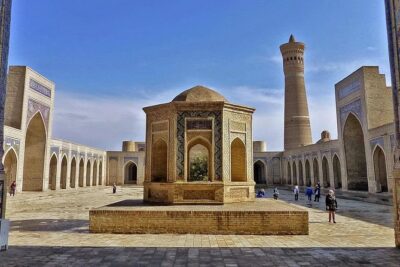
The Kalyan Minaret is next. It is part of the Po-i-Kalyan mosque complex and one of Bukhara’s best-known landmarks. The 20-minute stop is enough to appreciate the minaret’s scale and role in the city. The nearby open space also helps you see how the tower anchors the surrounding religious buildings.
At Poi Kalyan Mosque, you have another 20 minutes. The mosque dates to the 15th century and is one of Bukhara’s major monuments. The two short visits work together: first the minaret, then the mosque complex. Keep your eyes on the relationship between the structures instead of rushing only toward individual details.
The schedule then brings you to Ulugbek Madrasah, founded in 1417. Its connection to Ulugbek, the astronomer-ruler and grandson of Timur, links Bukhara to the intellectual life of the Timurid world. You have 20 minutes here.
The Mir-i-Arab Madrasa receives 30 minutes. It is considered one of Bukhara’s most interesting monuments, and its position near the Kalyan complex makes it easy to compare the different madrasah facades in one stretch of sightseeing.
The longest stop of the day is the Ark of Bukhara, with one hour scheduled. This massive fortress is not just another decorated facade. It gives you a sense of Bukhara as a seat of power, with defensive walls and a large compound that served rulers over time.
After the Ark, you visit Bolo Hauz Mosque, built in 1712. The 30-minute stop rounds out the religious architecture of the day and gives you another example of historic Bukhara away from the Kalyan complex.
The final listed stop is the Ismail Samani Mausoleum, a world-famous architectural masterpiece. You have 30 minutes. Its importance lies in the building itself, not in a long checklist of objects. Allow yourself a quiet look at its form and brickwork, and do not treat it as merely the last stop before dinner.
Bukhara is likely to be the day that feels most continuous. Many major sights are close enough to form a coherent old-city route, while the Ark adds a large-scale fortress experience. The tradeoff is fatigue. Nine stops, even with short visits, require you to keep moving.
Day three: Samarkand’s grandest monuments
The final day is devoted to Samarkand, beginning with the Gur-i Amir complex, the mausoleum of Amir Temur. The itinerary calls this a masterpiece of medieval Islamic architecture, and the visit provides the emotional link between the first day’s Timur museum and the grand monuments that follow.
You have 30 minutes here. That is enough to see the mausoleum and connect its design to the Timurid story, but a visitor who wants time for detailed architectural study may wish the schedule were longer.
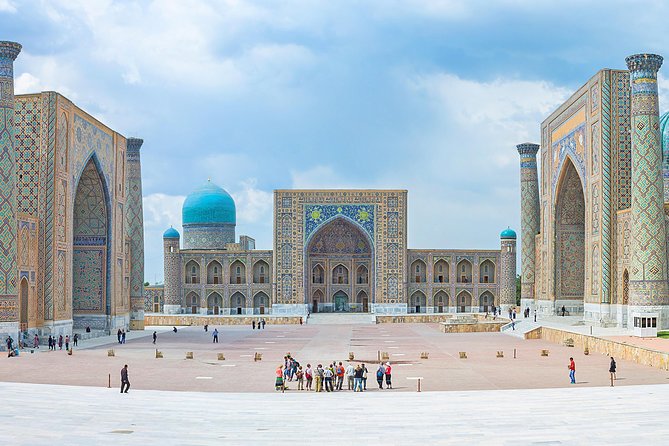
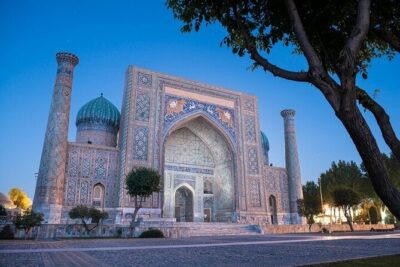
Then comes Registan, the heart of ancient Samarkand under the Timurid dynasty. The square is framed by three major madrasas, and the itinerary divides attention among them. The first listed stop is identified as Ulugbek Madrasah but describes the Sher-Dor Madrasah, built between 1619 and 1636. The visit lasts 30 minutes.
A second 30-minute stop covers Ulugbek Madrasah, built from 1417 to 1420 by order of Ulugbek. The separate entries appear confusing on paper, so pay close attention to your guide’s explanation of which facade and building you are seeing. This is one place where a good guide adds real value.
The third Registan building is Tillya Kori Madrasah, completed in 1660. It was the final building added to the ensemble. Together, the three stops give you time to look at the square from different angles, though the total schedule remains brisk.
Next is Bibi Khanym Mosque, which was among the largest and most magnificent mosques in the Islamic world in the 15th century. The 30-minute visit lets you grasp its scale and importance in Samarkand’s Timurid setting.
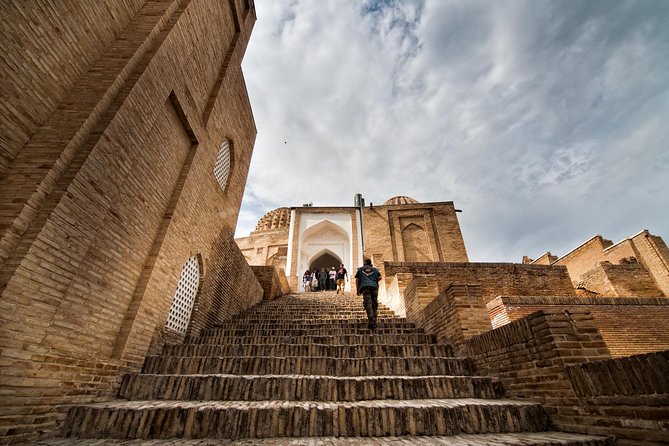
The route continues to Shah-i-Zinda, a complex of 14th and 15th-century mausoleums. This is another 30-minute stop, and it is one of the places where close attention to tilework matters more than rushing through a broad list of facts.
At Siyob Bozori, Samarkand’s largest traditional bazaar, you receive 30 minutes. This is a welcome change from formal monuments. You can see the everyday commercial side of the city and, depending on the timing, use the stop for a quick look at local market life.
Samarkand’s day has the strongest concentration of famous monuments, but it also has the least spare time. Registan alone can reward a slow visit, and Shah-i-Zinda deserves careful attention. If these places are your main reason for coming to Uzbekistan, you may want to ask in advance how much free time is possible.
More things to do in Tashkent:
- Best of Tashkent Mountains: Amirsoy, Chimgan & Charvak Trip
★ 4.8 · 567 reviews - Tashkent City Tour
★ 5.0 · 121 reviews - Amirsoy, Chimgan & Charvak Full-Day Adventure
★ 4.9 · 82 reviews - Tashkent: Historical City Highlights Guided Walking Tour
★ 4.8 · 71 reviews
Trains, guides, and the pace of the route
The included high-speed train tickets cover Tashkent to Bukhara, Bukhara to Samarkand, and Samarkand back to Tashkent, in economy class. That arrangement is one of the strongest practical features of the trip. Long road transfers would make an already busy schedule harder.
An air-conditioned vehicle handles local sightseeing and transfers. Pickup is offered, and the group maximum is eight people. A small group usually makes it easier to hear explanations and manage quick stops, though the actual feel depends on how many people book a given departure.
The human side of the program matters. Sevinc is named as a particularly charming guide in Samarkand, while Outilla is noted for calm guidance in Tashkent. Ibrohim and Izzatullo are associated with the broader organization of drivers, vehicles, transport, guided visits, trains, flights, and backup arrangements.
The feedback is not perfectly uniform. One account describes a poorly coordinated holiday, while several others describe very efficient organization and clear daily direction. I would treat that as a reason to confirm your train times, pickup details, and guide contacts before departure, not as a reason to dismiss the tour.
You should have a moderate level of physical fitness. The plan includes repeated walking, standing, getting in and out of vehicles, and moving through several sites each day. The short stop lengths help keep the route moving, but they do not make it restful.
Who should book this three-day Uzbekistan tour?
I would choose this tour if you have limited time and want the country’s main historic cities without handling the complicated pieces yourself. It is especially useful for a first visit, a stopover-style trip, or a small group that values fixed transport and included admissions.
You should also consider it if you want a broad first look at Uzbekistan: Tashkent’s civic spaces and museums, Bukhara’s religious architecture and Ark, and Samarkand’s Timurid monuments all appear in one plan.
I would hesitate if you prefer slow mornings, long museum visits, independent meals, or time to return to a favorite monument. The schedule is designed for coverage, not lingering. Also remember that insurance, personal spending, and traditional clothing photography fees are extra.
Free cancellation is available if you cancel at least 24 hours before the start time. A change or cancellation inside that window is not accepted for a refund. The experience can also be moved or refunded if poor weather or insufficient bookings cause cancellation.
FAQ
How long is the tour?
The tour lasts approximately three days.
Which cities are included?
The route includes Tashkent, Bukhara, and Samarkand.
Are train tickets included?
Yes. Economy-class high-speed train tickets are included for Tashkent to Bukhara, Bukhara to Samarkand, and Samarkand to Tashkent.
Are meals included?
Yes. The price includes three breakfasts and three lunches.
How large is the group?
The maximum group size is eight people.
What is not included?
Travel insurance, personal expenses, and fees for trying on traditional clothing for photographs or other purposes are not included.
Should you book it?
Book this tour if your priority is seeing the three headline cities in only three days with trains, local transport, meals, guides, and admission tickets arranged. The value is strongest for people who would rather spend their time looking at Bukhara’s Kalyan complex or Samarkand’s Registan than managing timetables.
Skip it, or ask for a slower custom plan, if you want depth over coverage. This is a brisk introduction, and the short visits can leave you wishing for more time. For a first, tightly planned visit to Uzbekistan, though, it offers a practical route with strong sights and useful logistical support.
Just added around Tashkent
- Uzbekistan Tour – 6 Days 5 Nights★ 5.0 · 4 reviews
- Private Intercity Transfer Tashkent – Samarkand – Tashkent★ 3.5 · 3 reviews
- Tashkent-Samarkand-Bukhara tour-3nights/4 days★ 5.0 · 5 reviews
- Tashkent Mountain Tour Amirsoy with Transport★ 3.5 · 3 reviews
- Tashkent City Tour with Hotel Pickup and Drop off★ 4.5 · 4 reviews
- Private Tashkent City Tour★ 5.0 · 3 reviews
- Tashkent Food and Metro Journey★ 5.0 · 4 reviews
- Transfer Tashkent Airport / Railway Station – Hotel★ 3.5 · 3 reviews
Bukhara Tours, compared.
2 Days Tour to Bukhara and Samarkand from Tashkent by train
Read our review →
Uzbekistan 8 Days Private Tour Tashkent-Urgench-Bukhara-Samarkand-Tashkent
Read our review →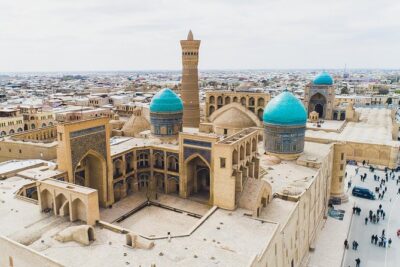
Browse the lists this tour appears in