
Reviewed · TASHKENT TOURS
Legends and Crafts: Suzani Masterclass & Cultural Immersion
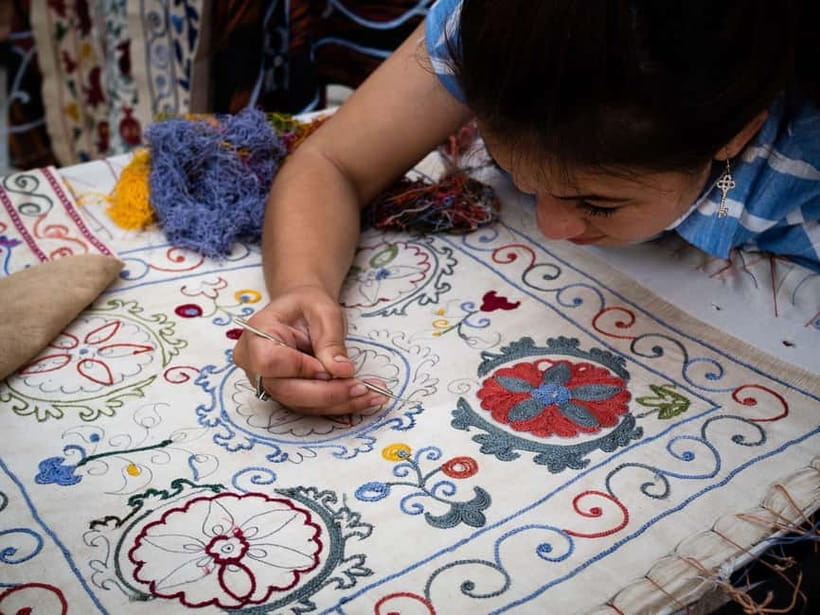
Suzani embroidery is the heart of this outing. You sit with an artisan, learn simple stitches and symbols, and make a small textile of your own. I like that the craft is not treated as a quick demonstration. You get a feel for the patience behind Uzbek embroidery. I also like the way guide Yusuf explains both old customs and modern life in clear, lively English.
The main consideration is time. Three to three and a half hours gives you a good introduction, but not a long workshop or a full museum visit. If you already have a packed Tashkent schedule, the stop at Navruz Park and the meal may feel brisk. Still, the private format lets Yusuf, Yulia, or Julia adjust the conversation and food plan to your interests.
Key points at a glance
- Make your own Suzani: Learn basic stitches and take home a small embroidered piece linked to Uzbek protective symbols.
- Start at Navruz Park: Hear stories about Uzbek customs, regional crafts, and the Silk Road’s effect on local design.
- Meet the guides: Yusuf is praised for his humor, patience, clear English, and practical advice. Yulia or Julia may also lead the outing.
- See more than embroidery: The cultural portion covers ikat, ceramics, Uzbek dolls, jewelry, and metalwork.
- Eat a full Uzbek meal: Expect non bread, shakarob, Kuzchi Kayfiyat salad, palov, green tea, and water.
- Best early in your trip: The craft discussion helps you judge textile and pottery quality and price later in Uzbekistan.
Why Suzani makes a better souvenir than another fridge magnet
Suzani is a decorative embroidered textile made with patterns that carry meaning. The designs are tied to Uzbek legends and are traditionally seen as a way to guard against bad spirits and bring good fortune. You do not need sewing experience. The point is not to produce a flawless wall hanging. It is to understand how much work goes into the finished pieces you will see in markets and shops.
The workshop teaches basic stitches and designs, then gives you a small project to complete. That scale matters. A large Suzani can take considerable time, while this class gives you a manageable keepsake within about an hour. You leave with something connected to your own visit, not simply an item selected from a shelf.
I especially like this part for visitors who plan to shop for textiles later. After handling the fabric and trying the needlework, you have a better sense of why quality embroidery costs what it does. You can look more closely at the regularity of stitches, the amount of handwork, and the difference between a handmade piece and a mass-produced one.
Do not expect a formal art course. The aim is cultural understanding and a pleasant introduction to the craft. If you are hoping to produce a large, highly finished Suzani, this is not enough time. If you want a personal souvenir and a clearer eye for Uzbek textiles, it is a smart use of an hour.
More things to do in Tashkent:
- Best of Tashkent Mountains: Amirsoy, Chimgan & Charvak Trip
★ 4.8 · 567 reviews - Samarkand One Day Tour – Departure From Tashkent
★ 5.0 · 313 reviews - Tashkent City Tour
★ 5.0 · 121 reviews
Navruz Park puts the crafts in context
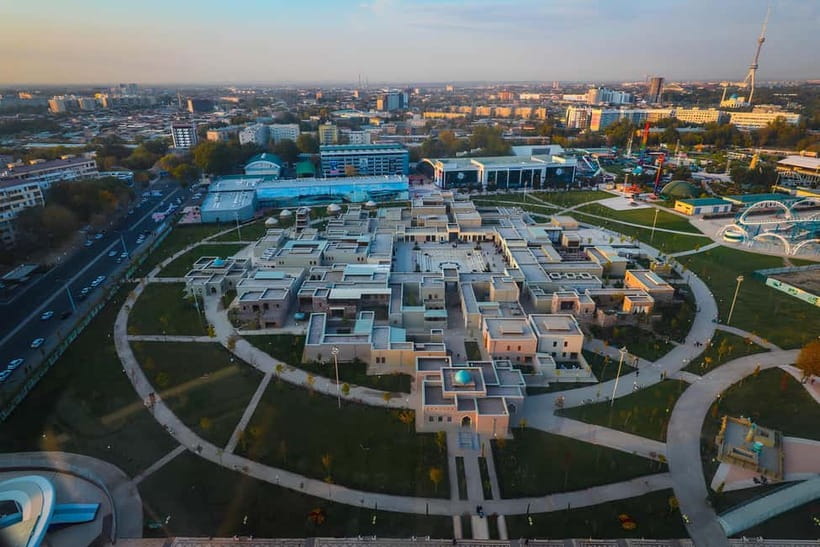
The outing begins with pickup in Tashkent and a guided visit to Navruz Park. The cultural section lasts about an hour and looks at Uzbek traditions through an ethnographic setting. Rather than treating crafts as isolated objects, the guide explains the stories, beliefs, and trade links behind them.
The Silk Road discussion is useful because it connects everyday design to a much larger network. Uzbekistan sat along routes linking Asia and Europe, and goods such as textiles, ceramics, and metalwork gained value through that exchange. You hear how craft methods and styles moved between regions, and why some objects were prized not only for their beauty but also for the blessings or protection associated with them.
The park portion also introduces Uzbek textiles beyond Suzani. You may encounter explanations of ikat, embroidery, and other regional styles. Uzbek dolls add another layer. Each doll represents a different area and reflects local legends or superstitions, giving you a simple way to see how clothing and storytelling vary across Uzbekistan.
The discussion of jewelry and metalwork is equally worthwhile. Traditional designs were not only decorative. Certain forms were believed to offer protection or good luck. That belief helps explain why jewelry could carry social and spiritual meaning, not just serve as an accessory.
You will also hear about globalization and the choices facing modern artisans. Craftspeople must preserve older designs while adapting to current tastes and markets. That tension is important if you are shopping for souvenirs. A contemporary Uzbek item is not automatically inauthentic, and an old-looking design is not automatically handmade. The guide helps you think about that distinction without turning the visit into a lecture.
The park is a good first stop because it gives your later meal and workshop more meaning. After hearing about motifs, materials, and regional customs, you can recognize some of those ideas in the fabric and food that follow.
Yusuf and Yulia bring the conversation to life
The guides are a major part of the experience. Yusuf is described as funny, patient, welcoming, and generous with practical information. He answers many questions about Uzbek life, and his clear English makes the discussion easy to follow. He also offers useful suggestions for the rest of your stay, which is especially helpful if this is one of your first activities in Tashkent.
Yulia, also referred to as Julia in some tour details, may join or lead the experience. She speaks English well and has a strong interest in sharing Uzbek customs. One particularly appealing part of her guiding style is the attention to traditional clothing. A museum visit connected with the experience may give you the chance to see older Uzbek garments and, in some cases, try on pieces. This is a memorable addition, though the exact presentation can depend on the day and guide.
The private group format improves the outing. You can ask about prices in craft shops, the meaning of a design, or the difference between regional foods without worrying about holding up a large group. The guides have also shown flexibility with the meal. If you have already eaten a great deal of palov, they can sometimes take your preferences into account and suggest another local restaurant or different dishes.
That flexibility has limits. The supplied details promise a full traditional meal, but they do not define a fixed substitute menu. If you have dietary restrictions or want something other than palov, contact the guide after booking and explain clearly what you need.
The one-hour Suzani workshop
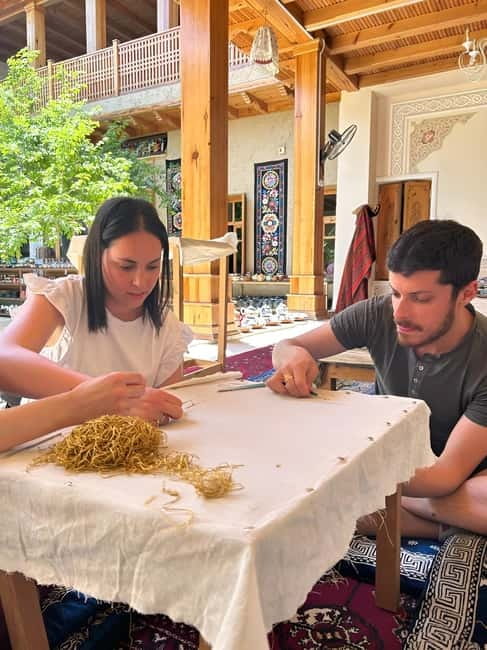
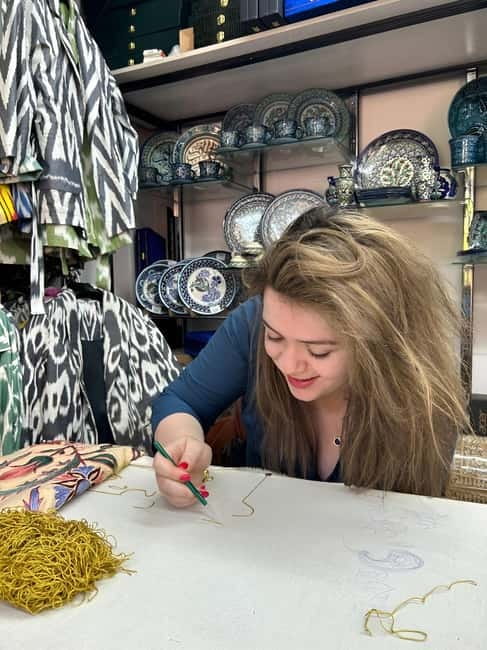
The workshop is held at a local craft setting described as a special stop away from the main park. Here you shift from listening to making. An artisan guides you through basic embroidery techniques and helps you work on a small design.
This hands-on step is more valuable than simply watching someone sew. Even a short attempt shows how much concentration and control the craft demands. Keeping the stitches neat takes patience, and repeated patterns are less effortless than they look in a finished textile. If your first efforts are uneven, that is normal and part of the lesson.
The designs carry symbolic meaning. The class presents Suzani as more than decoration, with traditional beliefs about protection and good fortune attached to the motifs. The result is a souvenir with a clear connection to Uzbek culture, even if it is modest in size.
You should allow about one to one and a half hours for this section. Materials and instruction are included, so you do not need to bring sewing supplies. Wear something comfortable and be ready to focus with your hands. The class is suitable for beginners, including people who describe themselves as poor at crafts. The goal is participation, not a perfect score.
Same city, a completely different kind of day:
- Amirsoy, Chimgan & Charvak Full-Day Adventure
★ 4.9 · 82 reviews - Tashkent: Historical City Highlights Guided Walking Tour
★ 4.8 · 71 reviews - Shymkent Day Tour from Tashkent
★ 4.6 · 71 reviews - Highlights of Tashkent (old and new part)
★ 5.0 · 60 reviews
A garden meal built around palov
The final part is a traditional Uzbek lunch or dinner at a local restaurant, in a calm garden setting. The meal is not an afterthought. It extends the cultural discussion into the kitchen, with the dishes explained as part of Uzbek life and storytelling.
The included menu features fresh non bread, shakarob, Kuzchi Kayfiyat salad, and a variety of traditional palov. Palov is the familiar Uzbek rice dish made here with lamb, carrots, and raisins. Green tea and water are unlimited, and the full meal is included in the $90 price.
Palov can be filling, especially if you have already sampled it elsewhere in Uzbekistan. That is worth considering when choosing the timing of the tour. On the other hand, this meal gives you a proper chance to sit down and enjoy one of the country’s best-known foods rather than grabbing a quick plate between sights.
Additional sides are available for an extra fee. The included meal is substantial, but the exact selection may vary. Ask about additions before ordering if you are trying to keep spending predictable.
I like the rhythm of the day: craft history first, handwork next, and food at the end. You gain background before seeing the designs, then spend time making something, and finally share a meal where food itself becomes part of the cultural lesson.
Is $90 a fair price?
At $90 per person, this is not the cheapest way to spend a morning in Tashkent. You are paying for a private experience with hotel pickup, a live guide, entry and cultural interpretation at Navruz Park, workshop materials, artisan instruction, a take-home souvenir, and a full traditional meal.
The value is strongest if you would otherwise book several separate activities. A standard sightseeing tour might show you monuments but say little about textiles. A craft workshop might not include transportation, a guide, or dinner. Here, those pieces are combined into one focused outing.
The price also makes more sense for a small private group. You are not simply joining a large bus tour and listening to a fixed script. The guides can answer questions, adjust the pace, and take your food preferences into account. Solo visitors may find the cost harder to justify than couples or families sharing the experience, though the personal attention can still make it worthwhile.
If your main goal is low-cost sightseeing, you may prefer to visit Tashkent’s public attractions independently. If you want help understanding Uzbek crafts and would like to make your own souvenir, the package offers solid value.
Timing, pickup, and practical details
The activity lasts about three to three and a half hours. Pickup from your Tashkent hotel is included, and you should wait in the lobby five minutes before the agreed time. The driver will have a sign with your last name. After booking, send a message to the local guide through WhatsApp as requested.
Starting times depend on availability. Morning is a particularly good choice because you can use the rest of the day for other Tashkent sights. It also works well on your first or second day, when you are still learning what Uzbek textiles, pottery, food, and prices look like.
The tour is available in English, Polish, Russian, and Uzbek. English-language guiding is a strong point, especially with Yusuf and Yulia or Julia. Free cancellation is available up to 24 hours before the start, and you can reserve now and pay later, which helps if your schedule is still changing.
The experience is private, but the exact group size is not specified. The tour details also do not give a firm accessibility description, so ask the provider before booking if you have mobility needs or require a particular vehicle setup.
Who should book this experience?
I would choose this outing for a first visit to Tashkent, particularly if you want cultural context before shopping. The guide can explain why one embroidered piece costs more than another and how regional styles differ. That information can save you from making a rushed souvenir purchase later.
It also suits couples, families, and small groups who prefer conversation over a fixed sightseeing script. Children and adults can both take part in the embroidery, though the activity requires patience and careful handwork.
Art lovers, textile fans, and food-focused visitors will get the most from it. The meal is a real part of the experience, not just a convenience. People who dislike craft activities or have no interest in local food may find the pace less appealing.
I would not book it as a replacement for a full Tashkent city tour. It does not promise a broad list of major monuments, and the workshop is introductory rather than advanced. Think of it as a focused cultural outing that adds meaning to the rest of your Uzbekistan trip.
Should you book Legends and Crafts?
Book it if you want to understand Uzbekistan through objects, stories, handwork, and food. The strongest reasons are the private guiding, Yusuf’s friendly and patient approach, the chance to make a real Suzani piece, and the useful introduction to shopping for textiles and ceramics.
Skip it if you want a long embroidery course, a large museum visit, or the lowest possible price. The schedule is compact, and palov is the central meal. For most first-time visitors with a half day available, though, this is a thoughtful way to get your bearings in Uzbek culture and take home something you made yourself.
FAQ
How long does the Suzani and cultural experience last?
The activity lasts about three to three and a half hours, including the cultural visit, embroidery workshop, and traditional meal.
Where does pickup take place?
Pickup is available from your hotel in Tashkent. You should wait in the lobby five minutes before the scheduled pickup, and the driver will hold a sign with your last name.
Which languages are available?
The live tour guide service is available in English, Polish, Russian, and Uzbek.
What food is included?
The meal includes non bread, shakarob, Kuzchi Kayfiyat salad, traditional palov with rice, lamb, carrots, and raisins, plus unlimited green tea and water. Extra side dishes cost more.
Do I need embroidery experience?
No. The workshop teaches basic stitches and designs, provides materials, and includes guidance from artisans. You take the finished small piece home.
Can I cancel or pay later?
You can cancel up to 24 hours in advance for a full refund. You can also reserve your place and pay later.
Just added around Tashkent
- Uzbekistan Tour – 6 Days 5 Nights★ 5.0 · 4 reviews
- Private Intercity Transfer Tashkent – Samarkand – Tashkent★ 3.5 · 3 reviews
- Tashkent-Samarkand-Bukhara tour-3nights/4 days★ 5.0 · 5 reviews
- Tashkent Mountain Tour Amirsoy with Transport★ 3.5 · 3 reviews
- Private Tashkent City Tour★ 5.0 · 3 reviews
- Tashkent Food and Metro Journey★ 5.0 · 4 reviews
- Tashkent City Tour with Hotel Pickup and Drop off★ 4.5 · 4 reviews
- Transfer Tashkent Airport / Railway Station – Hotel★ 3.5 · 3 reviews
Tashkent Tours, compared.

Best of Tashkent Mountains: Amirsoy, Chimgan & Charvak Trip
Read our review →
Samarkand One Day Tour – Departure From Tashkent
Read our review →

2 Days Tour to Bukhara and Samarkand from Tashkent by train
Read our review →Browse the lists this tour appears in